December 6, 2015

Supporting Rachel Henson on her Blast Theory residency

I spent three days last week supporting artist Rachel Henson as she embarked on her 2-week residency at Blast Theory HQ in Brighton.

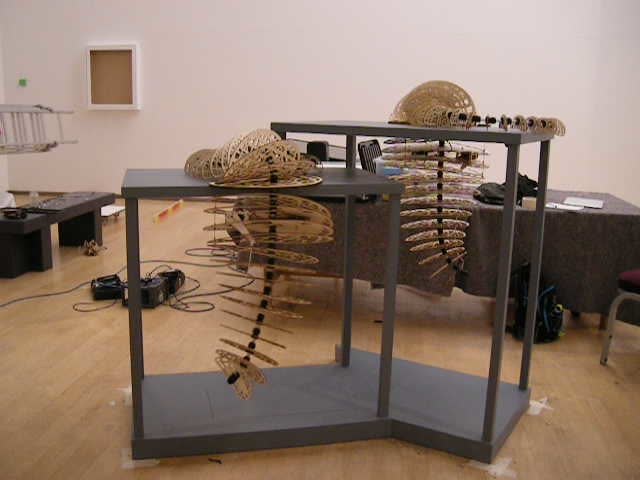
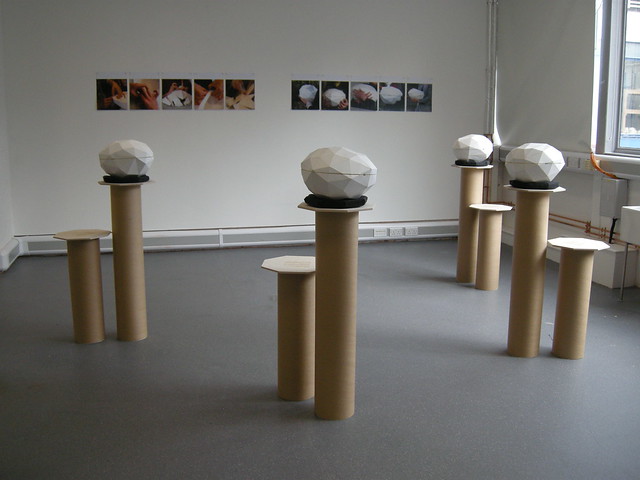
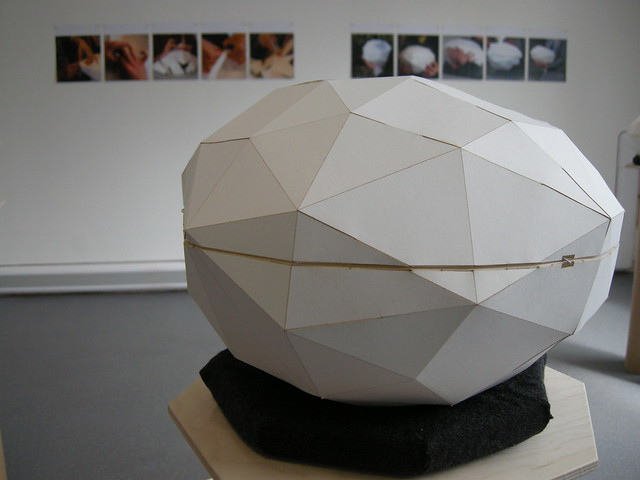
Rachel’s been investigating the use of haptic navigation devices and moving images off-the-screen. She got in touch after reading my dissertation about the paper-crafted Where the Sky Widens pods and, after meeting for an initial meet-up and chat several weeks ago, invited me to join a team of advisers who’ll be helping her with her R&D.

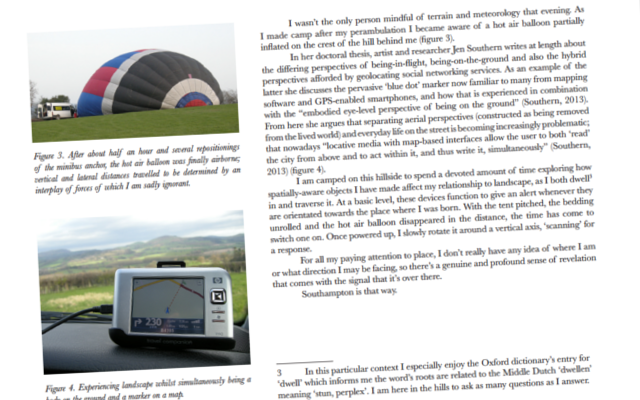
Where the Sky Widens: An exploration of slow making and spatially-aware prototypes as methods for considering emotional connections to distant places

Where the Sky Widens: An exploration of slow making and spatially-aware prototypes as methods for considering emotional connections to distant places

Rachel’s local to Brighton, so it’s been an interesting experience where I did the packing of equipment, the travelling, the living out of a rucksack and the residing in a liminal sort of space – as per usual for residencies – but without being the actual artist in residence! Rachel’s working towards devising a mechanism for guiding a solo walker to a selected destination in such a way that, along the way, their senses are working in a state of alertness to what’s around them. My three days were to get Rachel and Neil initiated into the world of physical computing before she then fed in expertise about sound and situated visuals from other practitioners.

sunrise

Living the dream – sunrise over Travis Perkins

Soldering

“Clean your tip!” Soldering 101

Neil’s a programmer, so the coding side was covered and I focused on skilling them up on working with the hardware: primarily GPS and magnetometers, but then also looking at different actuators that could be used to respond to the data coming in off the sensors. First task: getting them the other side of The Fear that most people seem to experience when working with this kind of thing for the first time. Soldering irons were deployed and we went from complete beginner on Monday, via adding connectors to various components, to Neil assembling an Adafruit Wave Shield on Wednesday!

Alongside the soldering we also breadboarded a GPS+compass system that would tap a solenoid in a heartbeat pattern to guide the walker to a secret location. There seem to be two types of residency venue: those with roofs that are very permeable to radio waves (and everything else!) and those that are somewhat more bunker-like. 20 Wellington Road is a former Victorian icehouse, tending towards the latter, so testing things involved going up three floors to the roof (also street level, thanks to the local gradient!) in order to get GPS reception. Monday was nice and wet and blustery, so we had to get a bit creative with protecting the laptop we were using to monitor the incoming data…

GPS test

Weatherproofing strategy – hide!

We also did some experimenting with a breadcrumb style approach along a trail in contrast to carrying a navigational device with you all the time. This involved a lot of keyfinders and a lot of whistling!

keyfinder experimenting

Call and return with keyfinders

keyfinder trail

Laying a trail

This almost immediately set Rachel’s thinking off in another direction, because of the way it focused her awareness in and down instead of out. When I left on Wednesday, it seemed the main area of enquiry was going to be on a navigational device at a distance to the walker – in front, but always out of reach, leading the way. They’ll be half-way through the residency now – will be very interesting to how ideas have progressed at the end of next week!

Prototype Creatures from the Colony Project – commission for The Lowry

Two prototype creatures from the Colony project have been commissioned by The Lowry for exhibition in Right Here, Right Now; their current showcase of contemporary art relating to digital systems and cultures. It runs through until the end of February 2016, and opened to the public yesterday.

I was up there last Wednesday for the preview and launch event. It started well with a visitor in the cafe doing a double-take-including-putting-glasses-on as I passed by with one of the creatures we’d walked with to gather data a few weeks ago. This acted as my magic vest and we chatted for a bit before I continued up to the galleries.

I like that the creatures act as permission objects in this way, and we experienced the effect several times whilst we were out with them on the data walks. Since I’m designing for a certain amount of spectacle and stranger:stranger interaction as I continue developing the Colony project, it seemed only fitting to bring along a creature for people to interact with at the launch (in addition to the two that were attached to the plinths!).

Here are a selection of the reactions they generated:

critter reaction

critter reaction

critter reaction

I also really like the two modes of engagement captured in this image posted @chrisinculture by on Twitter

Lowry Two Modes

The rest of my images from the launch are in this Flickr album, and the official selection from The Lowry is here, too.

Below are a few installation views of the gallery the morning after the night before – the rest of that album can be seen here.

critter installation

critter installation

critter installation

There’s an exhibition catalogue, including an essay by Beryl Graham that you can download and read. In the meantime, I’ll leave you with this, which is what the Colony creatures will be doing for the next three months (with a few variations!)

Critter wriggle

Colony installation at The Lowry

Without giving away too many secrets, here are a few behind-the-scenes glimpses of the two days I spent installing the Colony prototypes at The Lowry earlier this week for Right Here Right Now.

Many thanks to Dave, Emily and the rest of the team who helped. (Especially Dave, who transformed my cardboard maquette and rough sketches into a rather lovely plinth.)

The finished plinth and the cardboard maquette I'd originally made to show what I wanted

The finished plinth and the cardboard maquette I’d originally made to show what I wanted

Underneaths

Underneaths

A plinth in two parts...

A plinth in two parts…

Cable nemesis

Cable nemesis

Committing to a fixed position of the first critter

Committing to a fixed position of the first critter

Final fixing of panels in position

Final fixing of panels in position

The critters settled into their accommodation for the next three months.

The critters settled into their accommodation for the next three months.

Then there was a lot of watching and tweaking of angles. Also a lot of ladders, but I think they’ll be gone by the launch next week!
Colony installation at The Lowry

Salford metropolis in the fog

Salford metropolis in the fog

Salford Quays data-gathering walks

Phase III of The Tour of T’North:

Salford

I’ve been building some Colony ‘critter’ variants for exhibition at The Lowry as part of their Right Here Right Now showcase of contemporary digital art. During the exhibition, the animatronic forms will be moving in such a way as to ‘remember’ a walk taken around the surrounding Salford Quays area. This was the data-gathering part of that task where I did the walks and collected the data that would determine the critters’ movements.

murk

Day 1 was my first visit to the Quays and a chance to – literally – suss out the lie of the land. Amidst the drizzle and general greyness I walked around with what I hoped was a not-too-suspicious-looking rucksack full of batteries, GPS equipment, Arduino and data loggers.

dodgy rucksack

The critters are effectively claustrophobic and move more (get distressed) in response to being taken to places where buildings restrict their view of the sky (this links back to the quality of the GPS signal they receive – see the previous post for more information). In order for them to not just be doing the same thing all the time during the exhibition, I was therefore seeking out a range of built environments and collecting the data in order to get a feel for the ranges encountered. Media City provides a selection of massive office buildings with comparatively narrow walkways between them, but the quays also have some plazas and bridges out over the water as open spaces by way of contrast.

No two bridges the same, it seems.

Here’s the non-swinging swing bridge the Detroit Bridge.

Detroit Bridge

I checked the list of banned anti-social behaviours and arting wasn’t on there, so I did a few circles of the viewing platform en route across to the other side.

Bridge antisocial

The data I collect are in the form of many (tens of thousands) lines of text and numbers. To help me quickly see what sort of values I got and to relate these back to the landscape, I often convert the data into visual form and view them in Google Earth. Here’s the visualisation of the walk from that first day:

Recce walks

I had two different sets of kit in my rucksack, so each is represented by a different colour. The quick way of understanding what the visualisation shows is to think that the length of the lines corresponds to the extent to which the GPS signal is being affected by the built environment. It’s also important to remember that the lines can be deflected away from the actual path I took – I didn’t get my feet as wet as some of these traces might suggest! For example, the lines over the water towards the bottom left of the image above, were produced when I walked along the base of the wall of the Imperial War Museum; the effect of this massive piece of architecture being to throw the calculated GPS positions off by several tens of metres.

Imperial War deflections

The imagery currently in Google Earth is somewhat old, showing Media City as it’s being constructed:

buildings to be

I really like this combination of seeing the promise of the buildings that don’t quite exist yet and the invisible effects they then went on to have on the radio waves that also fill that space.

Having retired to my accommodation and spent some time examining spreadsheets and ranges, I returned for day two of the data-collection. This time with two critters.

clear sky

The skies were clearer this time around and I was met by Aliki Chapple, who had generously volunteered to spend the afternoon doing odd things in public places with a stranger off the internet.

Once fully bedecked in our moving wooden sculptures and their fabric slings, we set off to explore.

window reflection

By the end of the afternoon we had completed two different pairs of walks: the first was a bit of an epic loop around the edge of the Quays, mostly encountering different residential environments; and the second was a shorter one centred more on The Lowry and the Media City end of things.

Again we experimented with the effects buildings would have if we walked close to them; but we also encountered smaller masses and also had some interesting conversations with befuddled, inquisitive people we passed on our journeys. This is what Colony is really about: using the critters as a tool and as a permission object to pay attention to and explore the spaces we inhabit. They are also deliberately intended to be a conversation-starter.

Imperial War wall

residential

rusty slabs

Needing somewhere to safely leave the critters whilst we went to find some food, we also had some nice interactions with the staff at The Lowry – the cloakrooms were briefly home to some unusual inhabitants!

Cloakroom

Here are the visualisations of all four of the walks:

data vis

I was surprised by how little variation we got in the first, more residential, areas we walked in, although I was naturally expecting the overall effect from buildings to be less pronounced.

data vis

These screenshots are from Google Earth with the 3D buildings layer switched on. This is more up-to-date than the flat, base imagery, and it gives a real sense of that relationship between concrete and line length – check out the area in front of The Lowry (top right in the image above, with the tower) and also alongside the multi-story car park for the Lowry Outlet shopping centre (top centre – the blue lines are me walking from right to left along the base of the carpark wall, and then returning on the opposite side of the water, on the far side of the blocks of flats.):

Here are the lines from all six of the walks – quite a lot of ground covered!

All data

Next steps: converting these lines into code that the exhibition critters will remember and play back.

Colony software trialling in York

Right at the end of last year’s residency at the Pervasive Media Studio in Bristol, Tarim and I uploaded the new code he’d been working on to a critter and went for a quick wander before I packed up and headed back to Birmingham.

With a couple of Colony critters having been selected to form part of the upcoming Right Here Right Now exhibition at The Lowry, I wanted to give this code rewrite another try-out to find out more about how it behaves.

Phase II of my recent Tour of T’North was a few days’ stopover in York, so out came the Arduino and the GPS modules…

For the geographically-challenged:

York be 'ere

…or if you like your maps a bit more abstract, here’s the data I collected from my walk:

York lines

A recap for those of you who might not have been following this from the start (5 years ago!), I’m processing GPS data to get a measure of the error that gets induced in the positional calculations by the built environment. If you’re standing near some tall buildings, these often block the direct path of the timecoded radio signals from the GPS satellites, meaning they instead reach the GPS receiver by a longer path having bounced off assorted architecture. The extra time taken for the waves to travel this indirect route throws off the calculations based on the timecodes in the signals and the accuracy of the latitude and longitude co-ordinates decreases. There are other things that can happen too, but that’s a simplified version of the main effect. I’m interested in how this process can effectively give a fingerprint of the stuff that makes up a place.

The lines in these images are a visualisation of the data collected overlaid, roughly, on the areas where the data was collected. The longer the lines, the greater the error and, typically, the more bricks and mortar there are in the vicinity.

Here are the same lines as above, this time viewed in Google Earth. (I do this as part of my process of looking at the collected data, so I can relate the behaviour of the lines back to where I was and what might have caused that behaviour.)

York overview

Getting to this stage was a bit of a learning curve because the data is now being logged in a different format and I had to figure out a way of extracting the numbers I needed to then feed into the script that produces the file that is read by Google Earth. Got there in the end, though! (Nothing too high-tech, just some spreadsheet-fu with 32,000 lines of data.)

Although the Google Earth views aren’t really one of the outputs of the project, I like them as illustrations of the process and, as mentioned above, they are very useful to me in helping to interpret what happened. Switching on the 3D buildings layer is a bit of fun, too!

Here’s the data from around York Minster:

York Minster deflections

I walked down from the top right corner of the image, meandering through the narrow streets near The Shambles. If you look carefully you might be able to spot where the lines disappear for a bit, as I go down an alleyway and the GPS receivers loose the signal completely. I then swooped out along the bottom edge of the open space in front of the church [first photo below], walked along the outer edge of the grounds, then came back towards the front by walking along the path that runs along the left-hand side of the building. From here I walked along the foot of the wall along the front of the building [second photo below], by the steps and the rather magnificent doors.

You can see how much the lines have been deflected out from the actual route walked, particularly when I return to the front of the building – the lines are in nearly the same place as when I first walked along the bottom edged of the paved area!

York Minster

At the foot of York Minster

After a quick detour to the post office, it seemed like a suitable nod to the city to walk a section of the old walls.

York walls

I was a bit surprised at how much the top bit of the ramparts affected the GPS reception, but that’s the whole point of all this really: looking at the results and going “oh, that’s interesting”! Later on in the development of Colony, I’ll be developing a visualisation of the data collected so that the group coming off the walk has an aide-memoire for recalling their experiences and observations.

By way of contrast to all that stone, Phase II finished off with my favourite tree in all of the (just outside of the) city:

York tree

Interactive Landscapes residential retreat

I’ve just got back to Birmingham after a week-long Tour of T’North. Phase I was the Interactive Landscapes residential retreat hosted by Invisible Flock and Compass Live Art.

I keep telling the Midlands folks that it was “up near Filey”, but no-one so far knows where that is, so it’s here:

Hunmanby. Near Filey. Up and to the right; before you get to the wet bit.

About 8 artists were selected to take part and, together with the Invisible Flock trio and a few small canines we took over a B&B for a day or two. When I say “took over” I mean that fairly rapidly a lot of surfaces began to look like these:

workplace essentials

typical tabletop

Invisible Flock had brought along a load of different technical things and our remit was just to try things out and have a bit of a play.

These GPS trackers were something I was already familiar with, although in not quite so large a number…

GPS trackers and blinkenlights

I’d spent the previous week wrangling laser cutting, Arduino code and an assortment of electronic components, so I found myself bringing some low-tech tech to contribute to the proceedings: a camera obscura, a pen knife and some magnetic compasses. Looking back at what I selected, I think they were all connected by a certain sense of wonder and fascination. I think they were a reminder for me to consider the magic that simple devices can hold and maybe a call to go back to first principles.

After the table-top tech-prodding of the evening before, we headed out to the beach at Muston Sands. You know that sense of wonder I was talking about? It’s there in that first moment when you see the sea, too!

Sea!

We descended the track down to the sands and then basically we had a few hours to do whatever we wanted. My foot was misbehaving, so I couldn’t roam far, but I decided to turn this to my advantage and to instead concentrate on the details of a small area.

Here it is (click for full-size version):
22406754486_749a78fb1b_o

I spent my time slowly moving through what probably amounts to only the left-hand half of that image, paying close attention to the decisions I was making about where I went and what I stopped to look at and why. I stooped; I peered; I stretched; I surveyed; I zoomed in; zoomed out; I took photos and I took notes. Lots of notes.

feets and noticings

The Flickr album is here, should you be inclined to look at a lot of beachy details.

seaweed

stepping stone

The exercise was sort of practice for a project that’s been lurking in the back of my imagination for several years now, and I think I may finally have found a tool that might do the sort of thing I’m asking of it: Twine, for a series of inter-related word-pictures that you can navigate through, with the intention of capturing – you guessed it – the small details that go to make up the character of a place.

Text isn’t something I work with a lot in my practice, so I’m gradually feeling my way through this one. I’m getting a sense for what the process might involve, but at the moment I’m still a bit stuck on what sort of a thing the final experience might be – should it be something that takes you back to the original physical space, or is it about taking the essence of a place so it can be experienced elsewhere?

Probably a lot of that will get resolved when this turns into a fully-fledged project with the secondary agendas that usually accompany a commission. So, if any of that sounds like a project you can support, then get in touch because I’ve got some ideas I want to make tangible!

…In the meantime, I’ve got some notes to go through and some test branching narrative to construct…

Coming up: Colony at The Lowry

Two of the landscape-reactive animatronic creatures from my Colony project will be exhibited at The Lowry as part of its Right Here, Right Now exhibition:

Right Here, Right Now brings together 16 international artists who use and explore digital technologies. Together they address how technology affects our lives – be that through surveillance, artificial intelligence, voyeurism or online dating.

Created in the last five years, their critical, playful and illuminating artworks challenge our understanding of the digital systems that surround us, while making visible those that are hidden. Many are interactive, while others transcribe data into stunning visual displays or strange music. All invite us to re-think our own increasingly connected and systematised lives. [source]

Where the Sky Widens – the MA writing

It’s taken a while to get there, but I have now submitted for the MA course of which Where the Sky Widens was a part.

Several people have been asking if they can read the writing that accompanies the practical work, so here it is: my MA ‘evaluative document’ (like a dissertation, but different).

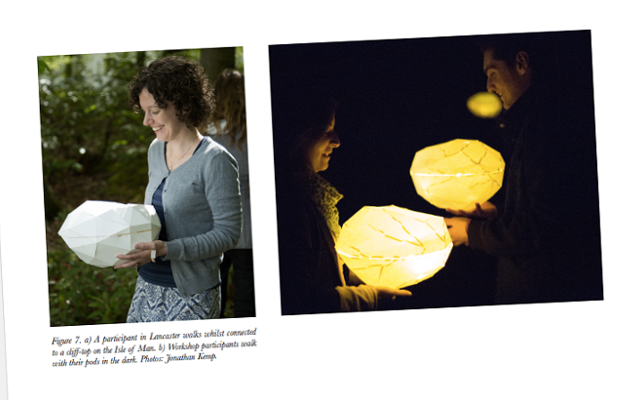
figure 7

Where the Sky Widens: An exploration of slow making and spatially-aware prototypes as methods for considering emotional connections to distant places

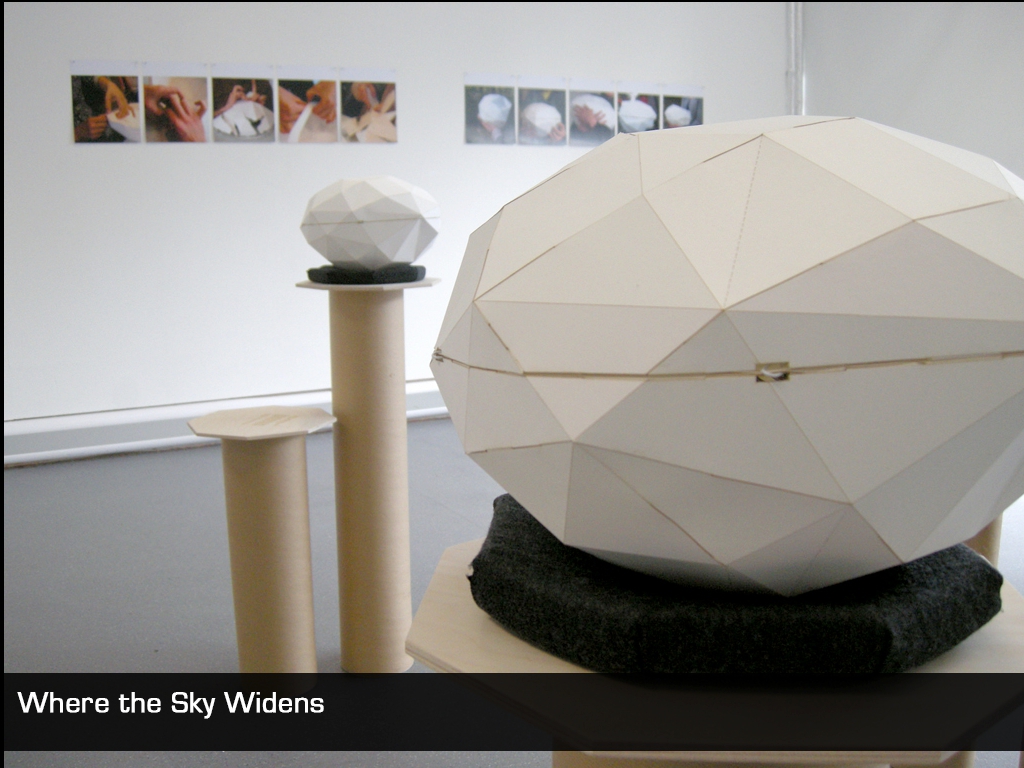
The practical component of this research project centred on the design and use of paper ‘pods’ supplemented with computational processing and electronics to make them react with movement and light to being pointed in a particular direction.

I ran workshops with different groups of people and we used the time it took
participants to make the pods to talk about the distant places to which we have strong emotional connections. We worked and talked at the pace of folded tabs and PVA glue—4 or 5 hours—giving us time to share stories; consider our relationships to our pasts, to people, and to places; and also to question the implications of crafting our own interfaces for digital technologies.

After having selected a location that was of significance to them, participants then had time to walk with the pod they had made, now programmed to signal when person and pod were facing towards that place.

The workshops were held with members of the public at Birmingham Open Media; Visual Sociology staff and students at Goldsmiths, University of London; and with staff and researchers connected to the Centre for Mobilities Research and Lancaster Institutite for the Contemporary Arts at Lancaster University. Two further
workshops had been planned, but were not realised.

Rather than describing the pods and workshops in detail, the following chapters are intended to complement the practical work through exploration of my practice, indicating relevant contextual frameworks and evaluation of the research project as a whole.

balloon

So, link to the .pdf file below. I’ve had to jibble it a bit so it makes sense away from the other things that were part of the MA submission: if it doesn’t quite make sense, or if I’ve messed up on figure numbers or anything like that then please let me know and I’ll fix it.

As ever with these things I see them as the start of a conversation, so I’m also happy to hear back about suggestions for where to go with this next.

Over to you:

Download: Where the Sky Widens v2.2 (.pdf)

There are some important “thank you”s I’d like to make too:

Thanks to Jen Southern, Kat Jungnickel and Anne Galloway for an intense month in 2014 which helped me to realise how things might slot together; gave me new ways of seeing my work and the beginnings of a vocabulary to express that; and also their support and challenges as I worked through everything after that.

Thanks also to Helen Kara for fielding so many research-related questions that, by various routes, always seemed to end up at her door.

To the ladies in the lasercutter suite: you’re awesome. Keep up the amazing work.
To my lovely proofreaders: your perfectionists. Keep up the amazing work.

Many, many thanks to the participants who took part in the workshops and gave so generously of their time and their stories. Thanks also to Jen and Kat (again!) and Karen Newman for hosting those workshops and for dealing with all the logistics of room bookings and spreading the word.

And finally, hugs and appreciation to all those who have contributed moral support and encouragement, cardboard tubes and sandpaper through the challenging times. THANK YOU!

(I think that’s everyone, but I’ll have inevitably forgotten someone crucial, so expect that list to be added to…)

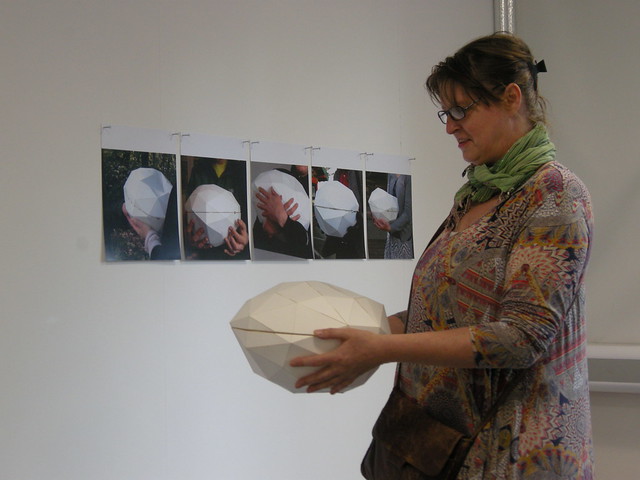
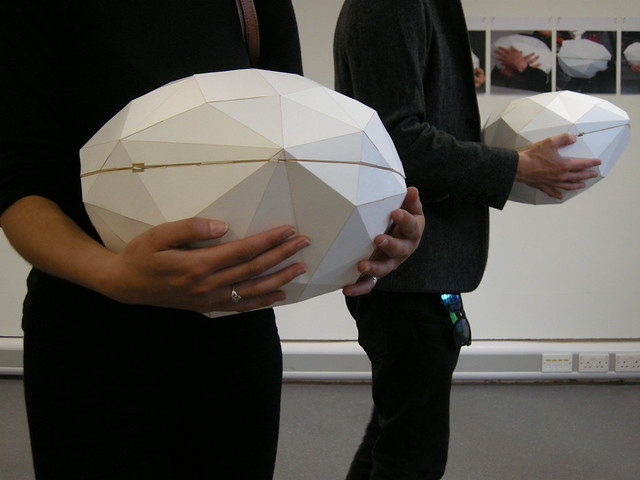
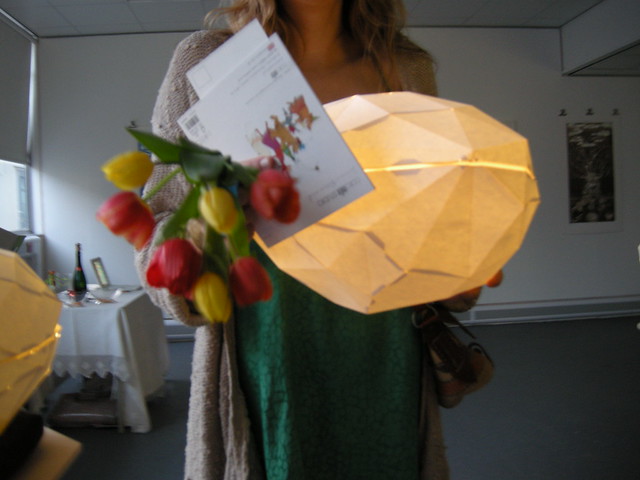
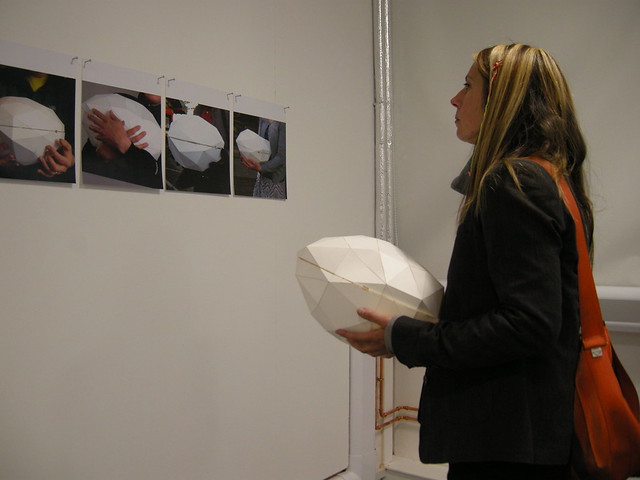
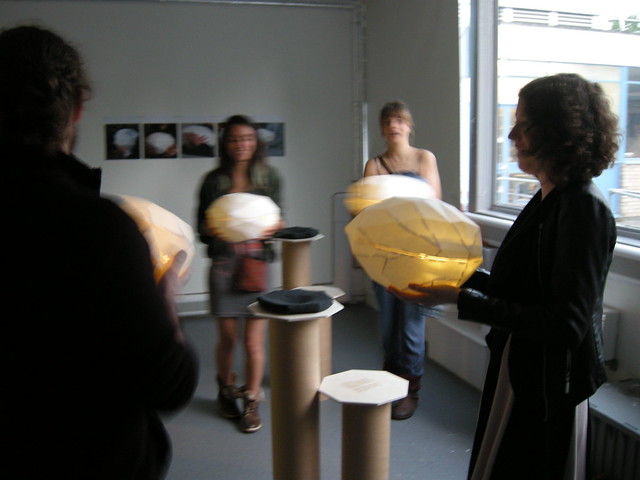
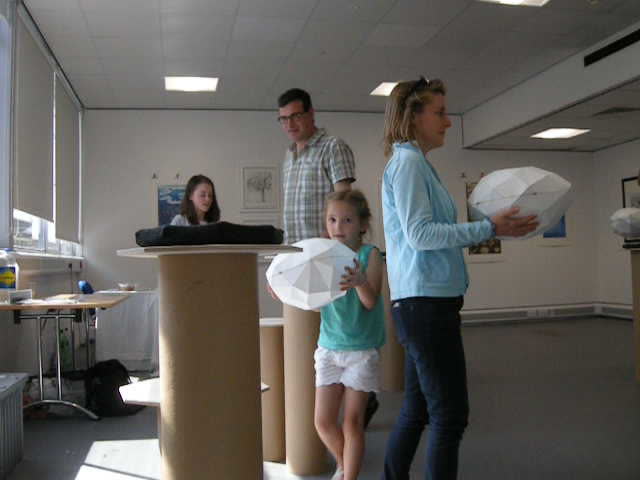
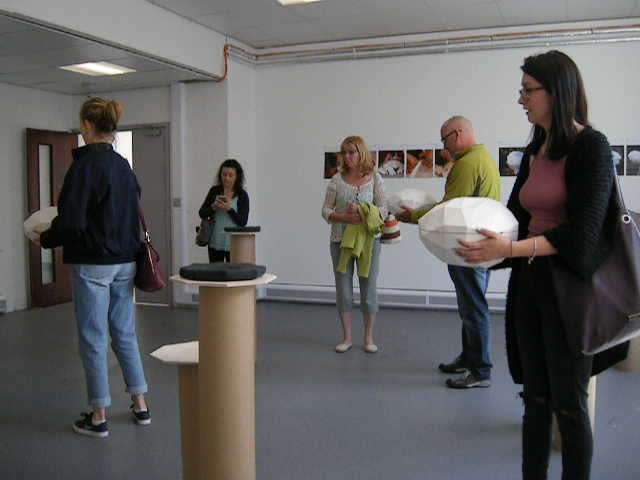
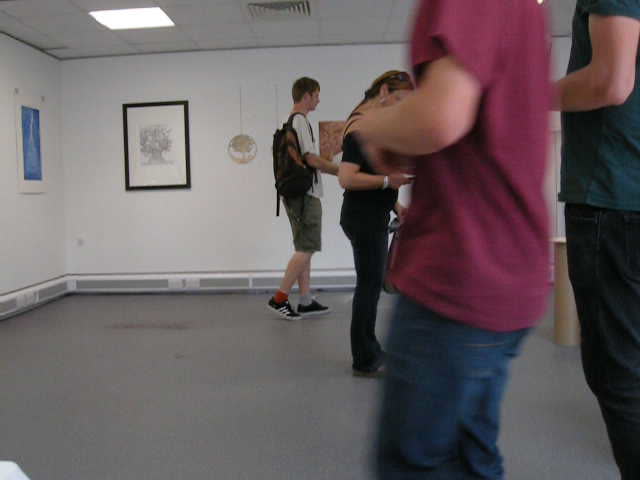
Photos and video from Where the Sky Widens degree show

Where the Sky Widens: degree show

Where the Sky Widens: degree show

Where the Sky Widens: degree show

Where the Sky Widens: degree show

Where the Sky Widens: degree show

Where the Sky Widens: degree show

Where the Sky Widens: degree show

Where the Sky Widens - degree show

Where the Sky Widens - degree show

Where the Sky Widens - degree show

Reflections on Communicating Research

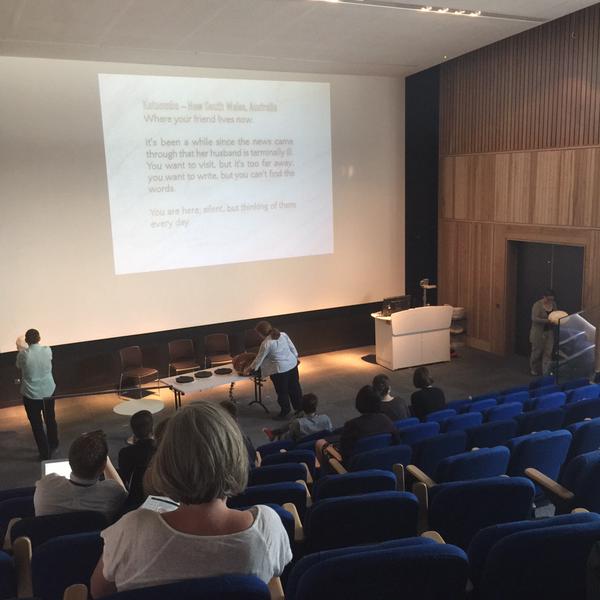
A presentation I gave on Friday as part of the How to Play Knowledge conference run by PhD candidates at the Faculty of Arts, Design and Media at Birmingham City University.

…a purpose-made forum for reflections on how to communicate research. To communicate is an art and every communication is a performance, so how to play knowledge?
Play as reproduction, play as performance, play as production, play as… You tell us!

Kene Kelly Ochonogor shared this photo of me in action:

Photo: Kene Kelly Ochonogor

Photo: Kene Kelly Ochonogor

Rather than talking about one particular project, I wanted to use my practice as a jumping off point for different thoughts, observations and provocations, hopefully offering a few things for the attendees to chew on within their own practices.

Here’s the approximate text of what I said, along with my slides – you can click on these for larger versions – and some relevant links.

Many thanks to Alberto and the pgr-studo for the invitation!

img1

Hello, my name’s Nikki

I was an art student at BCU before it was BCU, and I’ve been working as an artist for the last 11 years.

In that time I’ve done various things; here’s a selection to give you a flavour of my practice

img2

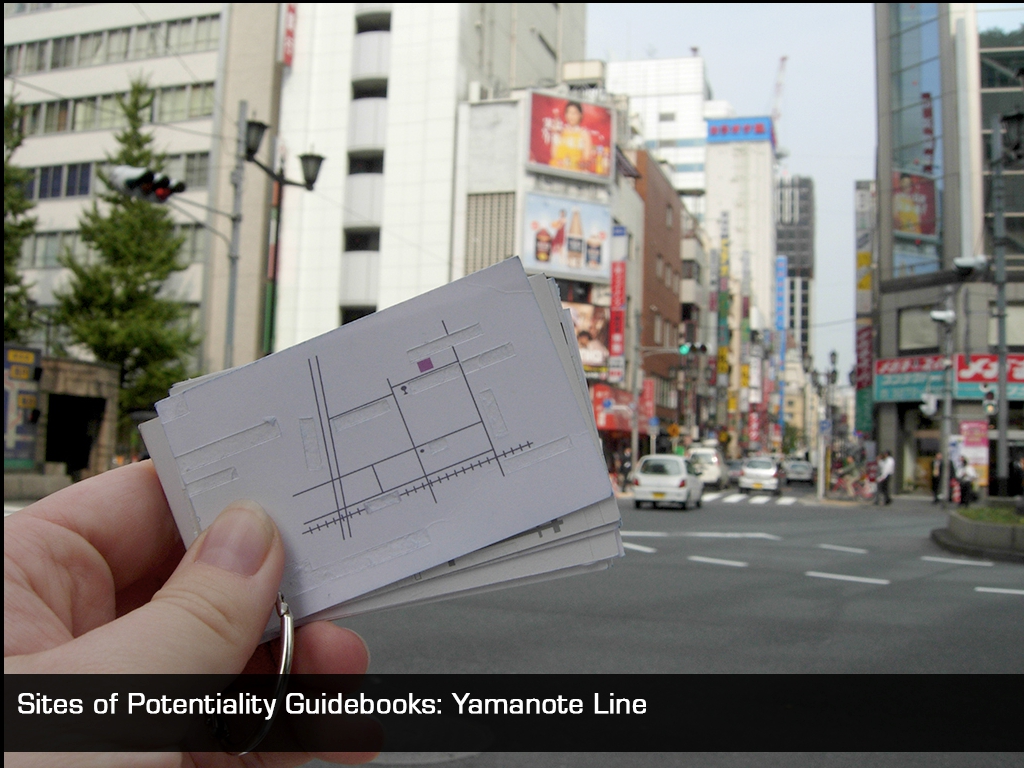
I did a series of not-quite random walks around Tokyo by following this edited map from each of the 29 stations of the Yamanote railway line. I tried to find the location the map showed and then I identified and documented the thing of interest at the end of each of the 29 walks.

http://npugh.co.uk/blog/29_not-quite-random_walks_around_tokyo/

img3

I’ve led walking and cycling guided tours. I like how travelling by foot or by bike slows things down. I like how you become very definitely placed into an environment and into your senses.

http://npugh.co.uk/tag/a_road_trip_for_longbridge/
http://bikesandbloomers.com/drafting-routes/
http://npugh.co.uk/blog/eastside_walk_and_talk_event_sunday_18th_october-2/

img4

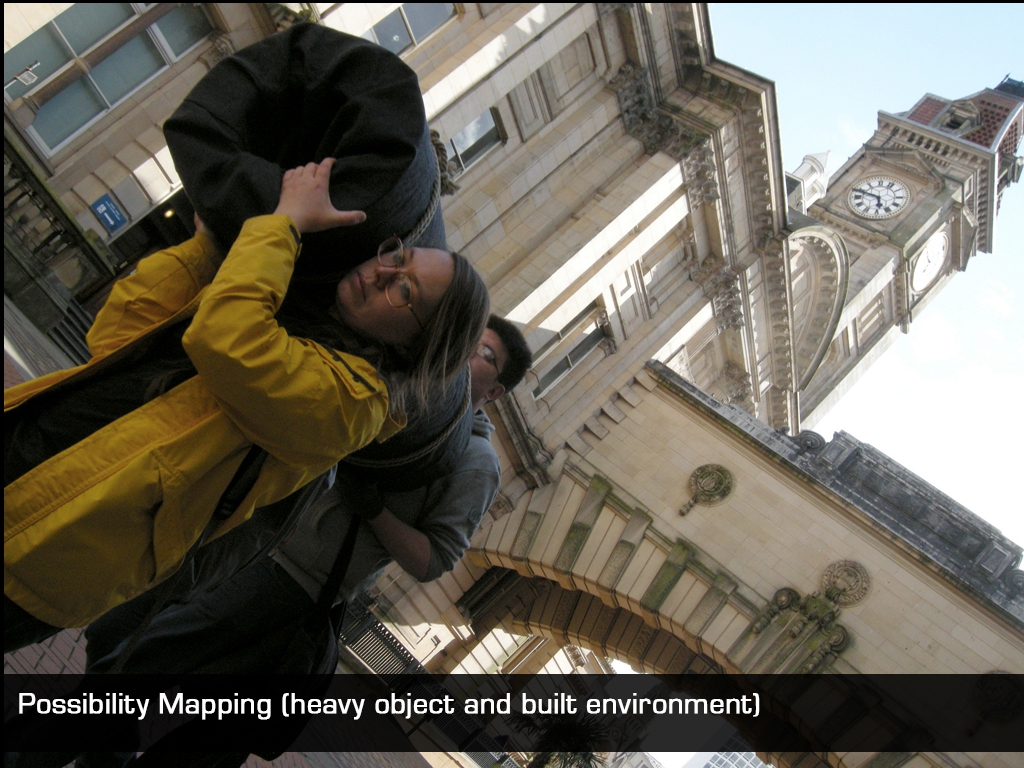
I made some large, wooden, tapping tubes that beat faster or slower depending on the space you carry them through. I invited people to carry them around the city centre to find out what difference that would make to how they experienced that space.

http://npugh.co.uk/tag/and_miles_to_go_before_i_sleep/

img5

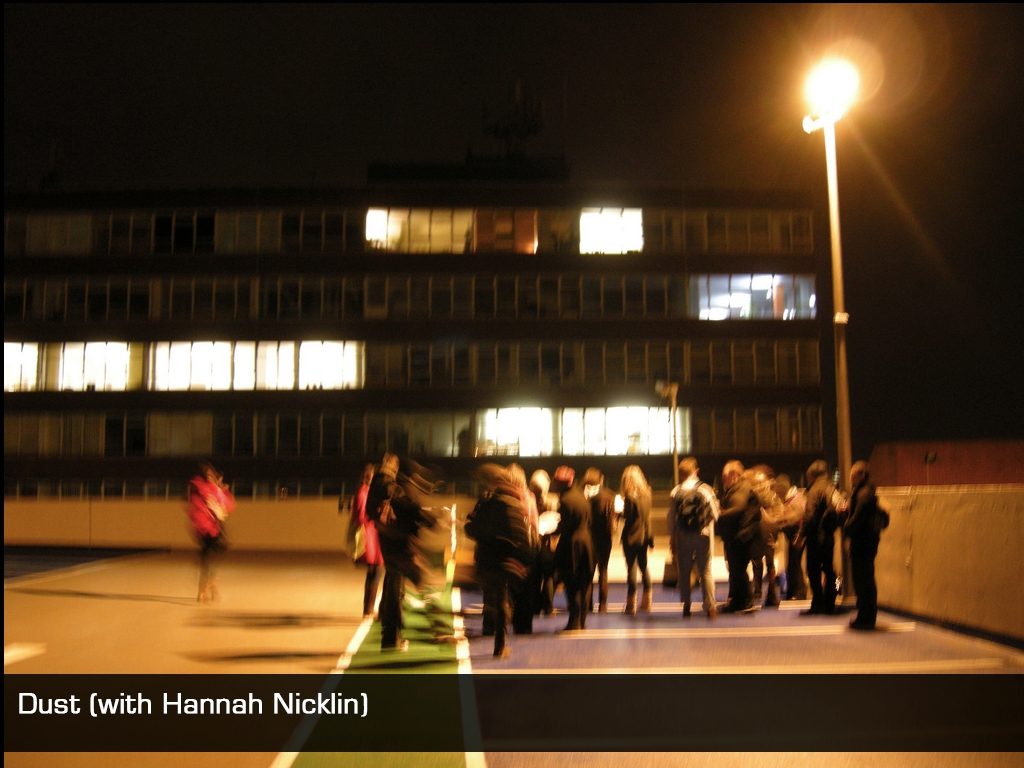
Working with Hannah Nicklin, we brought people up on to the top deck of a car park in the Jewellery Quarter at night, where they listened to a lump of clay telling them stories about the lives playing out in the city around them.

http://npugh.co.uk/blog/dust/
http://www.hannahnicklin.com/2011/12/what-was-dust/

img6

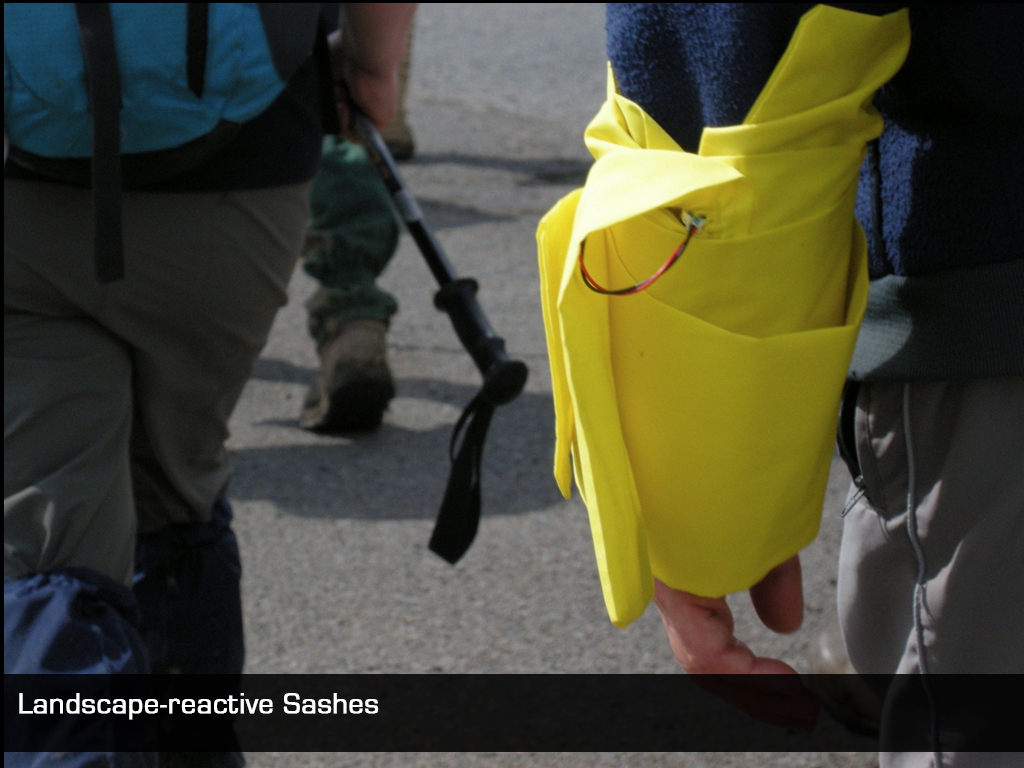
I togged up some ramblers with some landscape-reactive sashes and we walked, and walked, and walked…

http://npugh.co.uk/blog/walk_with_landscape-reactive_sashes_gretton_brookfield_plantation_and_rockingham/

img7

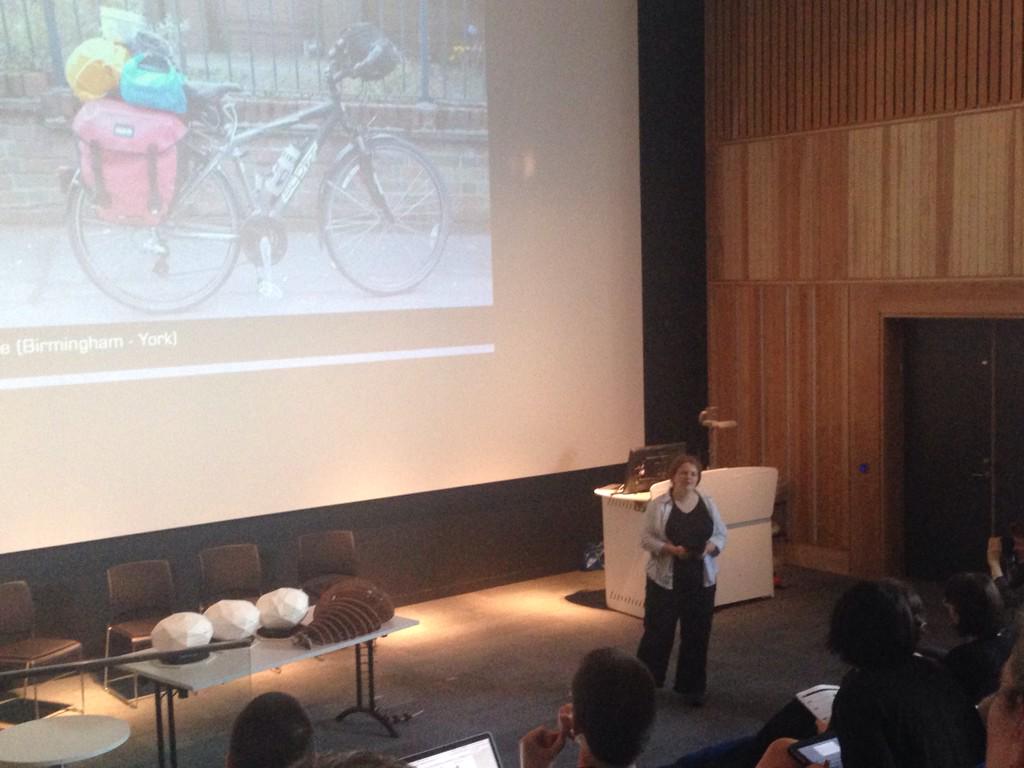
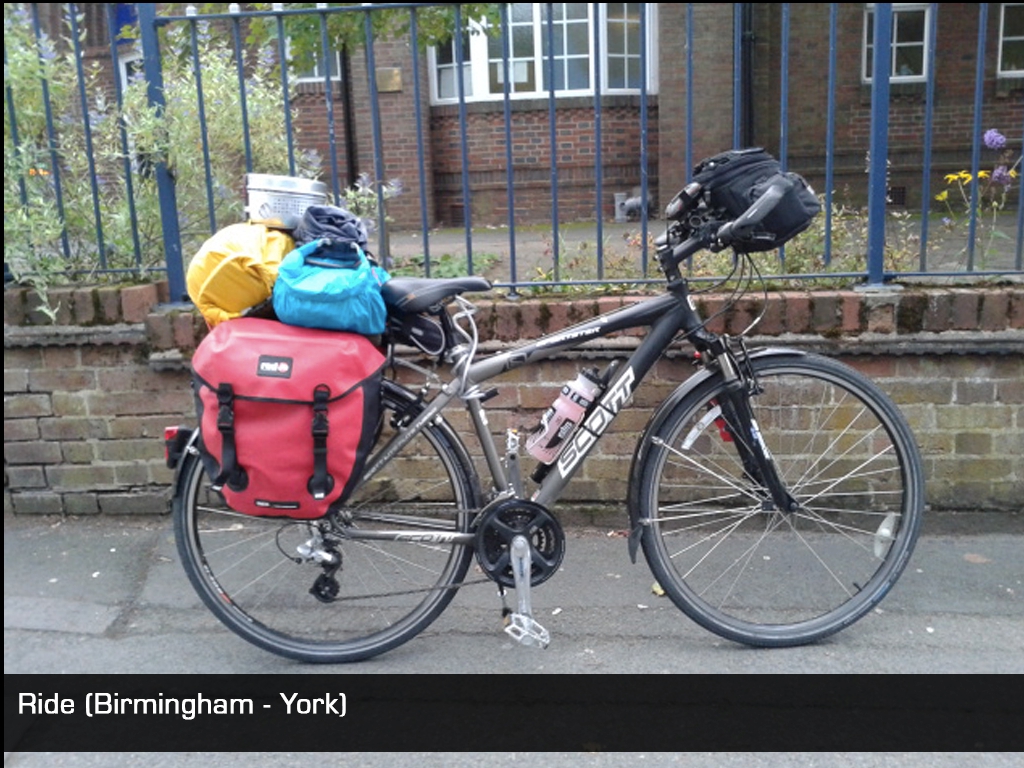
I cycled between Birmingham and York. Back in Birmingham, a sculpture I had made moved in response to how much effort I was having to put in at the other end of the connection.

http://npugh.co.uk/tag/ride_birmingham_-_york/

img8

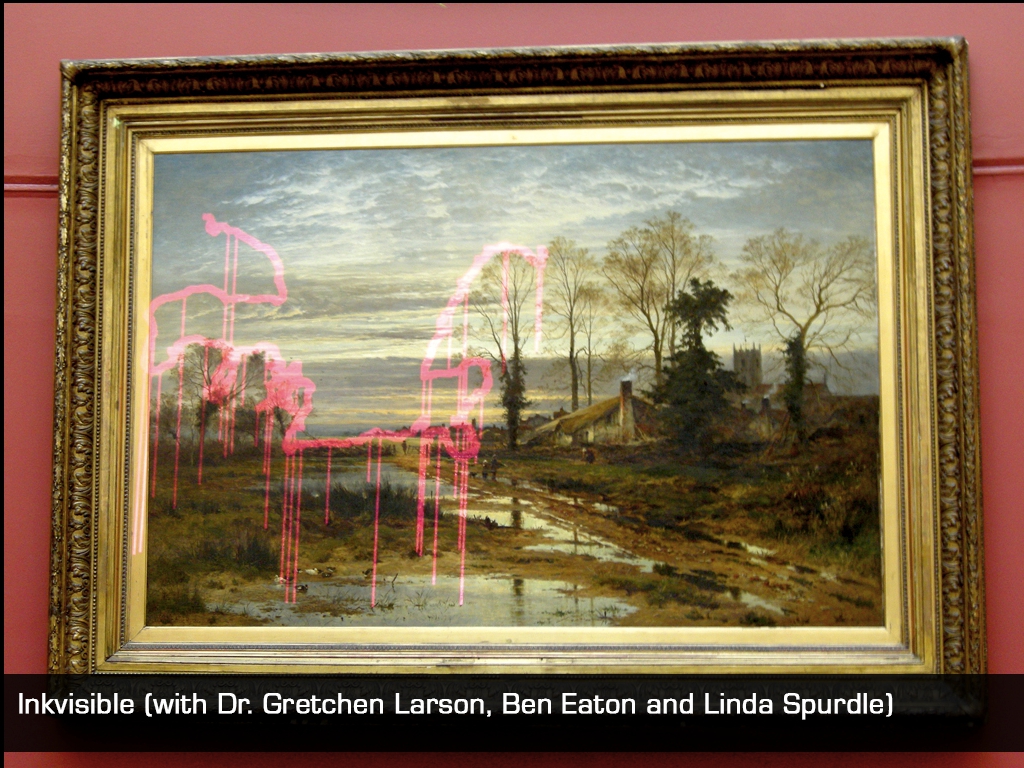
I worked in a team that allowed visitors to project graffiti onto paintings in BM&AG. We did this so we could ask questions about behaviour, power and authorship in weighty cultural institutions.

http://npugh.co.uk/tag/inkvisible/
http://wearecaper.com/portfolio/kings-cultural-institute-creative-labs/
http://www.kcl.ac.uk/cultural/culturalinstitute/showcase/current/kei/artsdigital/inkvisible.aspx

img9

And one of my favourites was this monkey that would only come out and swing on its trapeze if everyone in the room stood still for 20 seconds. Except I didn’t tell people that’s what they had to do. It was a beautiful, beautiful thing to see people experimenting and passing on guesses and knowledge across the weekend.

Also, it turned out that asking a group of people to stand still for 20 seconds – and at the same time – is really, really hard!

http://npugh.co.uk/blog/trapeze_monkey/

img10

I also work to develop the ecosystem that these sorts of projects sit within. As part of a collective called Many & Varied, a few weeks ago we ran a conference called Bees in a Tin.

Here the call was for interesting people making unique interfaces for the world around them. We’re also running a series of monthly Salons to support practitioners – you can’t go to the first one, because it’s this afternoon, but if you feel like a bit of an outsider or an inbetweener, check them out and get involved.

As you may be able to tell, I don’t really have a convenient label I can use for myself when people ask me what I do. I have to illustrate it.

So I’ve developed this…

https://twitter.com/ManyVaried
http://manyandvaried.org.uk/projects/bees2015/
http://manyandvaried.org.uk/tag/bees_in_a_tin_2015/http://manyandvaried.org.uk/projects/salons_2015/

img11

This is what I usually use to communicate the territory that I’m exploring:
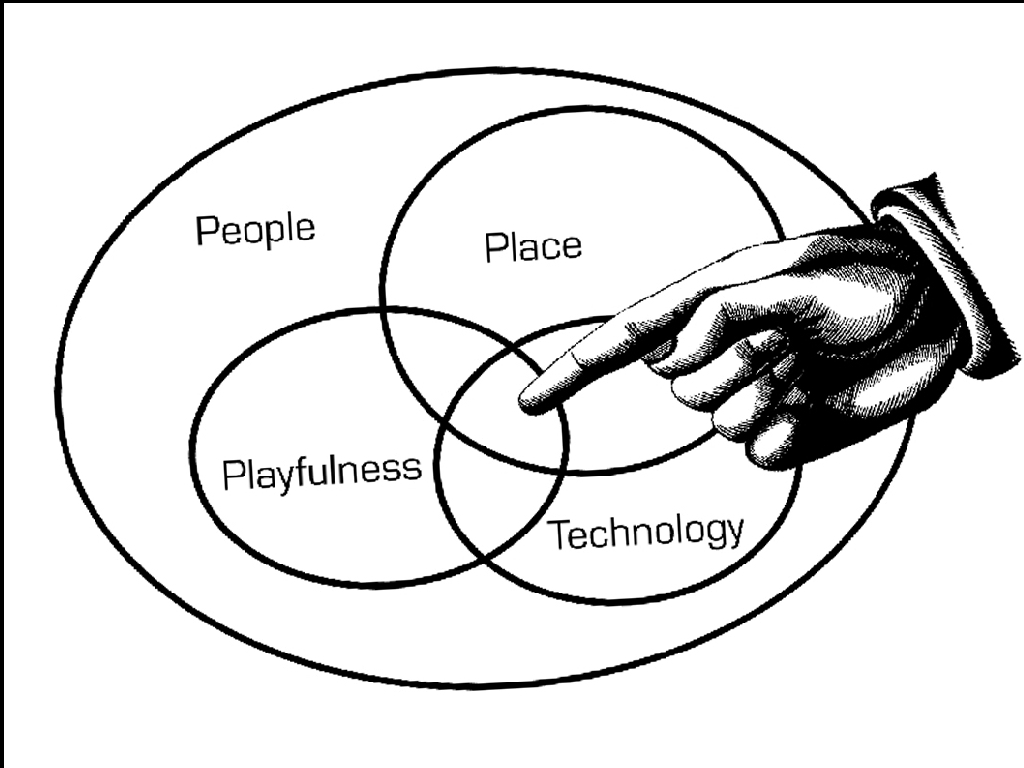
the intersection of people, place, playfulness and technology.

I’m interested in how we interact with the things around us – mostly physical spaces, but I also include social landscapes within that.

A quick definition:
Physical computing is the use of software and hardware that senses – and responds to – the physical world. Sometimes it makes stuff happen back out in the physical world too.

In recent years I’ve been using objects that include elements of physical computing.

I speak about these in terms of being ‘place interfaces’. Because, with these, I’m thinking about the interaction between the object and the person using it, as well as the interaction between the object and person combined and the space around them together.

The Venn diagram’s a really effective way of quickly and intuitively getting people understanding the sort of area I’m exploring.

At least, that’s what I think it does!

img12

Which is probably as good a time as any to invoke this xkcd cartoon…

The first two rows in the sequence are people failing to warn other people about big holes in the ground.

They fall in.

However, in the third row the guy in the beret recognises that the other one doesn’t understand, so he takes him by the hand and he shows him.

The accompanying text says “Anyone who says that they’re great at communicating but ‘people are bad at listening’ is confused about how communication works.”

Communication is a dance for two, right?

https://xkcd.com/1028/

img13

Rewind.

Before I studied art, I studied Materials Engineering.

I don’t view them as being wildly different – in fact I describe them both as “asking questions about the world around me, doing experiments to find out and then communicating the results”.

It’s easy to forget the two-ness of effective communication though, isn’t it?

img14

img15

Hello, my name’s Nikki.

I was an art student at BCU before it was BCU, and have been working as an artist for the last 11 years.

Who are you guys?

It’s a bit weird when you think about it, isn’t it? I’ve prepped this whole thing about communicating, but I don’t even know who it is that I’m talking to, or why you’re here!

How often do we do that, and, is there a better way?

I’m going to talk for a bit longer and then there’s time for some conversation towards the end. I’m also around for a bit at lunch time before I go to the Salon I mentioned before – come and communicate with me!

img17

img16

Hello, my name’s Nikki.

I was an art student at BCU before it was BCU, I’ve been working as an artist for the last 11 years …and I recently went back to uni again.

For the last 3 years I’ve been doing a part time MA because I wanted to investigate where my practice sits in relation to various bodies of research.

Doing the MA part time and whilst having an ongoing art practice means I’m coming at the concept of research from slightly conflicted insider and outsider positions at the same time.

This will almost certainly become apparent…

img18

Proper Research!
You know: capital P, capital R.

As well as using that “doing experiments to find out about the world” thing I mentioned earlier, I’ve described my work as being “enquiry-led” for a long time now.

But somehow, coming to see my work’s potential for being Proper Research has been quite a recent realisation.

This is partly because up until recently I hadn’t really been exposed to the idea that art could be a valid way of doing research. To illustrate this, just do a google image search for ‘research’.

img19

Science!

img20

It’s all science!

img21

And all science is blue

img22

and glassy!

img23

Sometimes it’s even the same glassy science, just rearranged slightly with a molecule photoshopped into the background!

Really?!

There’s evidently a lot more demand for stock photography of scientific research (or what we imagine scientific research might be) than there is for images of research through art.

img24

Here’s a picture of a cat to make you feel better.

So yes, art practice as research. I’m still figuring out what this might mean for me.

I’m reasonably comfortable with the doing-the-experimenting stage, and the observing-interesting-results stage, but I don’t think I yet do enough to claim the outcomes or the insights. So I don’t think I declare Proper Research to be achieved just yet.

But who decides what Proper Research is?

For those of us in Academia, we’re no doubt being conditioned to think of giving papers at conferences and of writing journal articles.

I’ve definitely found these things useful for absorbing the research of others and for getting a sense of how my work sits in relation to that.

…but this is a note to self to remind me to not accept that as the only option. It’s a construct of an established system, with established boundaries.

…but I’m always drawn to the edges of things and sometimes, if you push, they move…

img25

I have to confess I’ve not read a lot of theory in the past – largely because of either finding it completely impenetrable or it not interesting me.

Over the last couple of years though I’ve been hanging out with Sociologists and the Mobilities Studies gangs more and more, and that’s starting to change.

Mobilities Studies is another one of those Venn diagrams – Sociologists, Geographers and Artists, often working together, exploring the movement of people, things, ideas and data.

It’s a relatively new area of study, so the edges have not yet become fossilised, and through it I’ve struck a vein of writing from people challenging the status quo about how to conduct research, what constitutes research and what does or doesn’t get swept under the carpet when we present our research.

I like it!

You possibly won’t be surprised to hear I’m drawn to it because of the interdisciplinarity too. But these are really all just icing on the cake.

I like it because it speaks to things that I’m interested in.

As a result of this, I have been a lot more motivated to read books and articles; I have so many pdfs of articles I’ve downloaded that I want to read!

Because enthusiasm is important, isn’t it?

Let’s look at it this way though: if I can say I don’t want to engage with someone else’s work because I don’t want to, or because it doesn’t interest me, then I have to accept that other people can say the same about the things I’ve slaved over and put my heart and soul into.

Question:
How do we enthuse people so that they become a receptive audience?

(I don’t have an answer for that, by the way.)

https://en.wikipedia.org/wiki/Mobilities

img26

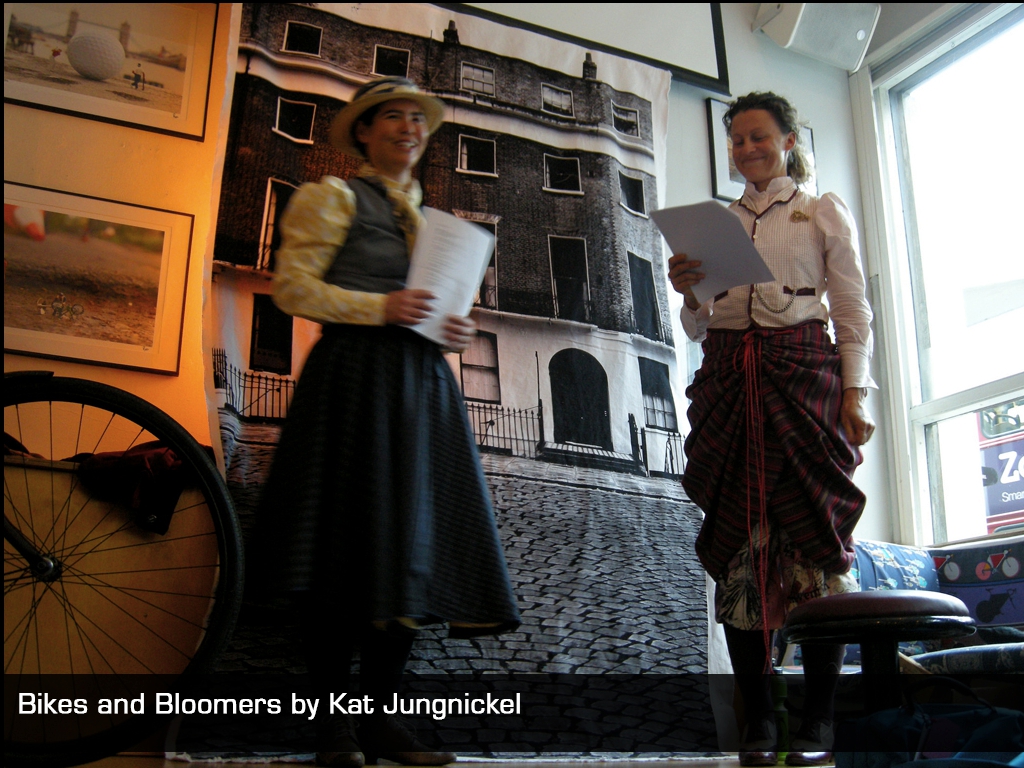
However, I was lucky enough to spend 2 weeks working on Kat Jungnickel’s Bikes and Bloomers project. Kat describes herself as a cycling sewing sociologist and that pretty much sums up the main elements of the project.

She’s researching the transformable garments some Victorian women designed so that they could strike a balance between strict social and dress codes, and safely riding a bicycle so they could benefit from the new freedoms that that offered.

She’s doing and communicating a lot of the research through examining some of the patents filed at the time and then making and wearing a collection of the garments.

http://bikesandbloomers.com
http://www.charlottebarnes.co.uk/140919bikesandbloomers
http://www.katjungnickel.com

img27

Here are the garments transformed into riding mode.

She talks about ‘entanglements’ between art-based methods and other practices that are not accountable to art – for example Sociology and Ethnography.

She talks about the struggle to have these ways of working recognised by the systems of academia.

But she also talks about their value for understanding the world in different ways and for communicating those insights to audiences.

I’ll post a load of links for you when I put this online, but for now, please take that as a call to action to consider the relationship between how you communicate your research and the methods you used to do the research itself in the first place.

How related are they? How related should they be?

http://transmissionsandentanglements.com
http://www.academia.edu/5704062/Methodological_Entanglements_in_the_Field_methods_transitions_and_transmissions
http://www.tandfonline.com/doi/abs/10.1080/1472586X.2014.887263?queryID=%24%7BresultBean.queryID%7D#.VZhonUIo-ZY

img28

This photo is taken from the sharing event. Note that it’s held at a bikey cafe rather than in an ivory tower at the university or in a gallery.

Here Kat and her team wore the garments they’d made and, in the character of the people who designed them, talked through the affordances of the various skirts, capes and bloomers and the contexts that they came out of.

I was only involved in the project for a short time, but I have spoken about that project to lots of different types of people and I’m always impressed by how easy it is to have meaty conversations with people about it.

There’s a way in for everyone, it seems.

Like bikes? Sorted.
Feminist? Yep.
Maker? Got that covered.
History buff? Look at these old photos we tracked down from the relatives.
Also, everyone likes a really good Victorian inventor story, right?!

Questions:
Could or should your research provide multiple entry points? Multiple ways for people to access it? Multiple ways for it to access people?

http://www.charlottebarnes.co.uk/140613bikesandbloomers

img29

I’m not very good at making art that gets hung up in galleries. For me galleries are more often than not hubs for activity that then leaks out into the surrounding outdoor spaces.

I use playtesting a lot – I gather groups of people together to try out prototypes at different stages of a project’s evolution. We try things out, I pay attention to the unexpected things that happen and these can then go on to steer the next steps in development.

More often than not galleries are, for me, where research takes place rather than being a place where a finished product is displayed.

Colony is a project I’ve been working on for 4 or 5 years now, and opening it up to playtester audiences is a nice way of invigorating the work. It also gives me lots of opportunities to try out different ways of explaining things and to home in on what the key message might be.

It’s a chance for me to practice the two-ness of my communication.

Also, If I’m getting faces like this when people first encounter the things I make, then I judge I’m on the right track with the enthusiasm thing!

http://npugh.co.uk/tag/colony/
http://npugh.co.uk/?s=playtesting

Can I have a volunteer, please?

Jerome Turner tweeted what happened next…

Photo: Jerome Turner

Photo: Jerome Turner

So this is one of the ‘critters’ from the Colony project. The plan is to make half a dozen or so of them and then they get carried through the city.

They make tangible the behaviour of different radio waves interacting with the built environment, and I’m interested in how this works as a sort of extended sense and how, in turn, carrying one of these and being part of the group affects how you navigate through the urban environment.

img30

But urban environments also contain people, as well as architecture.

One of the things that was really apparent from this playtest we did in Bristol is that lots of people felt compelled to come up and start a conversation or ask if they too could hold a critter too, or to have their photo taken with it.

This is going to be an interesting thing to have to work through. Do I design the experience to allow for these actions? Do I mediate the interest from these secondary audiences? Do I not allow for them at all and instruct the critter carriers to ignore them as they make their journey?

I think that’s a really interesting tension within the context of this conference. What happens when you have engaged, curious, benign audiences, but the timing’s just inconvenient?

Does anyone have any questions or requests for our volunteer? If so, now is the time!

https://www.flickr.com/photos/nikki_pugh/sets/72157647557546055

img31

I presented Colony last year at the Networked Urban Mobilities conference.

This involved having to flatpack one so it fit into my rucksack for the flight to Copenhagen, and also having to reassemble it at the other end.

I ‘performed’ the reassembly in the canteen to provide an opportunity for people to have a chance to start a conversation with me.

Yes a straight powerpoint would have been easier, but I work with bodies and experiences and spectacle and I’m prepared to put some effort in to convey those in ways beyond photographs.

That said, I’m increasingly being drawn into the world of academic papers and conferences. I get some value from doing this – and early signs are that it’s a two-way value – but it does highlight how outside of these systems I am at the same time.

Without an institution supporting me, delegate fees, travel and accommodation can be prohibitive.

How can I push at established conventions of convening in order to share the stories I want to share, with the people I’d like to share them with?

I would like to do a PhD at some point …I think… but not straight after finishing my Masters. So here I’m talking from the viewpoint of someone all too aware they’re about to have their library card taken away!

http://npugh.co.uk/blog/developing_colony_presentation_at_networked_urban_mobilities/
https://ruconf.ruc.dk/index.php/NetUrMo/NUM/schedConf/presentations

img32

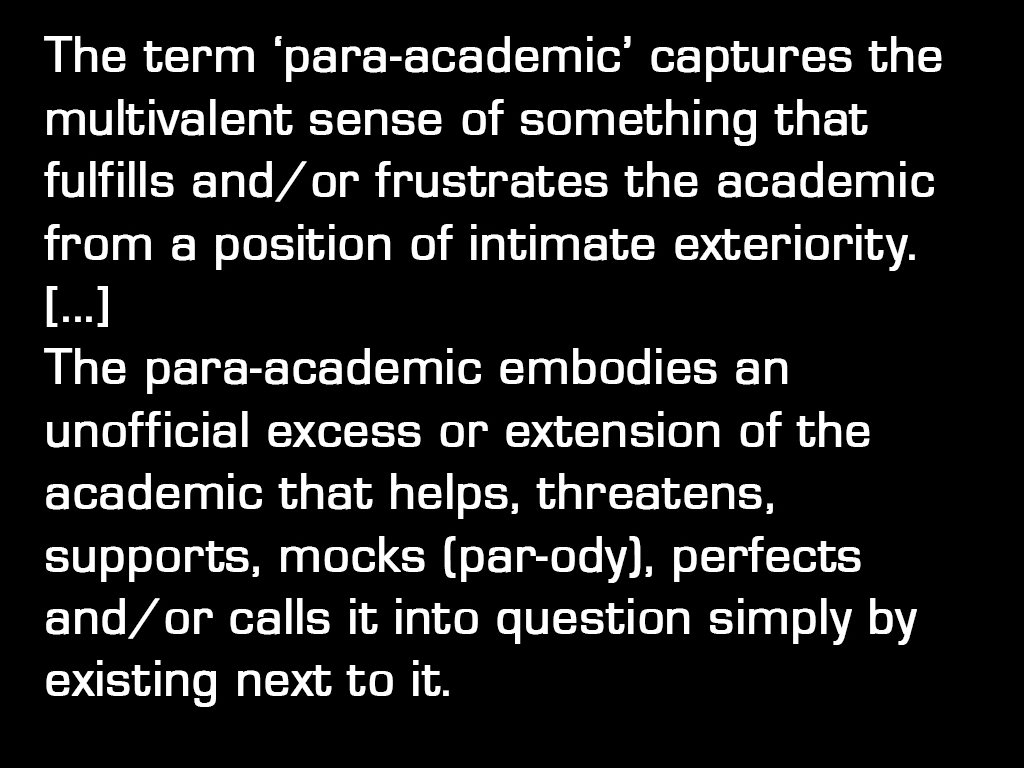
The term ‘para-academic’ captures the multivalent sense of something that fulfills and/or frustrates the academic from a position of intimate exteriority. Para-academia is that which is beside academia, a place whose logic encompasses many reasons and no reason at all (para-, “alongside, beyond, altered, contrary,” from Greek para-, “beside, near, from, against, contrary to,” cognate with Sanskrit para “beyond”). The para is the domain of: shadow, paradigm, daemon, parasite, supplement, amateur, elite. The para-academic embodies an unofficial excess or extension of the academic that helps, threatens, supports, mocks (par-ody), perfects and/or calls it into question simply by existing next to it.

So, it may already be that as a non-institutionalised artist I’m already para-academic.

Back when I was doing a lot of projects in schools, I often felt under pressure to know about curricula and learning outcomes and the like.

This was a trap.

I was there precisely because I was not a teacher. My value was in being something different.

Questions:
Should I be as protective of my not being an academic? Should I be protective of my identity as an independent artist? Are the two mutually exclusive? Are these silly questions to be asking?

Maybe there’s a place just close enough to academia that I can get the stimulation I crave, but outside it enough that I can retain my identity as artist?

Maybe that place is a collaboration?

http://punctumbooks.com/blog/party-or-is-it-a-panel-discussion-on-para-academic-publishing-or-both/
https://ia601405.us.archive.org/19/items/paraacademic/paraacademic.pdf

img33

I recently read a journal article I really liked, it’s called ‘Cycling through Dark Space: Apprehending Landscape Otherwise’.

I started reading it because it called to my enthusiasm. I’ve done a few night rides, enjoyed them, and I’d like to do more.

As I continued reading it, I found it really relevant to my work in the way that it talked about experiencing landscapes via senses other than sight.

Having finished reading it, it now also signifies a small breakthrough that I had.

You see, the article takes the form of field notes from one of the authors combined with an academic style commentary wrapped around it. What if teamwork is an option?! What if I’m not wholly responsible for all aspects of the research or all of the communication?

Actually, the realisation that I could use field notes at all is a bit of a new one too.

I think I’ve encountered a lot of techniques from various places – especially ethnography – that I’m quite keen to poach and adapt to my work.

However, in the same way that the written word isn’t always the best way to communicate an idea, with things like this I reckon thinking about it in your head isn’t always the best way to decide if a particular way of working is right for you or not. So I plan to get empirical and to design projects that will let me try these on for size – experience them – enable me to feel if they fit me.

http://www.tandfonline.com/doi/abs/10.1080/17450101.2014.956417

img34

…but for now I’m still doing my MA…

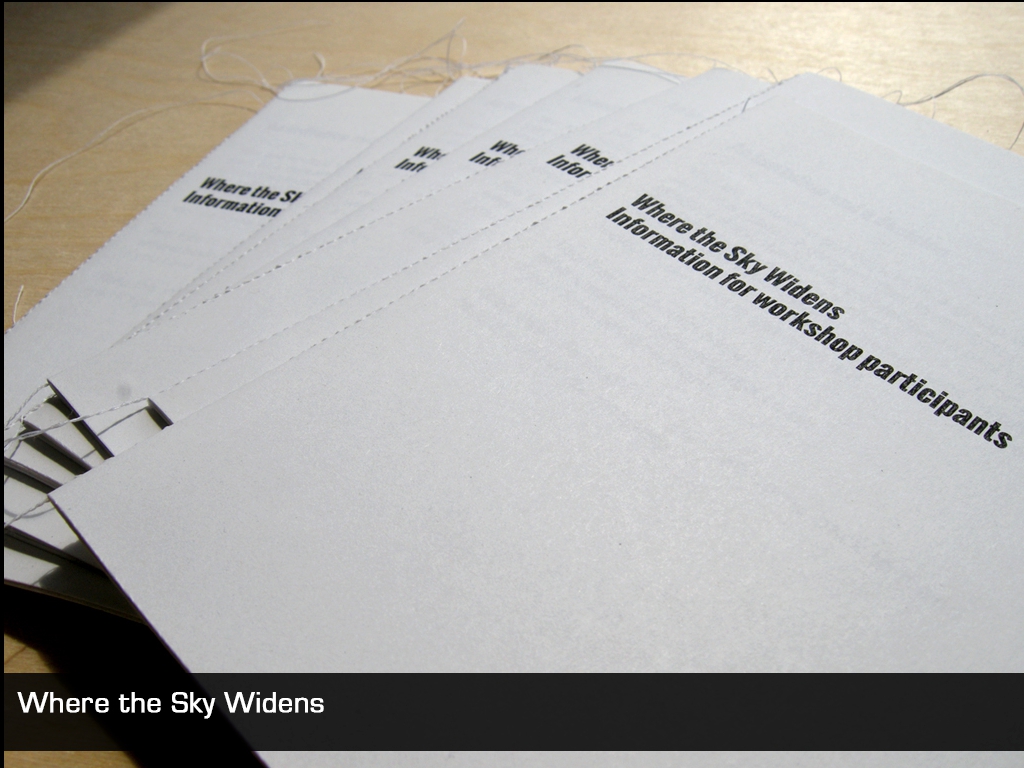
My final project has been based around a series of workshops, so I have to follow particular procedures around informed consent. Which means giving people a load of written information.

I tried to consider my participant information sheets as objects. To give the same thought to form and materials as I would to a sculpture.

Provocation:
As with the research you have done, think about what you want to communicate to people about the research you are about to do. Think about the tactile, sensuous ways you can do that.

http://npugh.co.uk/tag/where_the_sky_widens/

Can I have 3 volunteers, please?

img35

[Spoken only to the first volunteer]
In a short while I will invite you to walk with someone who endures.

She is finding it incredibly difficult to walk at the moment because she is in so much pain. In two week’s time she will have a hip replacement operation. A few months after that she will also have the other hip replaced. She hopes that the other side of surgery will come a time when she can climb a particular hill in the Lake District again.

This is a walk of hope and of ambition.

img36

[Spoken only to the second volunteer]

In a short while I’ll invite you to walk with a man and a boy. They are the same person, but when you walk the man sees this place as he remembers it when he was a boy.

He has moved away three times, but each time he is called back to this same cluster of houses.

This is a walk of memory and of belonging.

img37

[Spoken only to the third volunteer]

In a short while I’ll invite you to walk with a distant friend.

The friend is in Australia. Her husband is dying. Not only can you not go to be with them, neither can you find the words to write and offer support from afar.

This walk is your way of signifying to an unfair world that your thoughts are still with them.

This is a walk of separation and of connection.

Please walk with your companions.

Ezinne MT shared these two photos of the volunteers walking with the pods and the people’s stories they represented:

Photo: Ezinne MT

Photo: Ezinne MT

Photo: Ezinne MT

Photo: Ezinne MT

https://twitter.com/emichaelia/status/616916852506279936/photo/1
https://twitter.com/emichaelia/status/616915162356957184/photo/1

Does anyone have any questions or requests for our volunteers? If so, now is the time!

img38

Here we have an example of a recurring challenge for me.

I work with experiences. If not site specific, then at least very much about being located in a body. I make things that have to be interacted with, that have to be carried, that have to be felt.

I make tools that are intended to be used.

Quite often I make tools because the tools I need to ask the questions I want to ask, don’t yet exist in the world. I have to make them before I can ask questions of and with them.

Exhibiting things like those pods or the critters from the Colony project is possible, but they are not necessarily where the art is and often I see them as being lifeless and incomplete when they are not in motion with their symbiotic human.

Heaven forbid these things get preserved behind glass in a sterile vitrine! I want people to be able to do more than just passively regard these things from a distance.

For example: The Colony critters are instruments for detecting radio waves in a way that people can sense them and feel emotionally invested in what is revealed.

Until the time comes that we’ve made fully working versions and put them into use, people only see the tools. And yeah, okay, they’re kind of compelling by themselves, but this is not the project. I need to communicate something different. I need to be clear where the research is.

[I need to finish the project!]

img39

Example: The pods are the result of a process. And it’s the process that I’m interested in.

I ran workshops with different groups of people and we used the time it took the participants to make one of these to talk about the distant places that we have strong emotional connections to.

The pods come in kit form and are stuck into shape with PVA glue, so this is a period of several hours, punctuated by …………………. and by ……………….

The crafting and the pace of the materials made a particular space for conversation. Slow space.

It was the potential within this, and also the way the people related to their pods once they had been brought to life, that I was interested in.

Not the pods themselves – they are the bare minimum to allow the other stuff to happen.

As a way of communicating that project, scenes like this don’t do a lot for me.

https://www.flickr.com/photos/nikki_pugh/sets/72157652348168280
https://www.flickr.com/photos/nikki_pugh/sets/72157651285885910
https://www.flickr.com/photos/nikki_pugh/sets/72157651899634919

img40

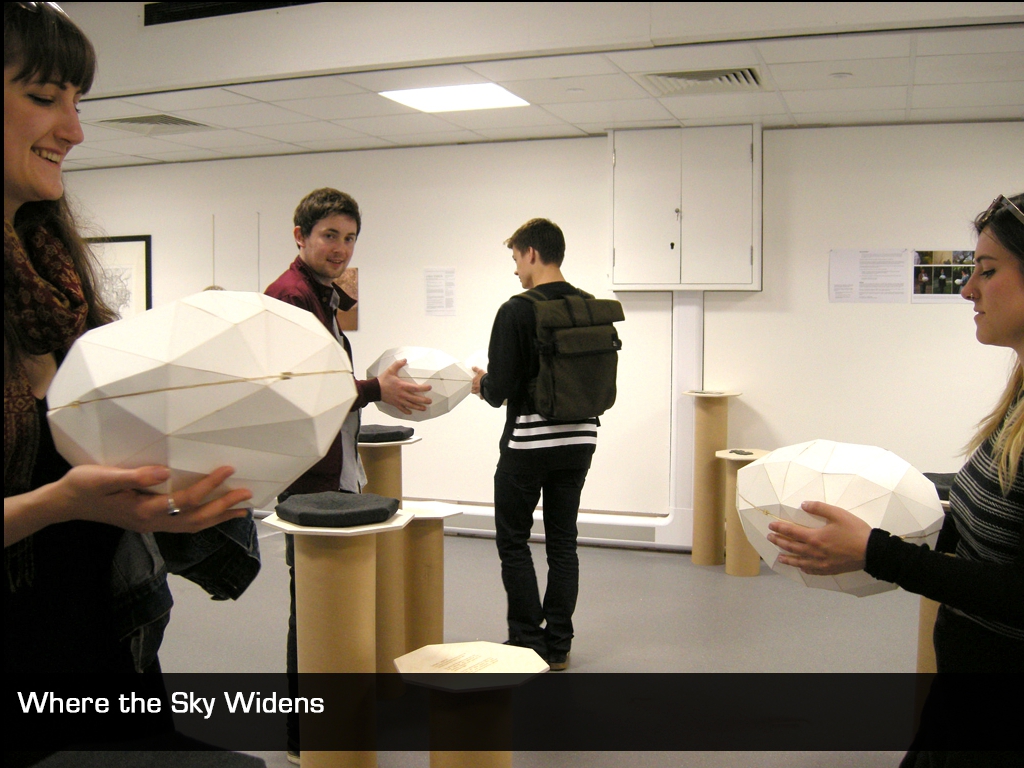
Put the pods into people’s hands though, and watch for the moment when they get it, and that’s infinitely more satisfying!

Those faces. That’s when I know I’ve communicated something.

https://www.flickr.com/photos/nikki_pugh/sets/72157654066662452

I’m going to stop talking at you now.


Copyright and permissions:

General blog contents released under a Creative Commons by-nc-sa license. Artworks and other projects copyright Nicola Pugh 2003-2026, all rights reserved.
If in doubt, ask.
The theme used on this WordPress-powered site started off life as Modern Clix, by Rodrigo Galindez.

RSS Feed.