June 2, 2015

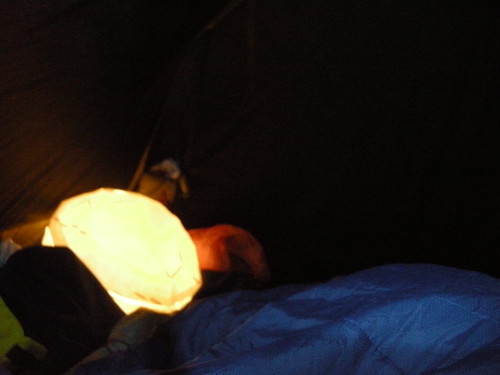
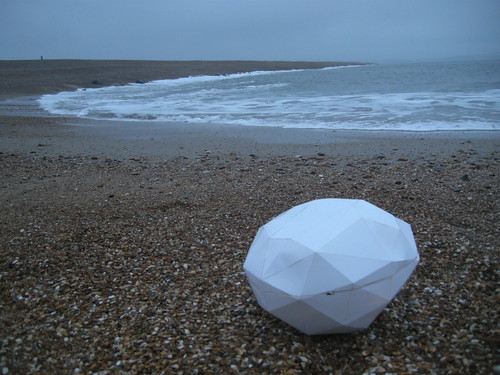
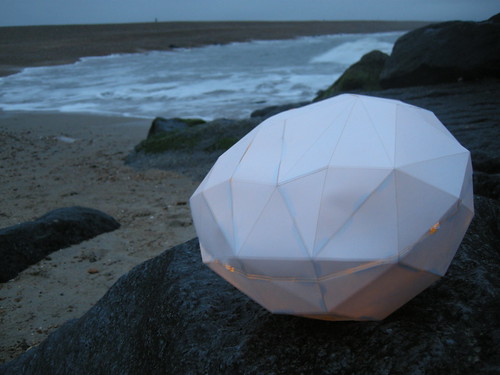
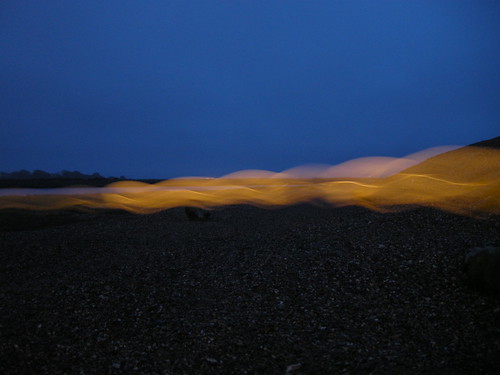
Where the Sky Widens pods in the dark

One of the questions I got asked a lot during the Where the Sky Widens workshops was “why did you choose to make them out of that material?”. That material being white cartridge paper.

This is the reason why:

glowing pods

Back in 2012 when I started doing the early work for what was later to become this project, the image in my mind’s eye – the one that compelled me to make these things happen in order to find out what it would be like – was of a group of people walking at a meditative pace around a public space at dusk. Each person would be carrying a pod and, against the blues and pinks and reds of the day’s end, these would also be adding their own gentle light.

Well, we didn’t nail the sunset, but at the end of the workshop at Lancaster University we did find ourselves in a black-out installation space with our completed pods. There was an examination taking place in the room next door, so this was all in silence: pods being regarded, carried, placed, held, offered and gathered together.

Jonathan Kemp took the following photos, capturing something of the experience:

glowing pod

glowing pod

glowing pods

glowing pod

glowing pod

glowing pods

Where the Sky Widens – Shropshire

Spending a few hours with a pod was all well and good, but what’s it like to spend a lengthy amount of time with one?

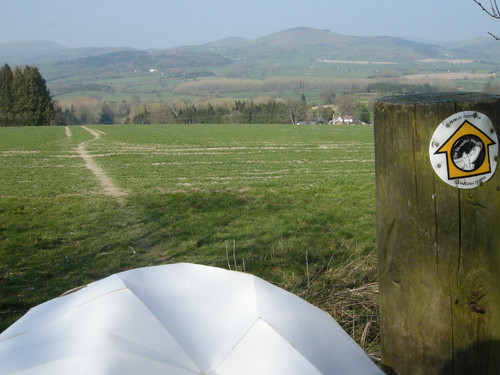
I took myself, a pod and a tent up into the hills of Shropshire to find out. (Click for the full wide-sky version of that image.)

Where the Sky Widens - Shropshire

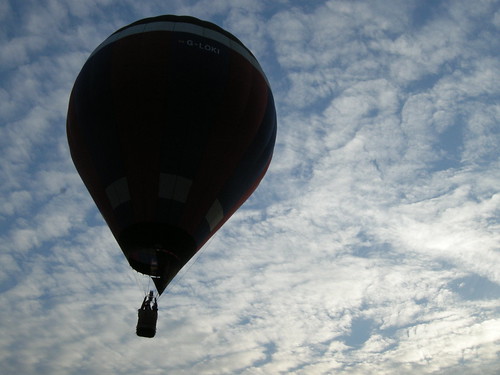
These guys launching from a few tens of metres behind my newly-pitched tent helped to set the tone for a few days thinking about journeying, roots and …buttons.

Where the Sky Widens - Shropshire

I walked with the pod…

Where the Sky Widens - Shropshire

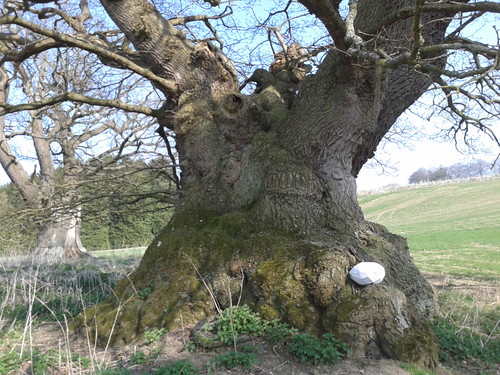
…paused with the pod…

Where the Sky Widens - Shropshire

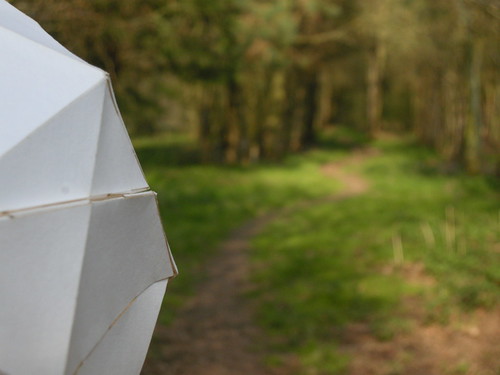
…ventured forth with the pod…

Where the Sky Widens - Shropshire

…and shared a tent with the pod until its battery ran out on the 4th day.

Where the Sky Widens - Shropshire

All the time with it reminding me in which direction the place where I was born is.

I’m not sure what to write as a conclusion – as with most good experiments it raised as many new questions as it answered.

Lots more photos here.

Where the Sky Widens – a walk by the edge

The thing about the interactive devices I make for all these interactive workshops is that I rarely get to experience them for myself.

I took the first steps towards correcting that on a recent trip to the South coast, where I spent a few hours walking along a gravel spit that juts out into the Solent.

After experimenting with programming the pod with a few different locations to respond to, I eventually settled on the place where I was born. Here’s the pod doing its thing on a sweep of the horizon:

It was interesting observing how the pod changed in nature as the sun set and night fell. It’s fairly conspicuous in daylight – prompting a “What’s that?! A dinosaur egg?!” from one passer by – but in low or no light it becomes something of a beacon.

Where the Sky Widens - a walk at the edge

Where the Sky Widens - a walk at the edge

Where the Sky Widens - a walk at the edge

Where the Sky Widens - a walk at the edge

On the drive back home my Mum tried to predict which corners would make the pod wobble. She got quite good at it!

You can see more photos here.

Where the Sky Widens workshop at BOM

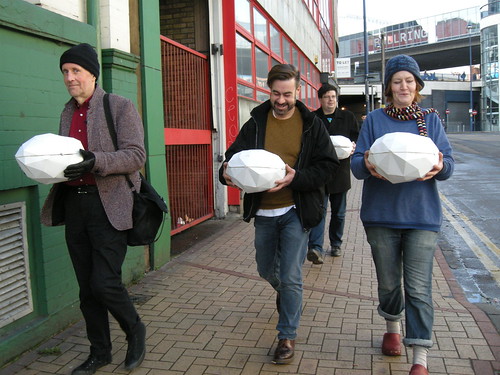
A few weeks back I ran the first of a series of particpatory workshops for my research project Where the Sky Widens. This one was kindly hosted by Birmingham Open Media and participants cam from a public invitation.

DSCN0538

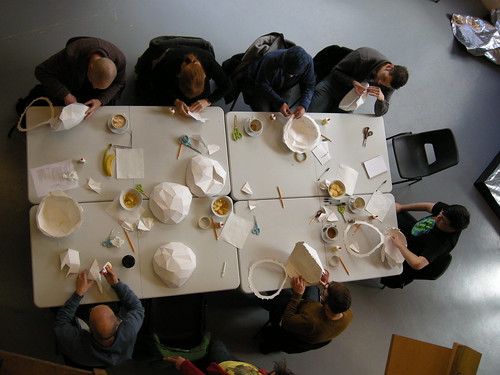
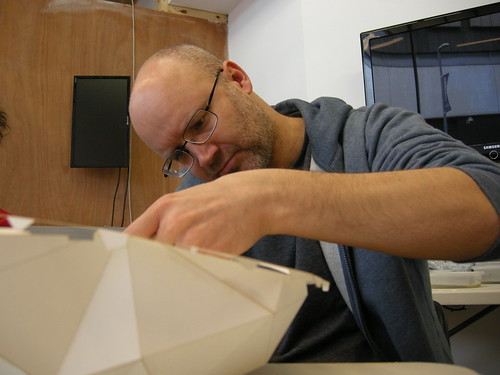
Being the first workshop I was quite hands-off at letting the discussion and pace find their own equilibrium. It was hard at first to encourage people to talk as they first got to grips with the paper templates, but as people found their groove there were some nice meaty topics.

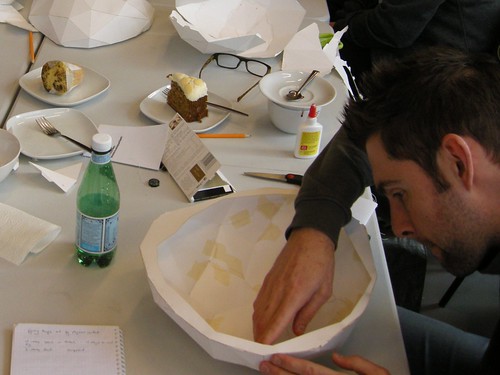
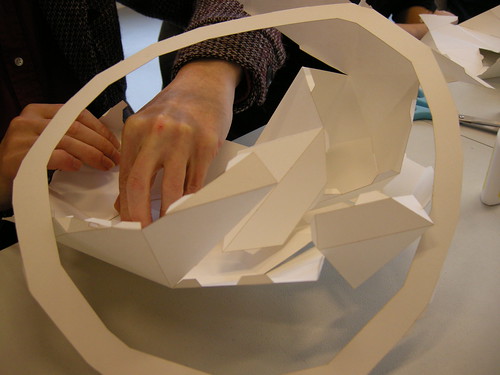
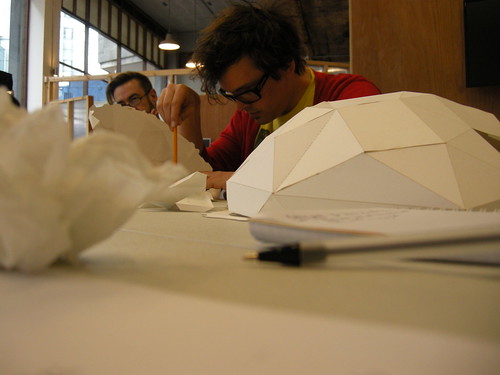
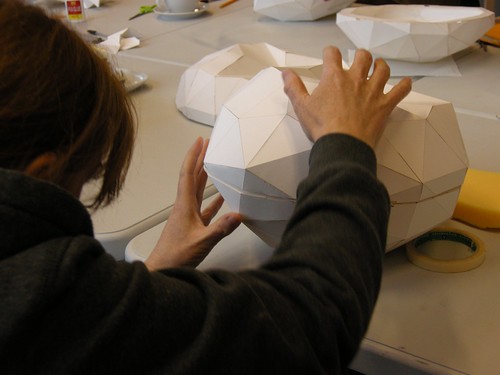
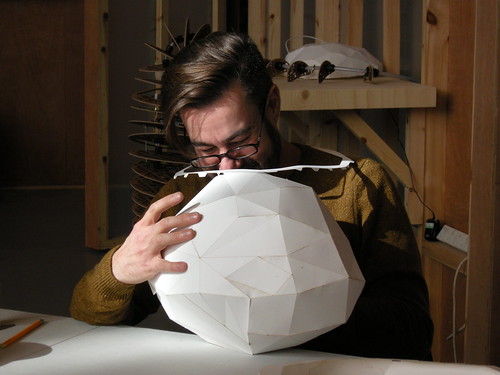
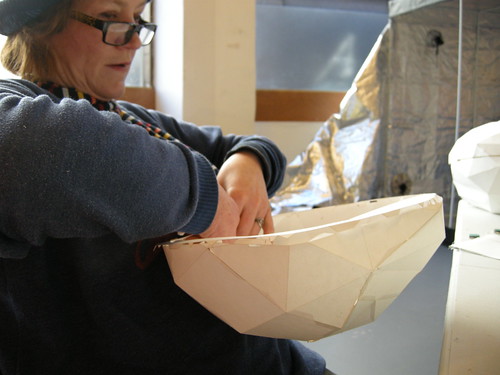
A recurring theme in the feedback has been about the strength of feeling people felt towards their completed pods after crafting it by their own hand rather than just being handed a pre-made object. No wonder really when you look back at the making process:

Where the Sky Widens workshop at BOM

DSCN0555

Where the Sky Widens workshop at BOM

Where the Sky Widens workshop at BOM

DSCN0564

Where the Sky Widens workshop at BOM

Where the Sky Widens workshop at BOM

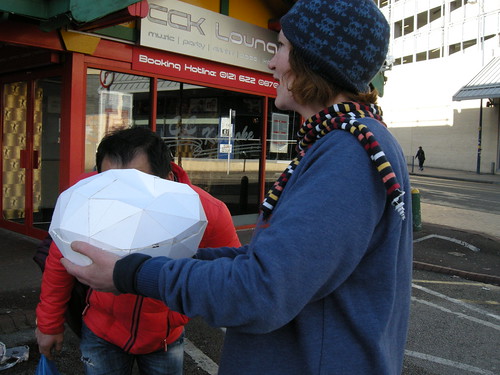
There were some really interesting places selected for people’s pods to respond to, and it was great to see the reactions when the pods first kicked into life and started waggling. Walks were made.

Where the Sky Widens workshop at BOM

Where the Sky Widens workshop at BOM

Where the Sky Widens workshop at BOM

Where the Sky Widens workshop at BOM

…and interactions were had:

Where the Sky Widens workshop at BOM

One person declined to take their work home with them and I’m curious to learn the fate of the others. There has been talk of naming, nesting and re-surfacing…

Dipping into the canal

I have some early stage ideas floating around for a project that needs me to get a sense of what sort of microbial life might be found in the canals. With fellow BOM Fellow Melissa Grant running a pop-up lab for her Bioprospecting Birmingham event it was too good an opportunity – to start turning vague ideas into something tangible – to miss.

First though I had to roll up my sleeves and collect some samples of canal water.

This was done with some trepidation having spent my first three years in Birmingham reading in the student newspaper about people ending up in the canal and the tacit knowledge that what lurks within really isn’t good for you. Still, not as bad as as the Gowanus Canal in New York, eh?

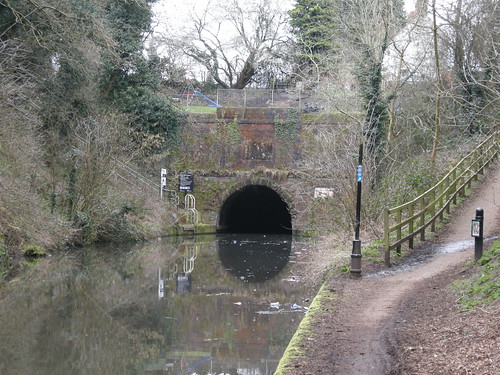
I set off armed with latex gloves and tap water for washing my hands knowing that I wanted to collect 7 samples at intervals along the length of the Worcester & Birmingham Canal between where it emerges from the Wast Hill Tunnel having flowed under Hawkesley and where it ends in Birmingham city centre. I had a rough idea of where each sample would be taken, but I hadn’t really thought through how I would actually get the water from the canal into my prepared glass jars. This became all too apparent when I reached the tunnel.

Canal Prospecting - sample #1

The banks were a bit muddy, so I went to check out the concrete platforms right up by the tunnel thinking I might at least have a solid surface to work from and, looking at the far bank, something to hold onto too. Nope! The gate to the steps down to that side was locked. I’d already ruled out the steps on the near side: although I could get to them, I decided I didn’t want to go very far down them!

Canal Prospecting - sample #1

Nothing for it but to back up a bit, get a bit grubby, reach over the edge and hope for the best.

Canal Prospecting - sample #1

Success!

No loud splashes or tales of woe from the other 6 collection sites either. These were, in order,

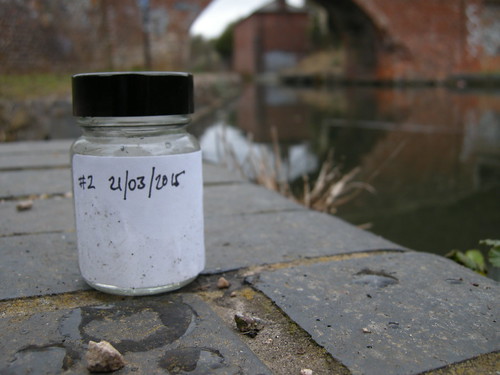
#2 Where the Worcester & Birmingham Canal meets the Stratford-upon-Avon Canal at King’s Norton Junction
Canal Prospecting - sample #2

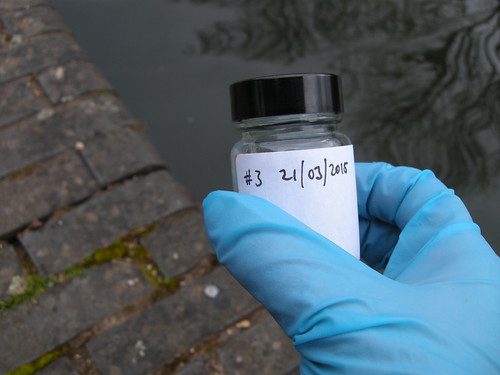
#3 By the electrons and chocolate at Bournville
Canal Prospecting - sample #3

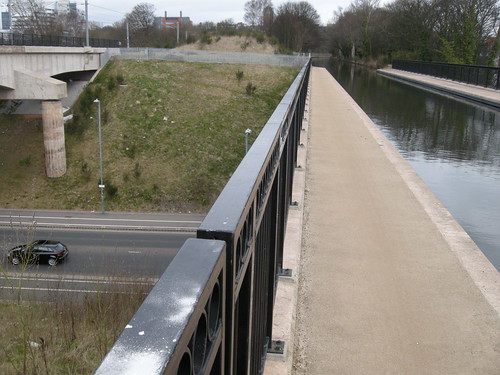
#4 Where the water hangs in the air above the Selly Oak bypass
Canal Prospecting - sample #4

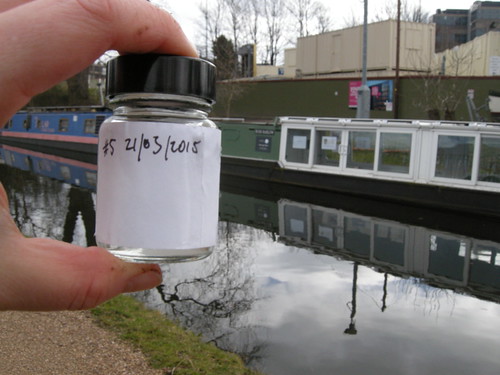
#5 By the Ross Barlow hydrogen-powered canal boat (where the waste product from the fuel cell is water)
Canal Prospecting - sample #5

#6 Under a dark bridge. We think there might be trolls…
Canal Prospecting - sample #6

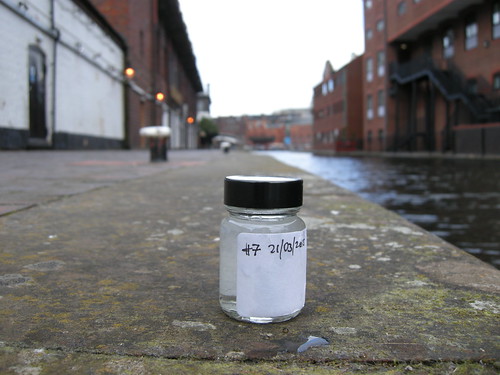
#7 And finally from close to the Gas Street Basin
Canal Prospecting - sample #7

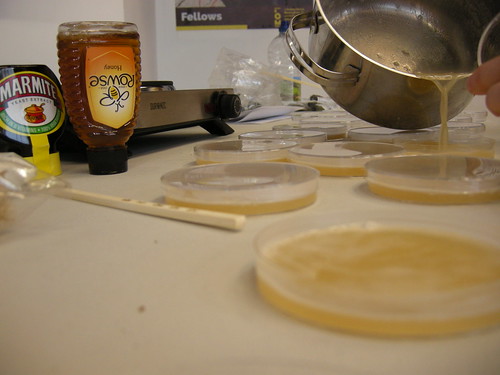
After that it was a quick dash home, a good shower and then on to BOM to check out Melissa’s latest laboratory facility and a recipe for agar growth medium featuring Marmite, honey and powdered milk.

Canal Prospecting - Bioprospecting Birmingham pop-up lab

Canal Prospecting - Bioprospecting Birmingham pop-up lab

Canal Prospecting - Bioprospecting Birmingham pop-up lab

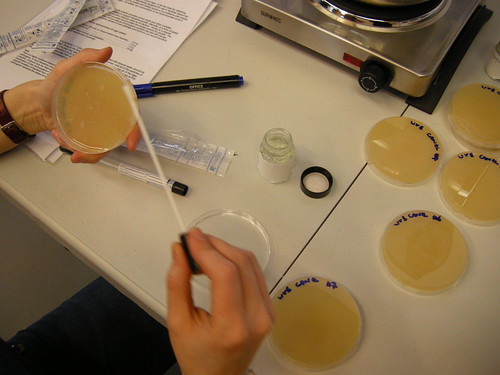
After this curious mixture had been left to set and cool down in the Petri dishes, we swabbed water from each of my collection jars onto the agar plates and …well …nothing really. Now we just have to wait and see what grows on that lovely meal we prepared.

Bioprospecting Birmingham runs through until the end of the week and Melissa’s also giving a talk on Friday. I encourage you to go and see what’s emerged from the canals and also from the other locations around the city that have been swabbed by volunteers.

The rest of my photos from my collection expedition can be viewed on Flickr, and I’ll report back in a bit with (hopefully) some documentation of life forms from the Petri dishes.

Making templates to make things from

Having arrived at a design for the Where the Sky Widens pods, I’ve been developing it into a template form from which workshop participants can assemble their own pods.

I went back to the 3D design software and re-worked the layout of the parts to try and minimise some awkward and fragile sections. There are lots of steps and software jumps in this, so I had to laser cut the results and assemble them again to check that everything was as it should be.

It wasn’t quite, but those details were easy to fix. (I think they’re fixed, anyway!)

One thing that worked really well was the dumb-bells. I want to transport the templates still attached to the A1 sheet of paper they’re cut into. This means we’ll have to finish cutting out parts of the outlines at the workshops and the dumb-bells make getting scissors right up to the cut line a lot easier.

I also experimented with engraving the assembly instructions onto the same sheets, but this made the cut time waaay tooooo loooooong (time == money and I’ll be lasering a lot of these things!)

Twitter has declared the pods also look like tribolites. It’s not wrong.

Pod evolution

As I iterate through different designs for the pods that will be used for the Where the Sky Widens workshops, I’m gradually becoming surrounded by more and more prototypes and I thought it might be useful to chart their evolution so far…

Here’s where it started, two years ago:

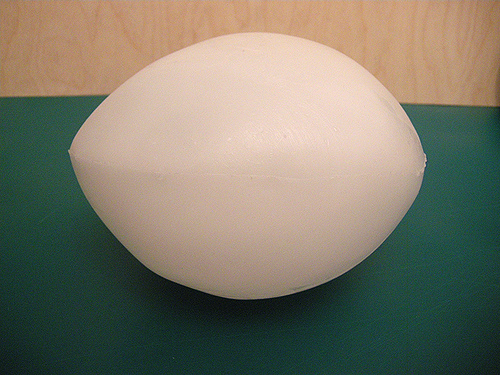
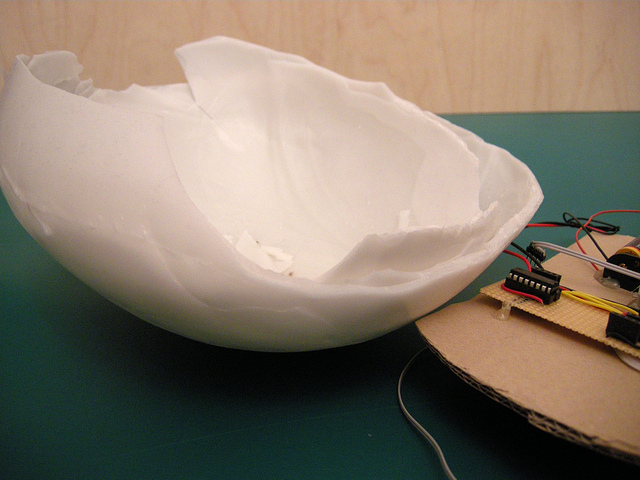
Wax pod: difficult to photograph, but very touchable

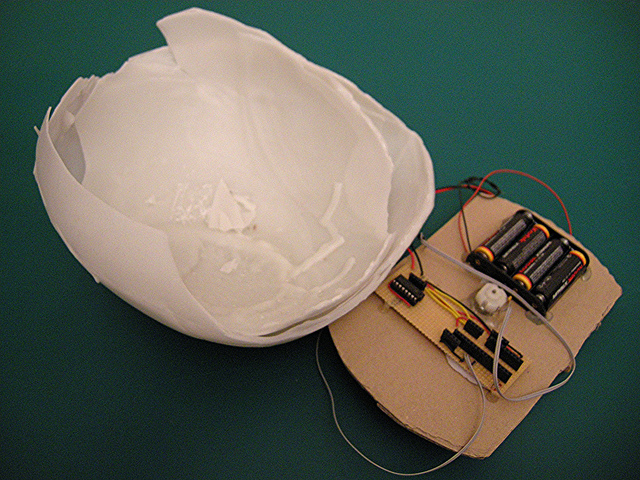
Wax shells cast in plaster of Paris moulds. Wonderfully fragile, lovely translucency, warm to the touch and, well, utterly impractical for housing battery-operated electronics.

Cutting the wax pods in half proved to be somewhat tricky

Different blends of wax were tried, but this was going to be a fundamental challenge…

[time passes…]

After deciding to use the pods in a new guise as part of a workshop series, I had to find corresponding new construction method and materials. The design brief is now to design something that can be assembled from (flat) kit form by a participant over the course of a couple of hours. The pods need to be in two halves to allow access for placing the electronics inside them …and also strong enough to carry the weight of those electronics. Ideally they’d also retain something of the fragility and the translucency.

Time to learn 3D CAD.

The original plan was to design a (curved) two-part clam armature. Participants would then fill in the gaps in the lattice work. Unfortunately a series of delays meant I had to shift the game plan again.

Plan C: folded and glued paper nets:

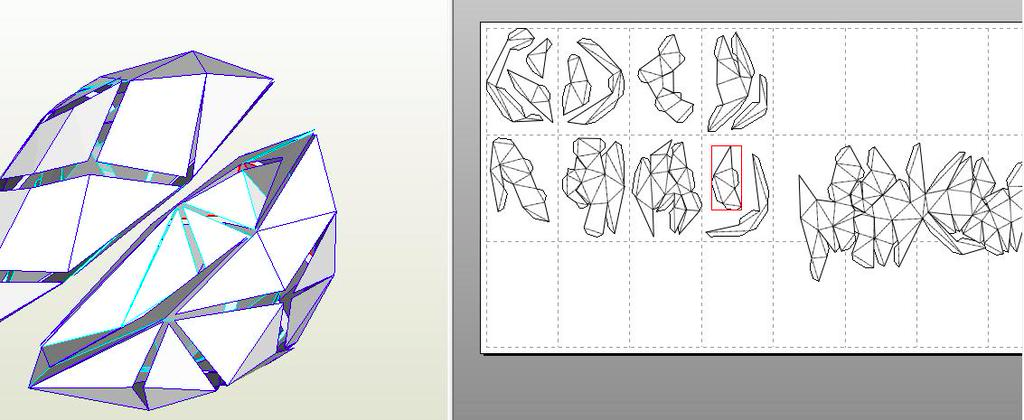
Working first in Rhino and then the papercraft software Pepakura Designer I (with a lot of help!) modelled a sort of crystalline version of the pod and then converted this into an opened-out net.

Unfolded

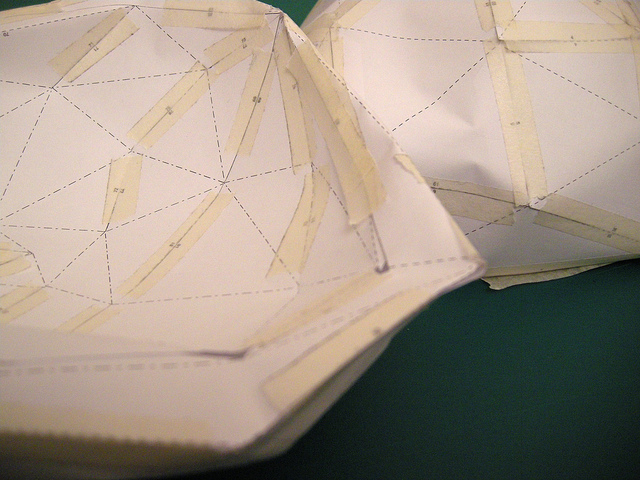
Here’s the first test print done onto several sheets of A4 copier paper:

First test printout of paper pod

… and a laser-cut version out of heavier stock:

The double wall gives it a nice thickness and also increases the strength

I really liked the double wall, however it was taking far too long to glue it together, so I had to revert back to a single wall. I kept the edge around the parting line, though, and that gave enough strength for it to do what it had to do.

The single-walled version

I increased the size a little too, to give more room for the circuitry. Shame I couldn’t get my brain around the software and three dimensions though – nice design, just the two halves didn’t match each other at the seam!

That’s better!

Phew! The next version was large enough, strong enough and both halves fitted together! Some tactical paperclips also did a nice job of keeping both halves together…

Putting a few LEDs underneath the top part also suggests it’s going to work well with internal illumination, too.

Two white LEDs, one red LED and the blue power LED on the Arduino

Here are all the versions together:

Next I have to refine the assembly process: focussing on construction instructions for the participants and how I’m going to present the pod in kit form. Fortunately no allen keys required…

Introducing Where the Sky Widens

Over the next few months I’m going to be working on a series of workshops as part of the final module of an MA I’ve been studying for.

Where the Sky Widens centres around use of paper pods that are aware of where they are in relation to a specific place – somewhere you have a strong emotional connection to – and they will shift their weight in your hands as you walk in the direction of that place, no matter how distant it is.

I’m currently at the stage where I’m prototyping the design of the pods so that they work as things that participants can construct within a few hours. This is involving much learning with 3D CAD software, paper nets and laser-cutting different types of paper and card.

A paper net about to be folded and glued

…and the results!

There’s a bit of refining to be done to the design of the pods, but we’re getting there. Meanwhile I’m also underway with the positional processing and haptic feedback. Yes this involves gluing nuts onto welding rods.

Developing Colony: presentation at Networked Urban Mobilities

I’ve just got back from a few days in Copenhagen where I was taking part in the Networked Urban Mobilities conference organised by the Cosmobilities Network. If you were there and just want to get to my talk, then click here, otherwise read on for the background context…

I’d submitted an abstract under the Art as Mobile Research special session strand:

‘ART AS MOBILE RESEARCH: THE JOURNEY OF MAKING’

In recent years, it has been argued that new research methods are needed to study current mobility practices, discourses and materialities. Next to more traditional social science methods, mobile methods have included participatory observation, virtual and autoethnographies, and various kinds of mapping. Building on these methodological innovations, this session theme explores art as mobile research. Since the early 1990s, artistic research has developed as a distinct field of study. Making art is taken to be a form of doing research and the works of art that result from that research are presented as a form of knowledge. Practical testing is frequently an essential part of this ‘journey of making’ process, enabling ideas and techniques to be resolved before making finished work as part of the whole creative process. Art is not only relevant from the perspective of the aesthetic experience, it is argued, but also as knowledge claim. For artistic practice, this development undermines the modern dichotomy of autonomy and instrumentalism, thus breaking away from the alleged ‘otherness’ of art as a societal domain that has clear boundaries and can be separated from science.

In this session, we investigate how art practices might contribute to mobilities research, as well as how artists reflect on mobile worlds in their work. How can artistic research practices and discourses be drawn upon to develop new ways of understanding and researching the performative ontologies of travel? How can artistic production be seen as a meaningful context to explore mobilities? How can the creative process of the ‘journey of making’ inform mobilities? We invite papers and art works examining these questions.

The session will be organizaed by Kevin Hannam from Leeds Metropolitan University and Peter Peters from Maastricht University.

Nikki Pugh (UK) is an artist working at the intersection of people, place, playfulness and technology. Over the Summer of 2014 she will be in residence at Bristol’s Pervasive Media Lab developing her ongoing project Colony.

Colony is an exploration of how we navigate public space: a small group of people each carry a landscape-reactive ‘creature’ that uses real-time processing of GPS data to generate either a claustrophobic or claustrophilic personality.

Responsible for its well-being, can you find a route across the city that minimises the enclosed or open spaces that distress your creature? How do you balance the elastic pushes and pulls acting on you: guardianship for your creature; the need to get from A to B; the desire to stay with the rest group; the points and stares from onlookers observing your unusual behaviour?

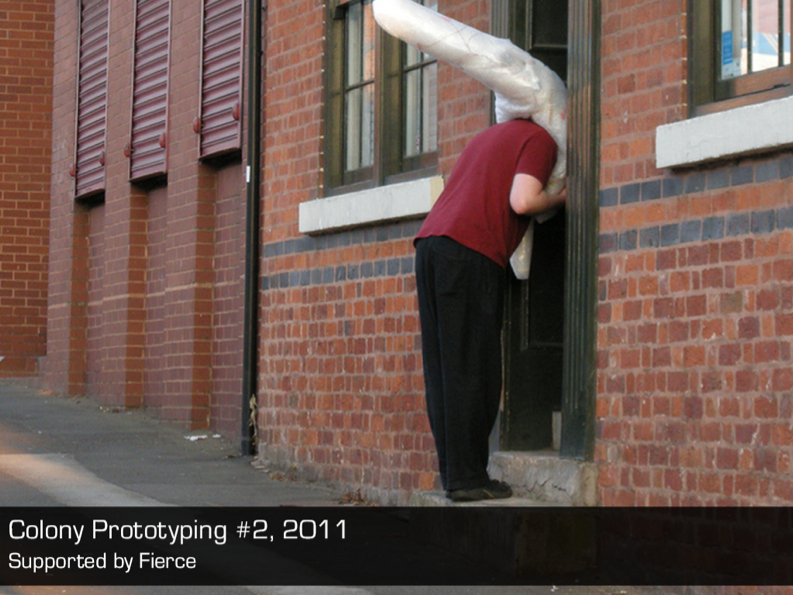
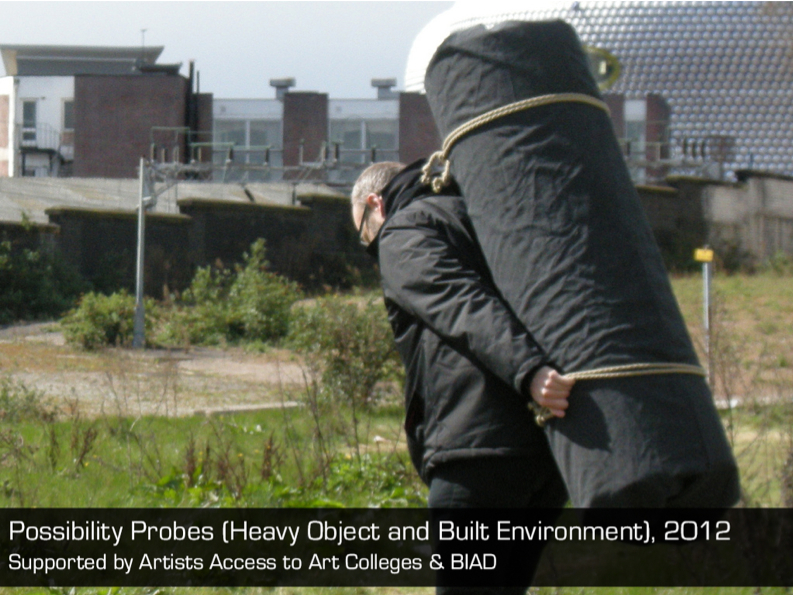
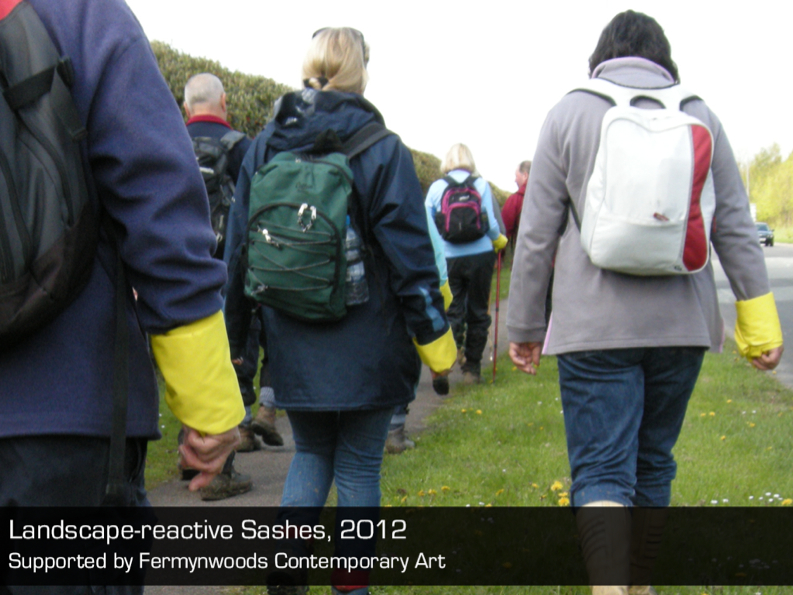
Colony has been developed through a series of prototypes and playtests. Early experiments saw people carrying vibrating bundles of bubblewrap through the post-industrial landscapes of Birmingham, finding excuse and entitlement to explore slightly grimy alleyways or listen to what doorways felt like. A later iteration explored assumptions about secrecy and convenience with large, heavy, cumbersome wooden tubes that hammered out signals according to how built up the surrounding were. Landscape-reactive Sashes (part of the arts programme at the Global Conference on Mobility Futures, Lancaster, 2013) explored what it was like to move as part of a networked group.

At the Networked Urban Mobilities Conference, Nikki will recount how these modules of research build on each other as she investigates the design of the animated, networked, landscape-reactive creatures, the narrative of the events through which they are used, and the affordances the combination of these give for providing new experiences of moving through the city.

My proposal was accepted into what evolved into the ‘Artistic Interventions’ session held last Friday, also speaking alongside Jen Southern, David Pinder, Mike Collier, Peter Peters and Samuel Thulin in a series of 7-slides-each-of-a-minute’s-duration presentations.

This gave me slightly less manoeuvrability than the recent talk at Pecha Kucha Coventry, but I tend to bring props with me and, well, they have a pretty good frame rate!

Accompanying me on the flight over to Denmark was a flat-packed creature fresh from the residency at the Pervasive Media Studio and a couple of heartbeats.

The flatpacked critter being reassembled on the first day of the conference. Adjustable spanners have a habit of being a few millimetres too narrow, but fortunately I had made a lightweight wooden one of the right size to bring with me!

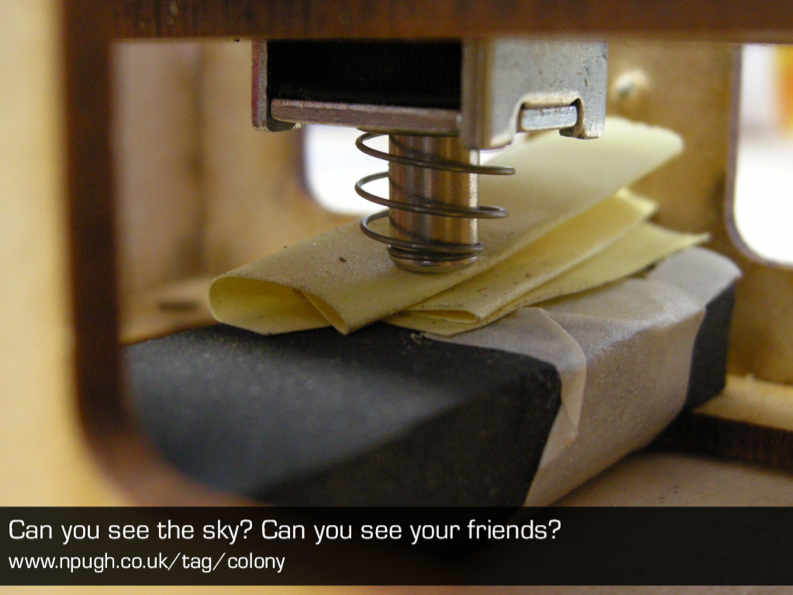
Heartbeat device v4: I took one in a relaxed state and one in a panicked state for people to spend some time with.

The heartbeats were passed around at the start of the session as we waited for further audience members to successfully negotiate the navigational challenge of getting to the room we were in. (The building used to belong to Nokia and seemed to have inherited some of their security quirks. We never did see the sauna, though…) It was interesting to watch people place them on their bodies and feel the different pulses.

Meanwhile the critter was draped over a table and purred away contently throughout my talk.

…And here are the slides and basic content of my presentation (although I did go off piste a little bit).

Hi, I’m Nikki and in 2010 I realised I was working here.

I’d just spent a few years involved with hackspaces and pervasive gaming.
So, peer-to-peer skills-sharing with a technological bent and also grownups doing playful things in public places.

What I took from the hackspace stuff was a sense of possibility that someone like me – with next to no formal training in electronics or coding – could design and make my own technology.

I don’t really get on with screens; I’m much more interested in working with pounding hearts and the hairs on the back of your neck. Making my own devices means I can choose alternative ways of interfacing with the tech, with each other and with the world(s) around us.

My practice is centred on exploring how we interact with and perceive our surroundings. By adding in sensors and microcomputers to sculptural and worn forms, I could now explore extending or adjusting our familiar senses and our everyday experiences of place.

I wanted to work on a project that would enable me to explore my relationship with that territory in the Venn diagram. That project is Colony and I’m going to give you an overview of key stages in its evolution so far.

I had a fleeting image of a small group of people, each responsible for the well-being of some sort of creature they were carrying.

I was interested in the different pushes and pulls that I thought would be acting on the people carrying the creatures. Curious as to how all those would interplay to affect the experience of navigating across a city in a group.

The first version I made was a simple bundle of bubble wrap with vibration motors down its length, programmed to go off at randomly-selected intervals and intensities.

One of the participants blogged this comment.

She also described how it was a passport to go down grimy alleyways and look over walls.

I like to think of the things I make as being permission givers.
Permission to go to new places, permission to behave differently, permission to be playful, permission to talk to strangers.

Feeling I had a successful proof of concept, the next step was to make the bundles landscape-reactive rather than just behaving randomly. This was to be the extended sense and the cue for selecting one path through the city over another.

I had a technique I’d been using that relates errors in GPS positional calculations back to the built-up-ness of the urban environment, so I used that to make the creatures claustrophobic.

I’m not going to go into detail about the system now, but feel free to talk with me about it afterwards..

What we got from this location-aware version was an excuse not just to go to different places, but to interact with those places in non-usual ways as people experimented with prompting and sensing different levels of distress in their creatures.

We all agreed there was something very nice in the soft, warm, light, secretive cuddliness of the creatures so far, so there was really only one thing to do next.

I made 3 of these wooden, heavy, cumbersome drum versions. They run off the same technology, but rather than using vibrations to secretly communicate their state to the person carrying them, these beat out a tapping noise that anyone standing nearby can hear.

I needed to challenge our first-reaction thoughts about what a ‘good’ design might be. What would be the affordances of something contrary to these?

In a world where our mobile devices are constantly sold to us on the basis of being smaller and sleeker and lighter, I also wanted to investigate carrying something burdensome. To constantly be aware of its presence.

The drums were not padded and they would get painful on your shoulder.
The cloth they were wrapped in was slightly abrasive, and would graze your knuckles as you gripped onto the cord.
The bulk of the thing would block your vision.

And people carried them around for much, much longer than I anticipated!

It’s like it became something of a mission. I’m not quite sure what it is, but I think there’s something there in becoming emotionally and physically invested in carrying an object that I’d like to return to later in my research.

Time to think about the Colony as a group. So I networked together some ramblers.

One person carried the equipment that was processing the GPS data and then radio tranceivers broadcast corresponding instructions out to sashes like this. Each sash had a single vibration motor in it that again buzzed with increasing intensity depending on how built up the surroundings were around that person who was doing the broadcasting. Being in rural Northamptonshire, that more often translated to density of tree cover.

We were walking for quite a long time and, unlike the Heavy Objects, I think there was a tendency for the sashes to become invisible to the people wearing them. The regular buzzing eased into the background.

Visually, however, those splashes of bright yellow made us stand out from the point of view of a spectator. They marked us out as being a group. I’m interested in that transition point between one lone person doing something odd and being seen as an outsider vs a number of people doing something odd and the spectator feeling that they’re on the outside because there’s something cool going on that they don’t know about.

This Summer I did a month’s residency at the rather marvellous Pervasive Media Studio in Bristol in the UK. 9 days with a laser cutter too. This was a chance to start pulling together all these little investigations I’d done so far.

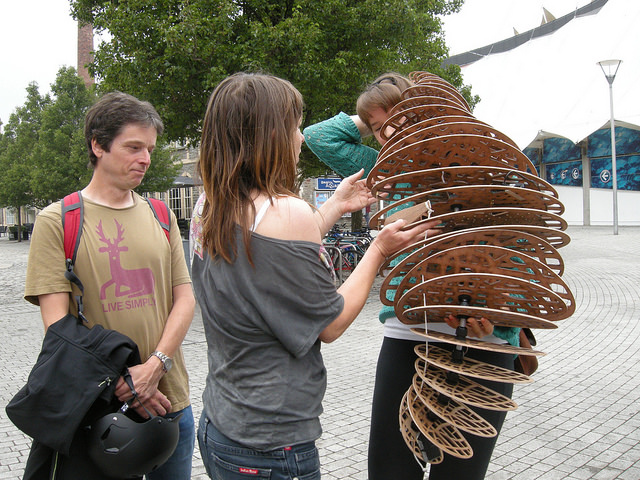
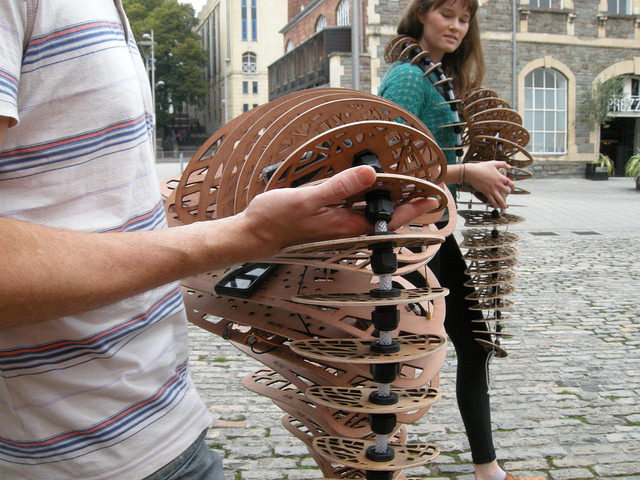
Here’s where we’re up to now. This one isn’t processing GPS because we’re indoors, but when it’s got the proper version of the code it’ll thrash its tail around when it gets distressed.

It’s a bit clunky and you have to concentrate to carry it around, but it doesn’t actually give you bruises!
We’ve been experimenting with slings to help support some of the weight, and there’s something very interesting in the almost ritual action of binding yourself to the object.

That’s the point where I start to see it as being a complete entity – when it’s a creature-human assemblage.

We’ve taken 3 or 4 of them out for a few walks around Bristol, and what I hadn’t expected was the amount of stranger:stranger interactions they invite. We had so many people coming up to us asking if they could touch them, photograph them, draw with them…

This makes me happy as I’m a big fan of urbanist William Whyte’s ideas about the importance of conversation starters for contributing to the conviviality of public spaces.

So, that was a whistle-stop tour of some of the main chapters in the development of Colony. As different opportunities have presented themselves I’ve used them to home in on different questions that have bubbled up.

And a lot of different questions have bubbled up.

In terms of a research process becoming a finished piece of artwork, it seems I’m converging on designing objects that I’d like to be used as tools for sensing the behaviour of radio waves in urban environments. On a macro scale in terms of the signals from the GPS satellites – GPS shadows, concrete canyons and multipath errors – and on a comparatively micro scale using the same radio tranceivers I used for the sashes to bring in a line-of sight test for whether you are still connected to the other members of the colony.

That’s what the heartbeats that have been going around are for – if you get separated from the group, the creature panics and you have a limited amount of time to get to a position where you regain contact. Leave it too long and it’s game over.

The end!

~~~~~

Artist Lise (surname unknown, sorry) was live-drawing the session. Here’s her take on my presentation:

Strange. But in a good way!

Colony residency: Lunchtime Talk at Watershed

On the 19th of September, nearing the end of my residency at the Pervasive Media Studio, I presented at one of their Lunchtime Talk events. Doing what I do, this also had a Lunchtime Walk element afterwards, where a few folks came outside with the critters to experience what it’s like to explore the urban environment with them.

Watershed have done a very thorough write-up of the talking bit here.

Nikki then brought her project to the Studio with Arts Council funding, on a residency to experiment with haptic mechanisms and methods to convey the creatures’ emotional state. She made a laser cut heartbeat machine with a solenoid and an arduino, programming it to beat faster when GPS signals were distorted. Cushioned inside of a jiffy bag, or a little card-board box, the solenoid felt like the thumping heart of a small creature. It was bizarre to hold a jiffy bag and to feel so attune to its needs and responsible for its well-being.

Here are some photos from the walking bit:

Colony never stops moving, however, so as soon as the guests had left we loaded up some brand new code, rejigged the wiring of the circuits and headed out again to do some initial testing of some code that Tarim had developed.

More photos here.


Copyright and permissions:

General blog contents released under a Creative Commons by-nc-sa license. Artworks and other projects copyright Nicola Pugh 2003-2026, all rights reserved.
If in doubt, ask.
The theme used on this WordPress-powered site started off life as Modern Clix, by Rodrigo Galindez.

RSS Feed.