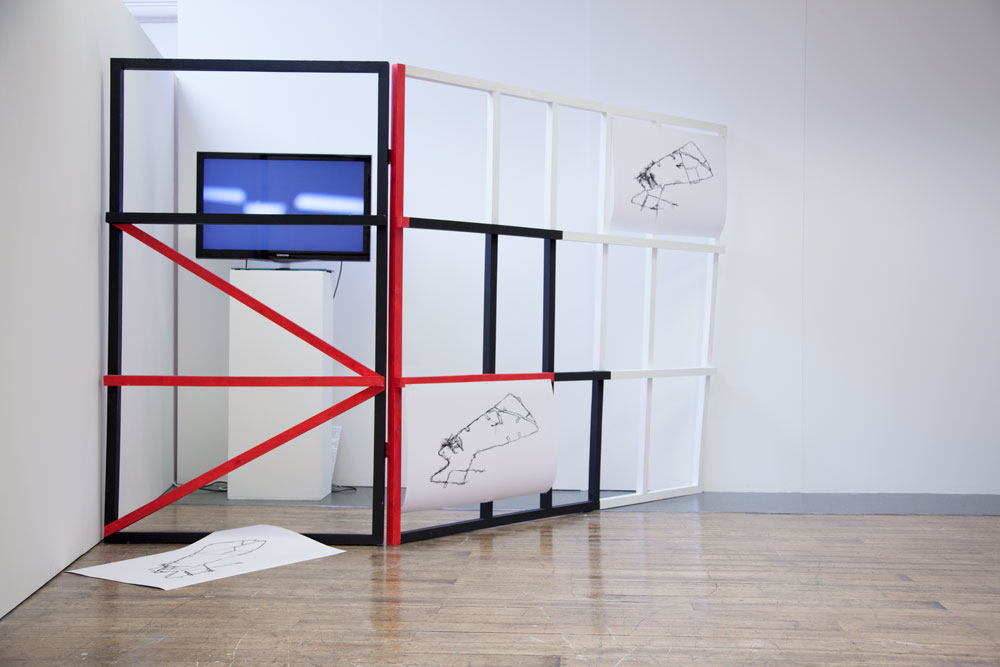
I got the news through a while ago, but had to double-check that they were ok with my instructions for display…
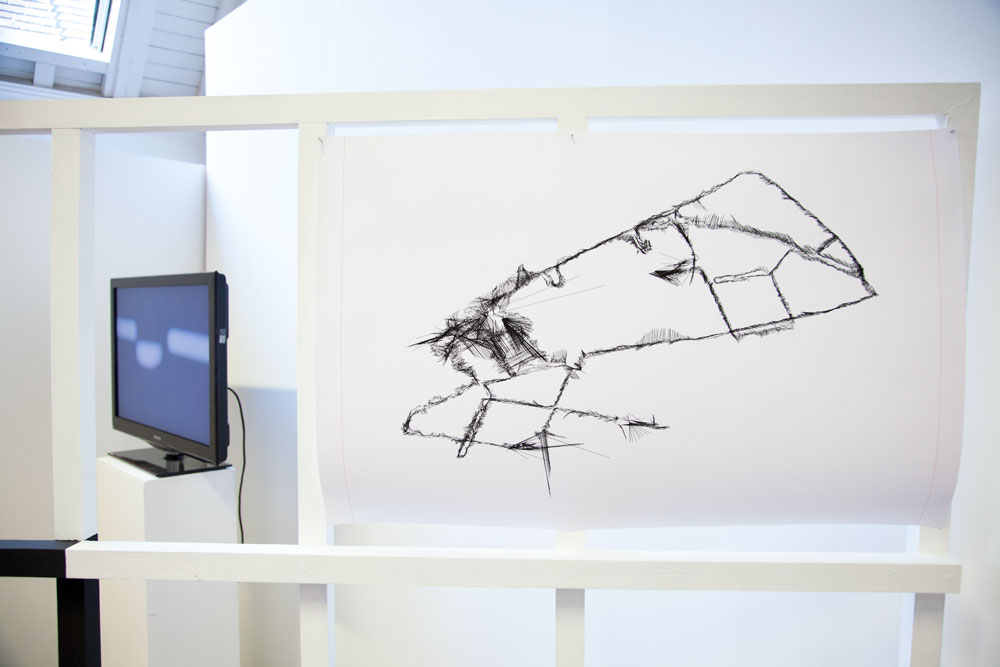
My Uncertain Eastside drawing generated from 6 circuits of the Eastside Regeneration Zone in Birmingham has been selected for exhibition at Birmingham Museum and Art Gallery’s Gas Hall as part of their biennial collaboration between with Wolverhampton Art Gallery to celebrate the work of artists in the region.
My letter tells me there were over 1200 entries to the Open, from which 146 were selected for the exhibition …so that’s something nice I can tell my Mum!
West Midlands Open, 2010
Expect more details closer to the exhibition’s opening in March…
Earlier this year I worked with Linden Primary School in Leicester to take over their timetable for a few days in order to create an immersive experience to develop Y3 pupils’ scientific vocabulary around the theme of light and shadows.
An under-informed Agent N appeared on the Monday, having received information to do as much research as possible at the school because something amazing was going to happen (we just didn’t know what). By Thursday, the pupils had successfully scanned the school grounds for signs of activity; been inducted as secret agents; used humming paths to guide a travelling minstrel called Skatz across from another dimension; investigated light and shadow to find some good wow words; used the wow words to compose a song for Skatz to use to return sunlight to his home planet; and performed a farewell ceremony to send Skatz safely back home. (see below for photos)
A day or so ago I had an email telling me that this and other Creative Partnership projects in the region are presenting their work at the City Gallery in Leicester.
…there will be an exhibition sharing the Creative Partnerships work of the eight schools that the City Gallery has been working with.
The exhibition is entitled ‘Pieces of Eight’ is at The City Gallery and runs from 7th – 11th July 2009.
There is a drinks reception on Thursday 9th July from 6.00 – 8.00pm and a celebration event for pupils and parents on Saturday 11th July 1.00 – 5.00pm.
I’ve not been able to find out any more details, but I’m going to try and get across to Leicester tomorrow night for the reception. I’m looking forward to seeing what happened in the other schools and it would be great to see you there too. Hopefully it’ll also be an opportunity to get some feedback from the schools on the success of these sorts of projects.
In the meantime, here’s a song that’ll get stuck in your head, stuck in your head, stuck in your head…
Here are some photos of the doings (for my Mum) and some thoughts about display (for me, ‘cos one day I’m going to nail the presentation of this piece of work).
Launch event
I’d suspected it was going to be big, but first response on seeing the museum building was something along the lines of “eek”. Other adjectives that came up over the next few days included ‘imposing’ and ‘didactic’. Here’s why:
I should therefore have guessed it would have been rather more of a formal launch event than I was used to: speeches started at 7 and lasted for close to 2 hours.
After the speeches drew to a close there was a bit of a mass exodus as probably about 500 people descended back down to the main entrance hall and the bar.
Waiting staff periodically emerged bearing trays of cheesy sticks, pretzels and sandwiches etc to be swarmed around by the guests. I wish I’d got some good photos of that!
We eventually made our way to the exhibition halls which were, by now, only fairly rammed rather than being completely rammed! It’s hard to describe the feel of this place: part science museum with interactive bits and pieces; part civic museum with dimmed lights and watchful attendants; part at gallery, part… The best way to get an impression of the mood and the scale is to have a lookatthephotos on the German-language section of the DHMD website.
Exhibits ranged from the exploded shards of lightning-struck trees through to a small canister of top secret recipe snow-globe snow. Nice.
the weatherproject was in the third room, curated by Novina Göhlsdorf to bring together different cultural responses to the weather. My jars are temporarily hanging about with the likes of one of Her Majesty the Queen’s umbrellas and latex casts of hurricane-flattened homes.
It was quite strange to see a tiny fraction of the entire collection at once looking so small and also so big. I’ve said it before and I’ll say it again: I’m glad I didn’t have to make that selection of 30 jars from over 10 times as many in the complete collection!
Display
I arrived at the museum not knowing anything about how they were intending to display the jars and record slips. This was intentional because I’ve always struggled to present this work and wanted to give them free reign to see what solutions they came up with with their resources, experience and expertise.
It was really interesting to compare their method of display with the one I used for the threshold exhibition back in 2004. My solution for threshold was to construct an 18′ long table with a folded plastic cover that arched quite snugly over the jars. (the cover is removed in most of the photos at the previous link because of the way it attracted the dust…). At the DHMD, the designers had made a similar cover out of similar materials and of a similar scale with respect to the size of the jars. All much more skilfully executed though! Rather than heating and folding a single strip of polythene/acrylic they had cut and glued individual pieces of much thicker stock to give some really nice clean corners. I’m jealous…
The DHMD installation also paired each jar with its record slip and gave each pairing quite a lot of space. At threshold I had 250 jars and was using the opportunity to get them all out on show en masse as physical objects and so they were a lot closer together. The threshold jars were all closely bunched together and the record slips available digitally at one end of the table.
The DHMD approach had a strange homogenising effect – both through intentional selection of collections made in the standard jar and with no additional labels/contents etc and through the omission of the individual ephemera such as postcards and photos that accompany most of the jars. This and the lighting/mid grey plinth colour led to quite an austere effect. Very different to what had gone before and I suppose made possible by both the exhibition and curator’s distance from the people who had made the contributions.
I can see how this was appropriate to the task in hand here, but the work did lose some of it’s quirkiness that I think is one of it’s strong points. I don’t dislike this format, however, and it may be something I experiment with more in future presentations…
I loitered a bit and watched how people interacted with the display, and have to say that I didn’t see many people do more than look at one or two of the jars. I’m not sure if this is an observation worth basing any theories on seeing as how people were having to zip around quite fast to try and see everything before closing and, well, if there’s a bank of empty jars labelled up in a different language next to an interactive display of snow-globes which one are you going to choose! I know which one I’d go for!
Actually, as it turned out, I got totally drawn in by a black and white film of rain in Amsterdam in the late 1920s. Regen by Joris Ivens and Manus Franken (here with soundtrack, although it was silent at the Dresden exhibition).
Another thing I found interesting was watching how people’s engagement with the work shifted. Typically people would glance at one or two jars and then, sometimes, go and read the accompanying text describing the work. That was the hook! If they did this then 9 times out of 10 they’d go back to the jars and have a closer look – often with a smile on their face and usually grabbing whoever they were with and getting them to have a look too!
So, all in all a method of display that brought along a whole bunch of new things to consider, but also reiterated old hunches too. Hopefully we’re getting closer to the ultimate weatherproject format…
If you happen to be in Dresden over the next few months I can recommend you stop by and check out the exhibition. Take the randomness of the weatherproject and then multiply that by 4 large rooms full of stuff both curious and scientific. There’s a whole range of interesting things all brought together here and you’ll definitely find something that whets your appetite.
And finally…
After the launch had officially ended we found our way to the after-party in seminar room 8. A good time was had by all, despite the strangely prison-like surroundings and the stinky cheese!
I’m going to finish up with these two photos that I really like (party lights and top-end museum security) and, more importantly a big thanks to Family Göhlsdorf et al for making my trip a lot easier than it could have been otherwise.
Lever, crank, bell crank, cam and ratchet was an installation of a series of sculptures I made specifically for the GOODS In group exhibition (Saturday 28th June, a one day event in a disused warehouse space).
It was the first time anything like this had happened in this space and location-wise it was outside the usual destinations and a little bit tricky to spot (amusing considering the size of the place!) so it was good to see so many people track it down and come and have a look over the few hours it was open.
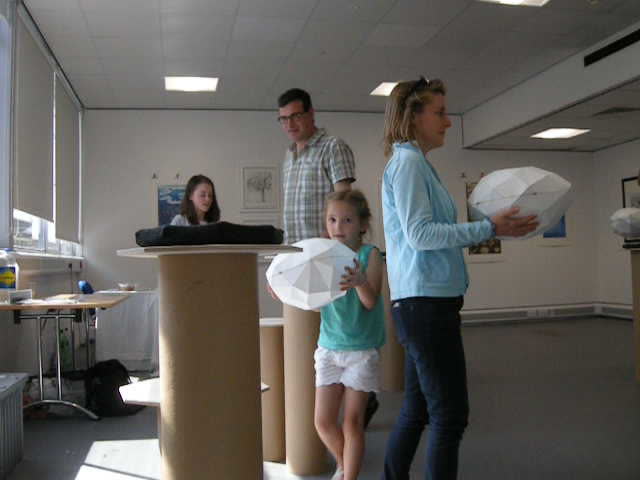
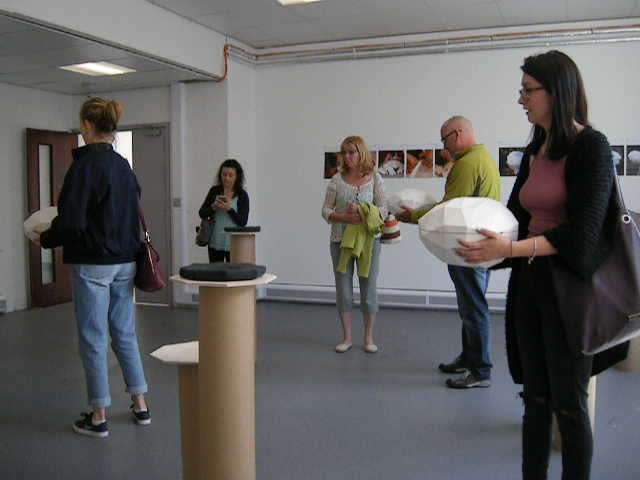
As per usual I ended up producing something that needed active participation from the audience in order to function: Lever, crank, bell crank, cam and ratchet consisted of 5 small cardboard models of each of the named mechanical components connected to each other and to weights via threads that arched across the room.
The sculptures were made so that rather than forming an array of mechanisms that combined to produce some overall useful effect, each one worked in isolation and therefore was limited to a basic repetitive action.
Apart from a few extras to form the axles and pivots (and the occasional rubber band, of course), the units were made from A4 cardboard picked up when I worked as a temp for an examining board. This is the cardboard used to reinforce the envelopes in which adult basic literacy and numeracy exams are returned.
I’ll leave you to form your own connections and meanings…
The way it worked out, there was no signage to accompany the works in the show so it became quite interesting for me to watch and see how people overcame (or otherwise) the usual gallery barriers to interact (or otherwise) with the mechanisms.
Many people wouldn’t operate the levers and handles – even when told they could, and even when they’d been looking at them for some time presumably wondering what would happen if…
As usual, the best way to get people participating was to lead by example and just get on and have a play and then invite them to join you. There were some nice cascades where for a while we’d have 3 or 4 people all operating different parts of the installation.
Also, as with other projects, those that got over that initial participation barrier tended to become ‘power-users’ [to borrow a term from a recent post] and get properly stuck in. I’m definitely talking about Pete here as demonstrated by the final scene in this video:
Starting today and running until the 15th of December, Artgos will be at the Merrion Market in Leeds.
This Christmas artsparkle presents Artgos, a new catalogue store in the heart of Leeds’ shopping district! A collaboration between Artsparkle and theartmarket, Artgos will be selling work by big name artists alongside fresh talent working with multiples, those fabulous, affordable artworks that make such great stocking fillers. Come along to the catalogue shop for a unique shopping experience, see performance artists in full flow, and kick-start your contemporary art collection for as little as £1!
Artgos website
Counsel for the Artist will be there in the form of some packs of postcards made especially for the event.
Each pack contains one postcard for each of the following statements:
Make exchanges with spaces
Strive to achieve modest connections
Set your own agenda
Add to a culture of learning and experimentation
Get the message across
Meet a new network
Resist the ascribed role of witness
Circumnavigate predictability
When I’ve shown them before I’ve been struck by how much these have resonated with other people – not just artists – so with any luck this will be a good opportunity to get the statements circulating into some interesting places.
If the Flickr stream is anything to go by, a lot of work has gone into preparing the space:
I’m digging the order forms! Hopefully some images of the opening party will also be added later.
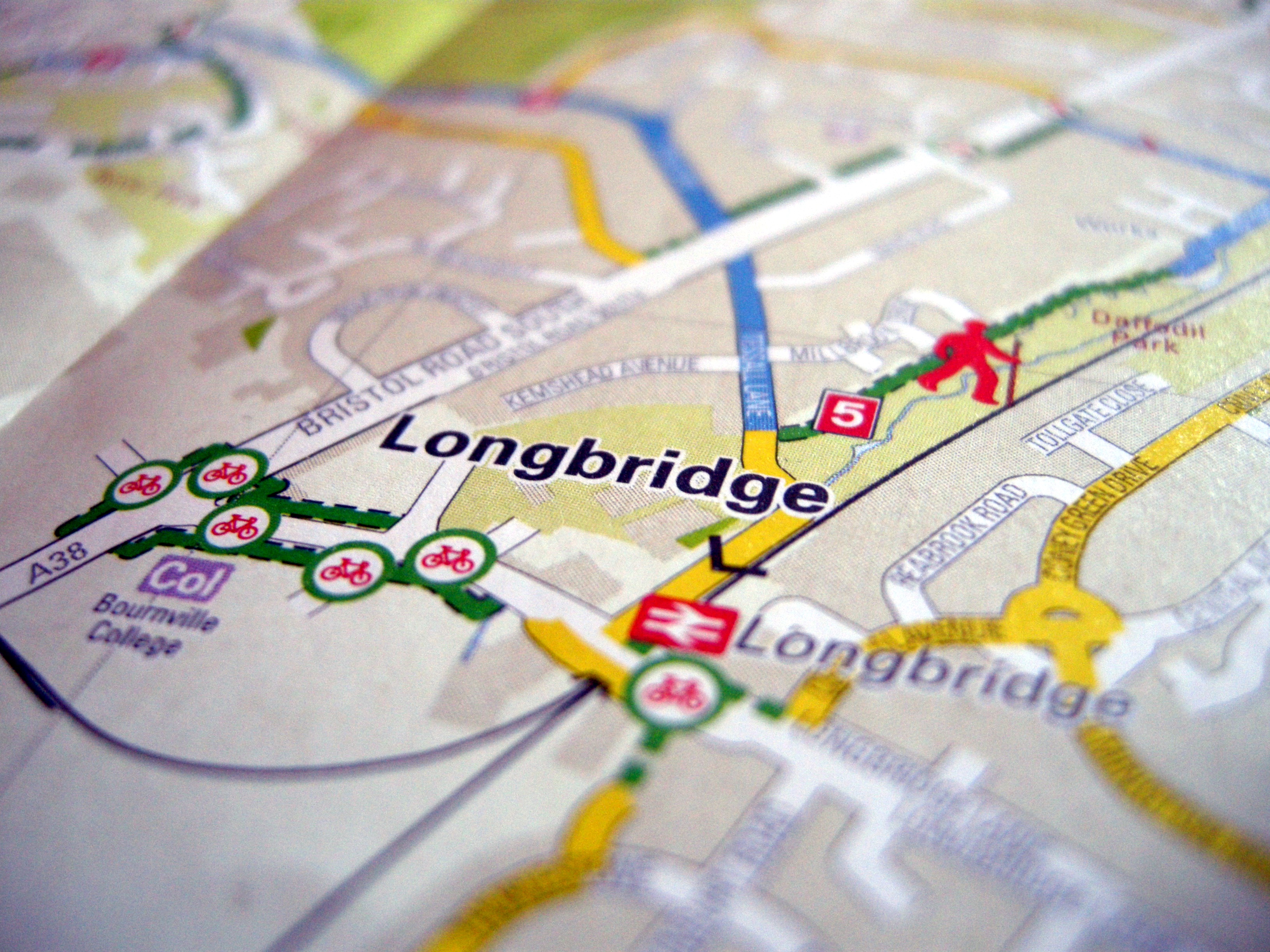
If you can’t get along to The Art Market in person, I have limited numbers of map-wrapped Counsel for the Artist postcards available through the invisible hand shop.
Tunnel Vision (Luke Jerram and Dan Jones as part of Architecture Week) had it’s strong and weak points for me.
I like the fact that it happened at all enormously, but I felt that it was really two separate things. I’d have liked to have seen either no sculptural stuff or a whole lot more that spilled out and around the different niches in the walls.
Guess there’d have been a Health and Safety officer with something to say about that…
I felt the end section where we were walking down the darkened tunnel with the sound and light was the most powerful element. Givien the choice I wouldn’t have shared the experience with 30 other people at the same time, although it did make for an interesting snippet of video (here slowed down to half speed)
I work in the grey areas between and across Art, Science and Technology, instigating enquiry-led processes that are
often highly participatory in nature. This website is where I track the projects I'm involved in and the things that feed
into and sprout off from my work.
You can also find me at fizzPOP (hackerspace) and BARG (pervasive games).
I'm primarily interested in issues around interaction: how we interact with spaces; how we interact with each other; and how we interact with objects.
For a general overview of my work, try the projects and cv pages.
If you'd like to start a conversation regarding a new piece of work, then there's more information on the commissions & collaborations page.
General blog contents released under a Creative Commons
by-nc-sa license.
Artworks and other projects copyright Nicola Pugh 2003-2006, all rights reserved.
If in doubt, ask.
The theme used on this site started off life as Modern Clix, by Rodrigo Galindez.