Inkvisible #3: Associations, assumptions and frustrations

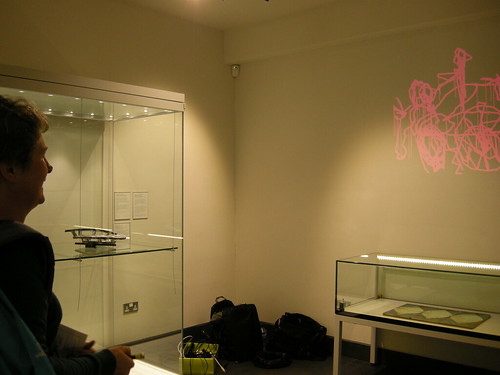
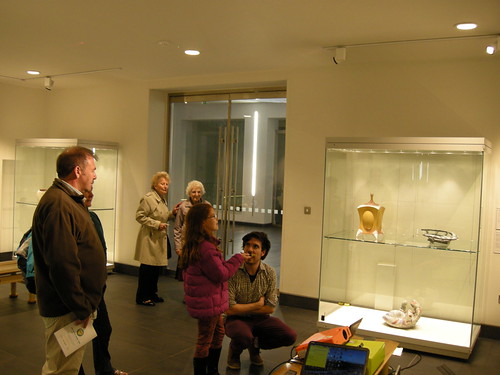
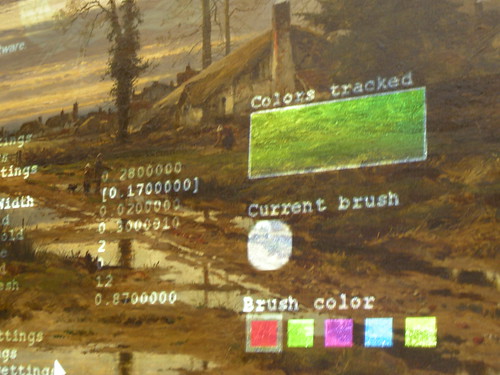
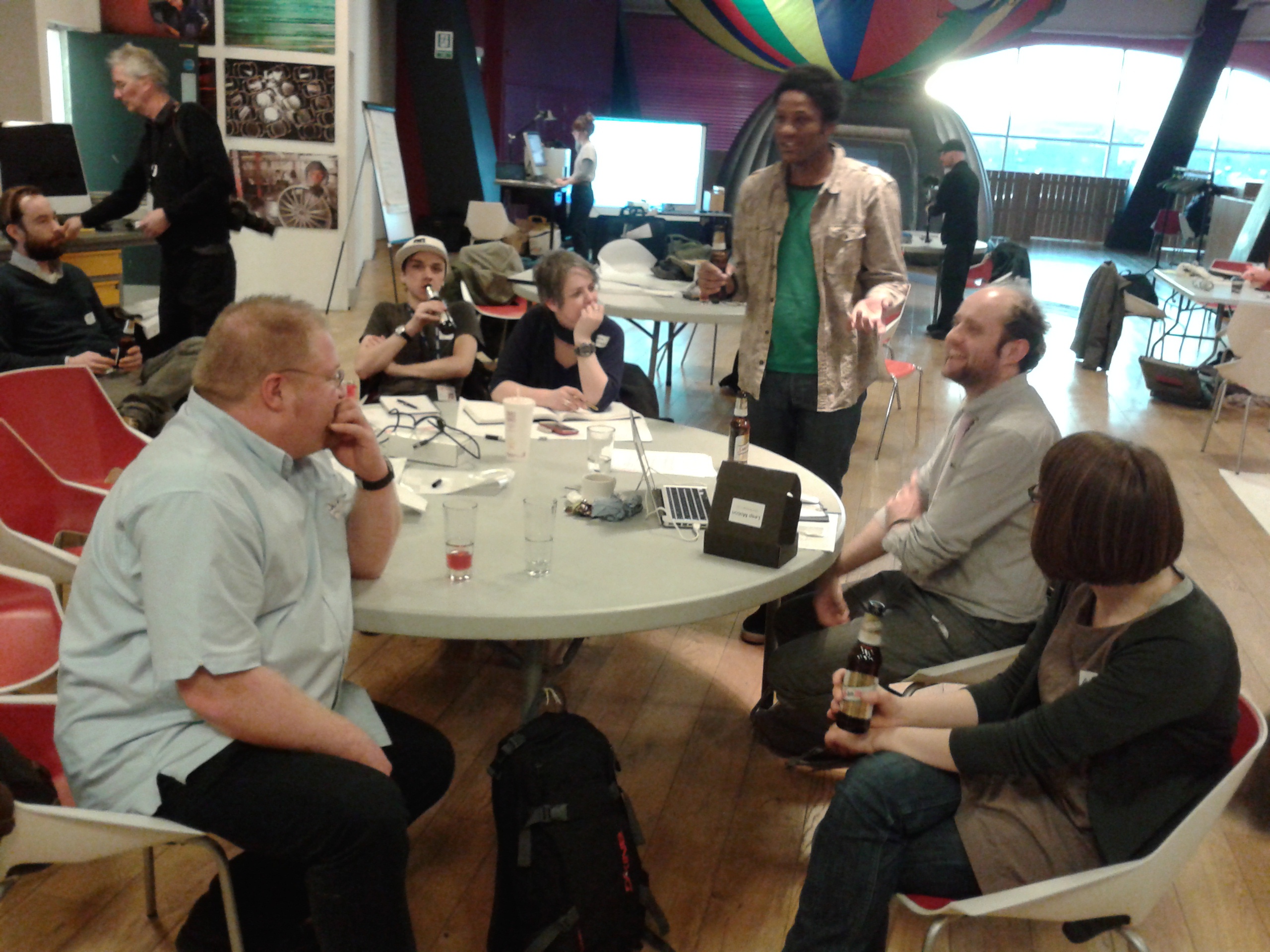
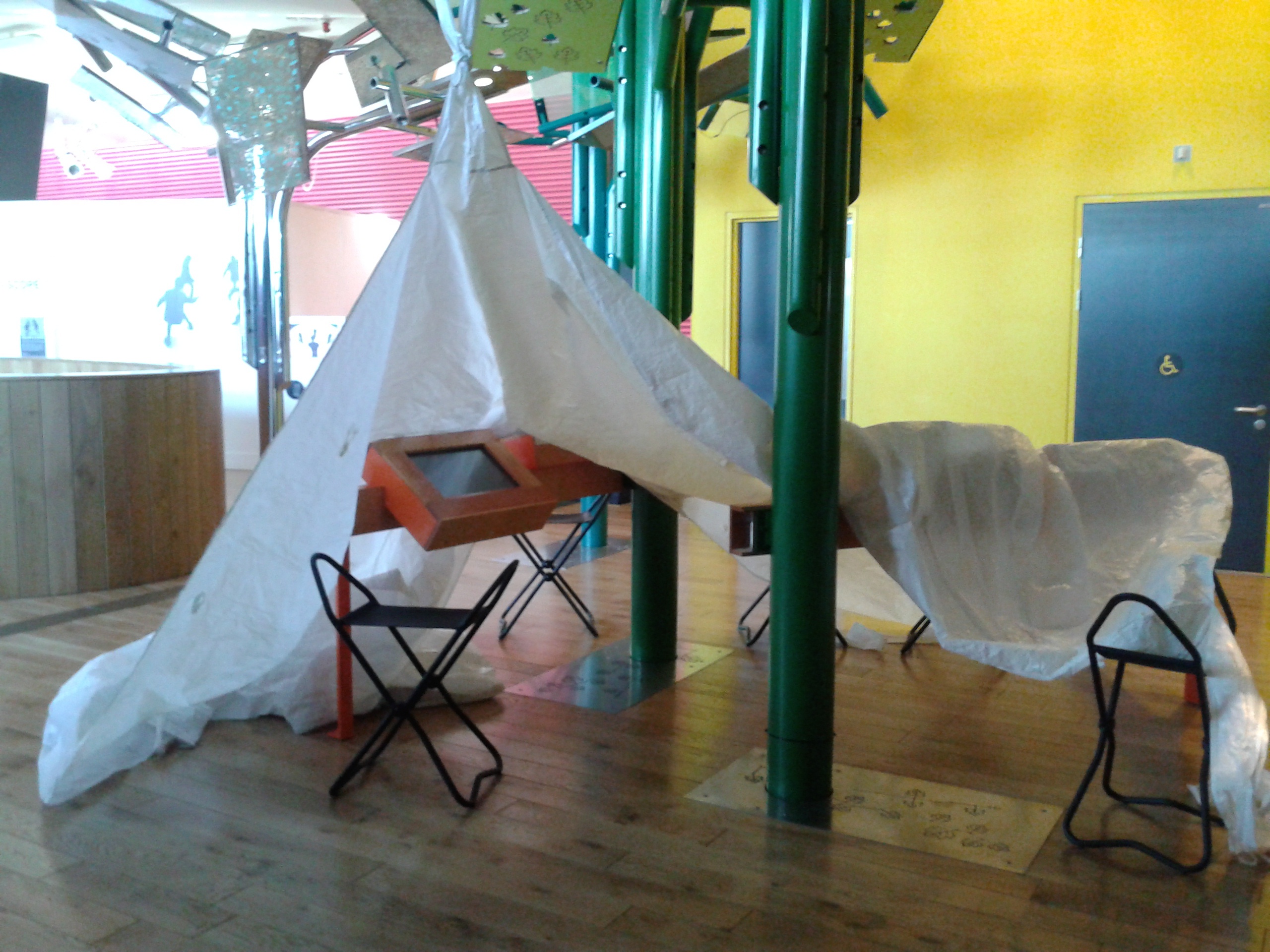
Having previously decided on our location and homed in on some of the aspects of interaction that we wanted to encourage during a planned final even, our aim for last Friday was to set up in situ and perfect the tech and social set-ups.

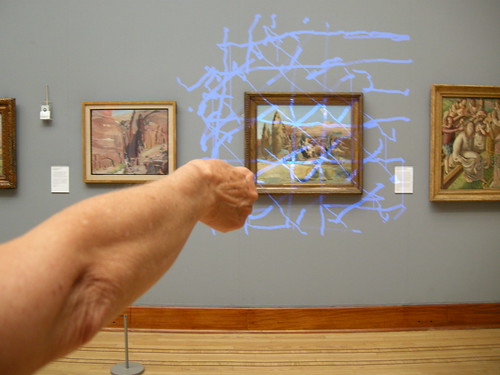
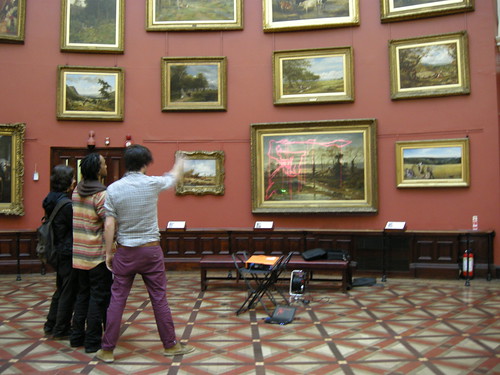
It all started well, with some excellent exchanges. Following an observation from Ben, we made a bit more of people having their photos taken alongside the marks they had made.

Inkvisible Day 3

We’re interested in how this may change the dynamics of what people draw and also the ownership they take of it.

Inkvisible Day 3

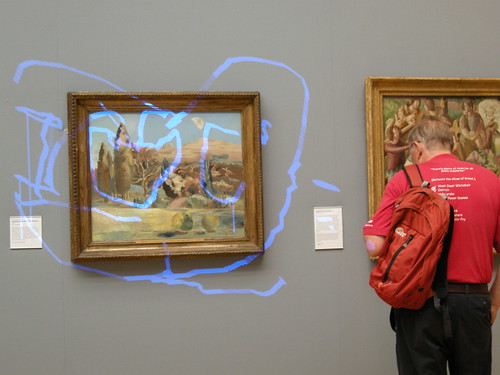
A Dutch artist echoed the paintings she usually does that consist of white and blue lines. She was very keen to take lots of photos of everything and there was a very strong sense that she would go on to share these with others.

Inkvisible Day 3

We don’t often get people writing text (it’s quite difficult, especially on your first attempt), but someone who I’m guessing was a visitor from East Asia, contributed an I ♥ You.

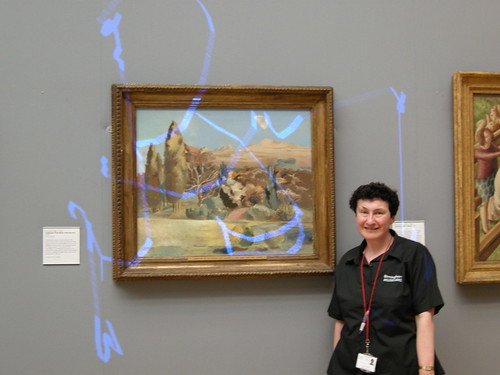
I’m curious about how this behaviour might relate to whether people consider themselves tourists or not. As a nice juxtaposition, though, this member of staff was also keen to have a go and to know where she could find her photo online afterwards. (pssst! It’s here!)

Inkvisible Day 3

We also had our first genitalia drawn – suffice to say from an unexpected source!

It’s been very interesting talking to people and finding out about their expectations and assumptions about what ‘everyone else must draw’. We think there’s some interesting psychology going on here beyond anything too Freudian.

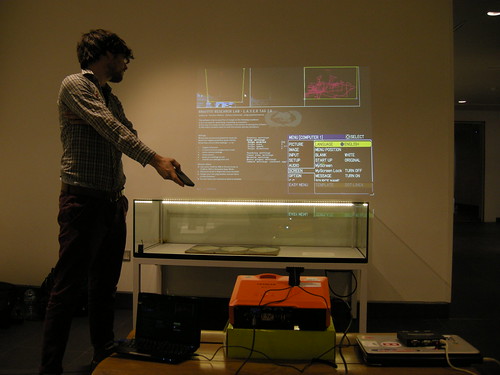
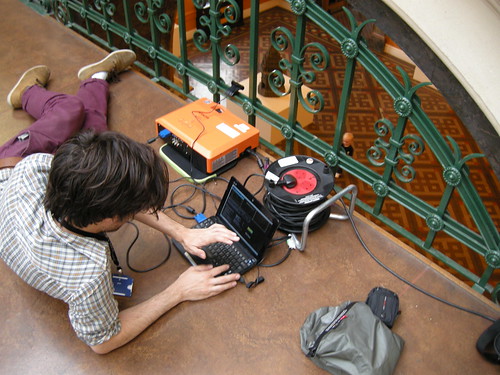
Unfortunately we then hit a point where the technology started to seize up on us; first working intermittently and then failing to work at all.

This has scuppered our plans to hold a formal event at the end of the month, however you could argue it has furthered our learning and the conversations around it quite a bit.

After some wrangling we decided we couldn’t run an advertised event with the technology being as unpredictable as it was. We have a fair idea of what we are asking from such an event though, and increasingly how to achieve that, so we’re still going to design and plan one – we’re just not going to try and make it happen just yet.

In the meantime we’ve still got one more day at BMAG: stay tuned to find out how we’re going to use it…

Inkvisible #2: Provocations

Last week we had our second playtesting day for the Inkvisible project. (Here’s the write-up of the first one.) This time I was at BMAG with Dr Gretchen Larsen, our King’s College academic.
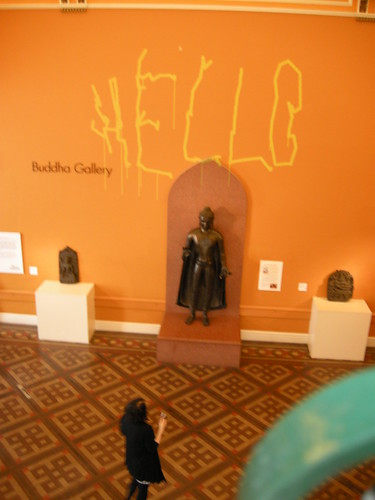
With or without a PhD, we all start in the same way!

After struggling to get the L.A.S.E.R. Tag software we’re using to track our green laser pointer in the orange space of the Buddha Gallery, I’d bought a purple laser pointer to try out. In parallel to this, we’d also been talking to a BMAG conservator to ensure our lasers aren’t doing any damage.

It turns out there’s not a lot of published research regarding the use of laser pointers for drawing graffiti within the museum environment!

The conservator is going to do some calculations and research into fluence and intensity, and whilst we think we’re a long way off the sorts of powers, spot sizes or exposure times that would be needed to do any damage, we’re making sure we err on the side of caution.
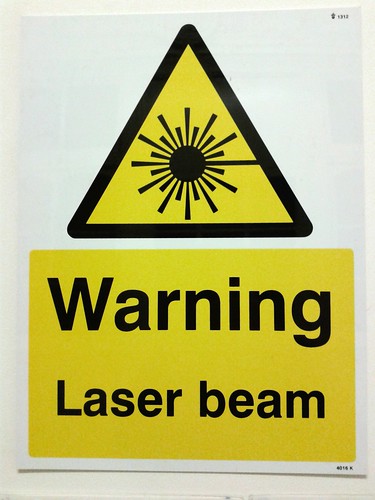
Inkvisible Day 2

This means that we will restrict the use of our green lasers to glazed oil paintings (framed behind glass), ceramics and sculptures, and our purple laser (with its shorter wavelength and increased likelihood of generating ultra violet radiation) to only ceramics and sculptures. Fortunately the area in the Buddha Gallery we were interested in using contains stone and bronze statues.
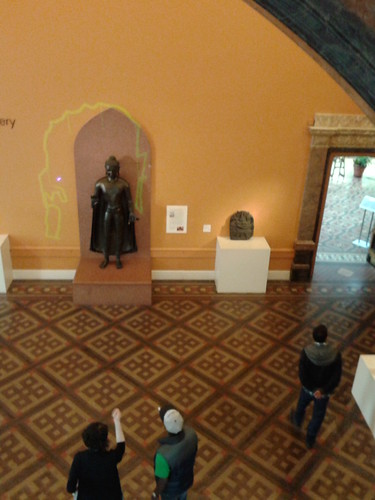
Inkvisible Day 2

We’re interested in this particular gallery partly because of its links to a community that come to leave devotional offerings and partly because of the overlooking balcony that means we can potentially project down into the space.

This affordance of being able to have all the technology up out of sight seemed to have a distinct effect on the interactions with museum visitors. In contrast to when we had the projector and laptop out in plain view and people readily came up to ask us what we were doing, here the mechanics were somewhat hidden and people tended to stay back to watch from a distance. We could still hear the appreciative exclamations, but it was almost as if when the workings are visible they act as an invitation for people to come up and ask what’s happening and how it works.

We’re also wondering if this effect is related to how many people are with the laser – if it’s just one, do visitors feel they need to leave them alone to do whatever it is they’re concentrating on?

Whilst the invitation seemed to have been removed, it was replaced with more of a sense of magic. “Is it real?”, one man was heard to say.

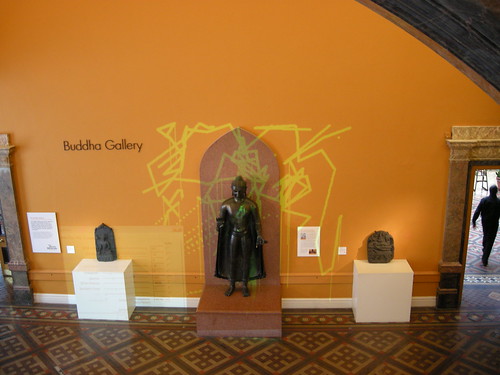
Something else was to become apparent too: the big bronze statue of Buddha didn’t like the laser!
Inkvisible Day 2

The above image might look like a lot of indiscriminate scribbling, but it’s us trying to figure out why the projected graffiti would stop as the laser passed over the statue. With a bit of tweaking of the software settings, we managed to get the laser to track over the (basalt, I think) surround, however we could not directly draw any traces over the statue itself. (Only drips or traces that were offset due to tracking misalignment.) We think this was because of the reflective relief metallic surface bouncing the laser off in all sorts of directions therefore making it invisible to the tracking camera.

The result was really quite eerie and added to the feeling of transgression.

The same thing happened when we tried the statue of Lucifer in the Round Room.

Our next stop was one of the Pre-Raphaelite galleries. Having had a wander around the museum we felt that Inkvisible would work best in the more traditional galleries: the new history galleries for example are lovely and spiffy, but our stuff would just look too normal in them, it would disappear.

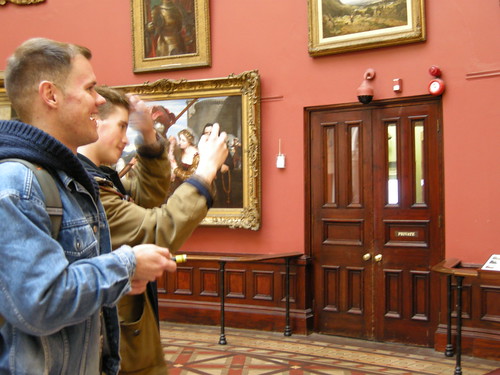
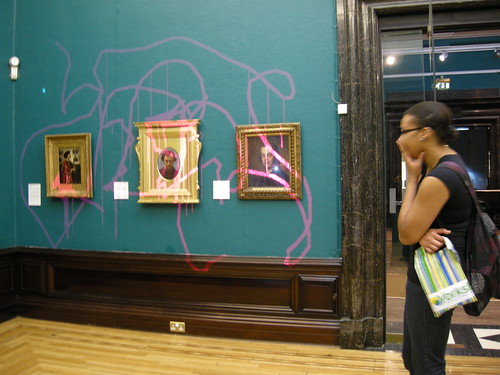
The Pre-Raphaelite collection at BMAG is renowned and attracts a lot of visitors expecting a particular kind of museum experience. We deliberately sited ourselves here to get a feel for what sort of responses disrupting that would produce.
Inkvisible Day 2

This was our first interaction: a woman who was drawn to it as if to a car crash. She was horrified at the prospect of having marked over the paintings, but couldn’t tear herself away. Result.
Inkvisible Day 2

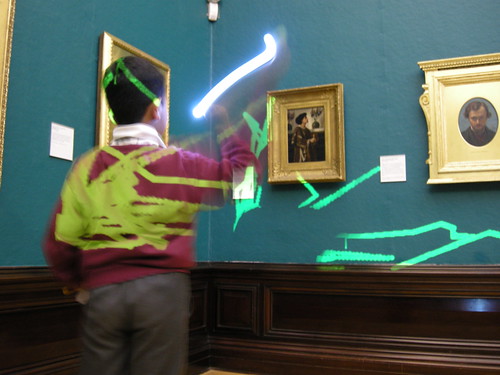
Not long afterwards we were descended upon by a series of groups of school children. Rising to the challenge we invited them to take part, giving as many of them a go as we were able to.

This was good learning for us as up until now we had only dealt with participants in twos or threes. Instigating countdowns to mark the end of turns and designating a Special Assistant to help with clearing the screen, we kept groups of about 10 7-year-olds engaged at a time.

Chatting to them between changeovers it was interesting to explore the extent to which they had already been trained in ‘appropriate’ museum behaviour. They enjoyed the opportunity to draw all over the walls and to not get into serious/expensive trouble!
Inkvisible Day 2

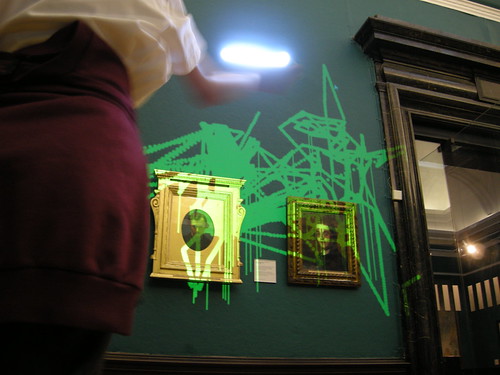
We were a bit nervous about handing over some Class 2 lasers to some excited small children, so for the most part we used an alternative method. Rather than tracking laser light reflected off of the walls and paintings, here we used a torch held so it pointed straight back towards the camera.

This had obvious advantages in terms of safety for both the artefacts and the participants, but it lacks something in the feedback for your movements that you get with the laser pointer unless you are right up close to the projection surface.

I like this a lot – it’s a very different experience when you can see the brush marks on the surface you are graffiti-ing over and this method also encourages you to move your (whole) body in a different way. We got some of the groups to try jumping and making marks as high as they could.
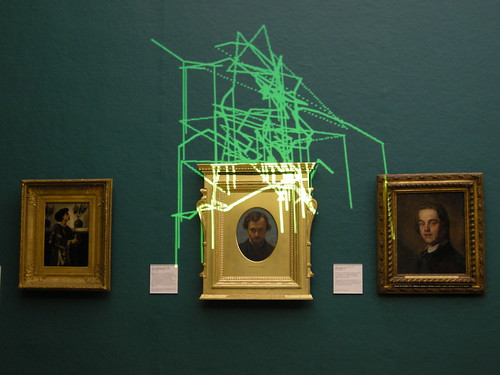
Inkvisible Day 2

Struggling a bit with the lack of correlation between movement and mark, also with the tracking system not being able to keep up with very fast movements, we switched back to the laser pointer method with some of the later groups.

Here it was very apparent that the children would treat the area of wall above the paintings as their canvas, avoiding the artworks below unless they were specifically encouraged to work lower down.
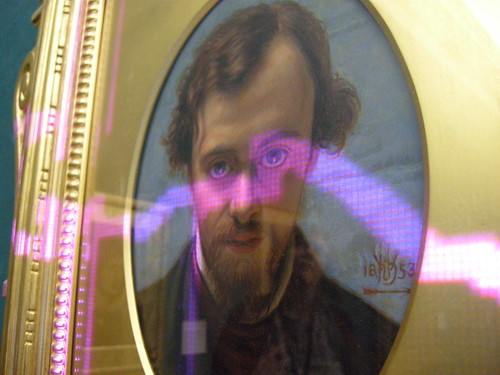
Inkvisible Day 2

After the school groups had all got on their respective coaches, we were paid a few visits by chaps from the Digital Heritage Demonstrator project. One of the comments was “I bet everyone draws lines across the eyes straight away”. Well, er, no, actually. Nobody had! It was interesting to think about what people assumed would be the obvious first thing to do.

We’ll be running a public event on the 26th of July where you can come and do some mark-making of your own.

What will you do?
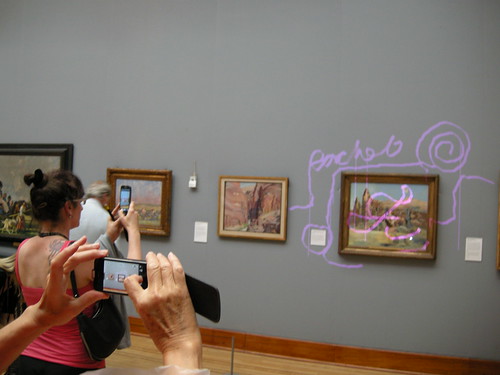
Inkvisible #1: Getting to know the medium

Last month I was invited to take part in in Arts and the Digital Ideas Lab (part of King’s Cultural Institute’s Creative Futures programme, produced in collaboration with Caper) as a creative technologist.

About 40 people took part – split more-or-less evenly split between representatives of academia (primarily King’s College London), cultural organisations (such as the Maritime Museum, Coney, Crafts Council and the Royal Shakespeare Company) and the creative technologists (always a delightfully ‘misc’ collection).

At a previous event 19 challenges had been arrived at and we started off by aligning ourselves to one of these. I gravitated towards “How can we nurture and sustain spaces for collective creative and critical thought in the digital world?”.

By the end of the day I was on a team pitching an idea that we later wrote up as:

Inkvisible is a hybrid framework of digital, projected graffiti; game mechanics; and narrative applied within the interior space of the museum.

Our aim for this phase of the project is to playtest different variations of the framework at Birmingham Museum and Art Gallery (BMAG) in order to gain an understanding of how it can be applied to create a channel through which the audience’s critical voice can be expressed and heard.

We got some money; we got the go-ahead from BMAG and now we’re doing it!

Starting yesterday, we began what’s effectively a 4-day residency to get to grips with what the affordances of this idea might be.

‘We’ now being a team consisting of:

(Others also contributed to the development of the initial idea.)

So, our first task was to get to grips with the technology we would be using to project the graffiti. We’d short-listed the Graffiti Research Lab’s L.A.S.E.R. Tag system (which seemed very much in the spirit of the voices we’re trying to encourage and the brief to use open source software as much as possible) and an alternative using motion sensing via a Kinect and outputting with Processing.

Ben and I set up in Gallery 10 and started experimenting…

Inkvisible Day 1

We had a bit if hoo-hah caused by insufficient cable-age and interference from the display cabinet lights, but before too long we were up and running and attracting curious observers.

Inkvisible Day 1

Inkvisible Day 1

It was immediately obvious that this was something that draws people (of all ages) in and can be used as a catalyst for conversation. Our task next is to make those conversations productive. We’ll be exploring that more when Dr Larsen and I are back in the museum again on Tuesday and Thursday next week.

For the remainder of yesterday’s experiments, we tried a few more locations.

Inkvisible Day 1

Our attempts at projecting down from the balcony into the Buddha Gallery were thwarted by what we think was a combination of distance, reflection angles and the background orange light.

Next we tried the iconic Round Room – the first bit of the collection you encounter as you come in from the main entrance.

Wanting to cover an area that overlapped with several paintings, we struggled again due to angles of incidence and the matt paint on the walls preventing the laser spot from being detected. We’ve been given permission by the conservation team to use our lasers on certain materials (not egg tempera, textiles or watercolours), but we don’t really want to upgrade to using a more powerful laser (we’re currently using Class 2).

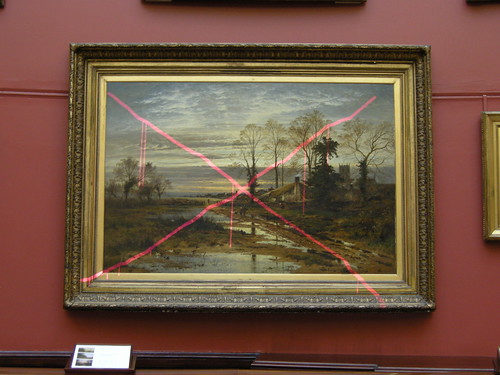
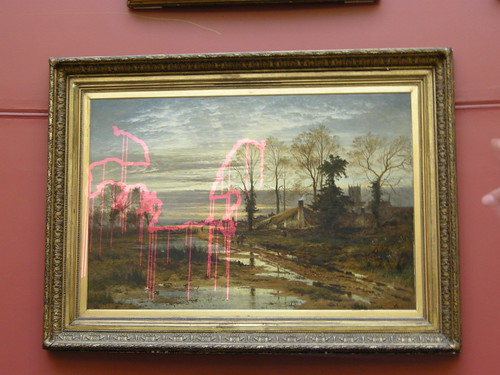
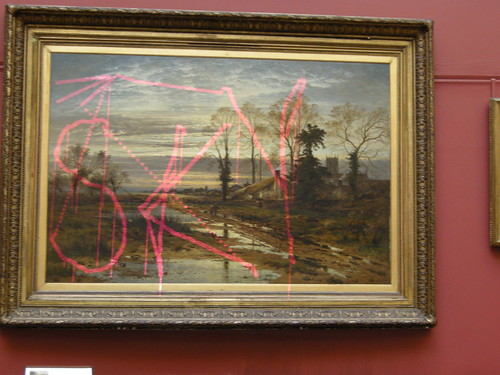
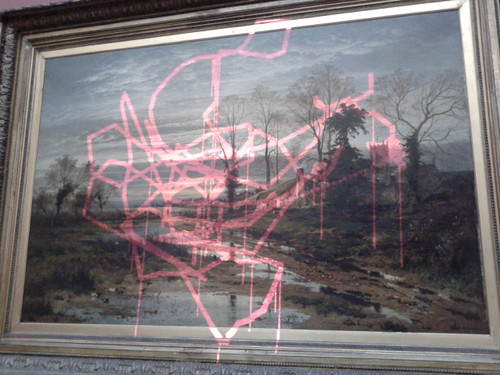
So, out of a combination of necessity and curiosity, we then tried honing in on one single painting.

Inkvisible Day 1

Inkvisible Day 1

As you can imagine, this had a very different feel compared to when we were using a blank area of wall above the cabinet in the ceramics gallery.

Inkvisible Day 1

Inkvisible Day 1

Having a specific and almost-tangible object to interact with (you really get a sense of the (im)materiality of both the pigment and the overlaid light when you’re up close) gives the opportunity to respond to something in particular.

Inkvisible Day 1

Inkvisible Day 1

We had people telling us about what they thought of the painting, for example: having grown up in that area of Oxfordshire and how the landscape reminds them of home. We also had someone backing-off to sit down and think for a bit before returning and asking to write the word ‘sky’ – the element that struck her the most.

The location in this part of the museum was very well trafficked and we had an almost constant stream of people coming up to us to ask questions, share their thoughts and give it a go.

People’s responses were not always positive – which I think is fair enough – and these were also important conversations to have. A few people said they didn’t see the point and one man in particular felt that we were being quite disrespectful to the work of the artist.

That last conversation came towards the end of the day when the overlaid projections were getting quite scribbly and doodley. Our experiments also came the day after a portrait of the Queen was defaced with real spray paint.

Inkvisible Day 1

It seems that use of the laser pen and seeing the resulting ‘paint’ traces is experience enough, and we’re not sure how much narrative we want – or need – to wrap it up in. What I think we will have to focus our efforts on is how to steer the use of this tool towards eliciting comment on the institution.

We’re in again playtesting on Tuesday and Thursday next week (18th and 20th of June) – do pop in and join the experiment.

Hacking The Public

Last weekend I took part in The Public’s experimental Gallery Hack Camp event. Experimental in that they’ve never hosted anything like this before and also, well, it’s a bunch of creative people in a space – we’re going to end up trying stuff out!

First up: rearrange the letters. GRAHAM CAKELY PLC. That’ll do nicely.

Second up: respect The Public’s attitude towards caffeine.

Third up: a tour of the 230 metre long gallery ramp that we had been invited to tweak and re-imagine.

++th up: IDEAS!

Eventually the ebb and flow of conversations settled down into coagulations around ideas. Kim, Alyson and I set off in search of cracks and crevices to leverage towards exciting, secretive, human-scaled experiences. This involved some impromptu den-making and a certain amount of static electricity…

Eventually the gravitational pull of the ramp drew us back in to what had been most people’s first response to the ramp: by some administrative oversight, the ramp is currently without a marble run. Shocking!

We fixed that.

like marbles; but BIGGER

We only had a few hours making time, but we managed to scrump some interesting materials from various boxes, shelves and cupboards. We by this time being Kim, Dave and I.

I think we had a nice demo mix of mechanical and electrical going on with chutes, a bicycle wheel paddle wheel, drumroll, unfeasibly large alarm clock, fire bell and Christmas lights all either affecting or responding to the golf balls along their journey.

Things got a little eratic after we relocated from the camp HQ to the ramp, but I think the power of these things is all in the build. Remember the Improbable Machine?
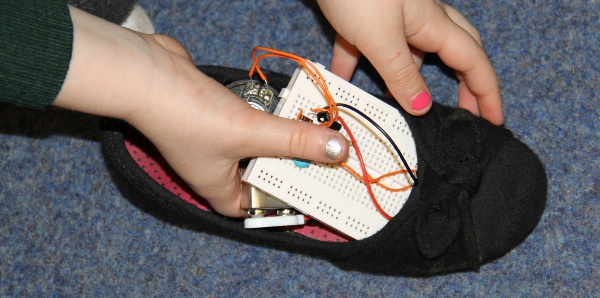
marbles from nikkipugh on Vimeo.

It’s got me thinking a lot about the use (or not) of prototypes in settings like this. I think I’d like to be able to engage with imperfection more.

Mis-fitting at Birmingham Institute of Art and Design

This term I’m doing some Visiting Tutor work teaching into a project for the second year BA Art & Design students.

The original idea was ‘Body Architecture’. Here’s what the brief evolved into after my recruitment:

Creative Mis-fitting

Watch the following music video:

We see someone wearing a succession of body sculptures (is it fashion? art? architecture?) as they walk through the city and prompt a variety of responses from the Normal People.

When we work in the bubble of an art school, it’s easy for us to forget the world outside and how our work might be perceived by those who have not encountered similar things before. We’re going to take our work outside.

Starting at the Margaret Street school of art, walk, run, slide, skate or use an alternative mode of locomotion for 3 minutes 50 seconds (the length of the music video). The place where you find yourself at the end of that time period is the place you will locate your work. Make sure you have arrived at your own space and are not within 20 metres of another Mis-fitter’s location.

Your brief is to design, construct and ultimately wear a body sculpture that responds to and in some way fits your location, whilst at the same time misfitting people’s expectations of what they might encounter in that place. Find a niche or other point of leverage at your location for your construction to echo – a bit like how the guy in the video’s costumes echo the things that are thrown at him. You will be wearing your work, so you also need to consider how it relates to your body and how you will move whilst wearing it.

You will document the process of arriving at your location, finding the bit to riff off, constructing your attire and any interactions that arise out of you and your costume inhabiting your location.

The project launched yesterday and I joined them in the afternoon to give a lecture on the-sort-of-stuff-I-do-and-the-things-I-think-are-interesting-about-working-in-public-space. This included: an overview of Dust, leading on to the importance of interfaces; objects as permission-givers; magic vests; triangulation; vibrant social spaces; interactions with/between strangers; Urban Sensation Transformers; silly hats and the implications of different design aesthetics; city as playground; rule-bending and transgression; comfort zones and accumulation of actions.

Following this we went outside into Birmingham city centre (Victoria Square and Chamberlain square for some blindfold work and giving the students a way in to working (and being vulnerable) in front of an incidental audience.

Working with one blindfolded person and one chaperone, they were given the following exercises:

  1. Blindfolded person to describe everything they sense/notice/feel/are aware of as they walk around.
  2. Chaperone curates a series of sense experiences foe the blindfolded person.
  3. Try to facilitate some interactions with stranger by making the first approach – ask people for the time or for directions etc and see if they then come back with questions or conversation.

We’ll be unleashing works in progress and the final pieces onto the streets around the school of art over the next few week, so keep an eye out for any unusual goings on …and don’t be afraid to say “what are you doing?”

Academia

I’ve spent the last few days surrounded by academics and researchers.
It got me thinking what department I might like to be affiliated to.
After a frustrating search, I started to dream one up…

blackboard drawing

Welcome to the department of HCI HPCI (Human-Place-Computer Interaction).

Human: the two main ingredients are the body and story-telling.

Place: urban, rural, large, small, public, intimate and everything in between.

Computer: unlikely to involve screens.

Interaction: like you’ve never experienced before.

We’d be a very empirical bunch of people – getting out there and learning by doing. Segregation into “teachers” and “students” probably wouldn’t be very useful. Members of the Department of HPCI would be interstitials: mobile, able to occupy the gaps between things and effect change. The department too would be something of an inbetweener: fluctuating co-incidences of interest resulting in temporary bonds to those within more traditional departments of Art, Computing, Urban Studies, Sociology… I’m thinking we’d also need adjunct professors in Sound Engineering, Electronics, Neuroscience, Astrophysics, History and, well, pretty much any other discipline you’d care to mention…

Bookmore would provide the support structures and pertinent questions; Lynne would design the graduation gowns and distribute motivation; Holly would be in charge of bunting (and running for your life); Hannah would instigate magic moments; Paul would invite people in; and Markuz would enable them to participate in something bigger than themselves.

Who else?

Gretton Explorers – a day at Gretton Primary School

The final part of my commission for Fermynwoods Contemporary Art was to spend a day working with Year 1 and Year 2 pupils at Gretton Primary School.

Working blind with people and place that I hadn’t met before and also up against a forecast for torrential downpour, I armed myself with a large rucksack filled with explorer-y things, a story about having been sent to explore Gretton and some mild consternation that my explorer equipment hadn’t been delivered yet.

With the pupils’ expert assistance we did some excellent exploring that was sure to make Yasmin Boss extremely proud.

Pictures, pictures, pictures…
Those marked (JS) courtesy of James Steventon, Fermynwoods Contemporary Art.

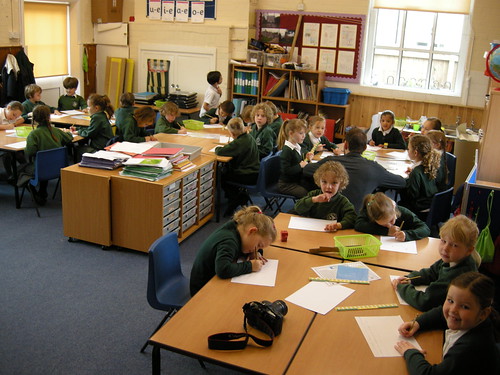
Settling down to making our map bits

The group decides that we need a map before we can start exploring and everyone settles down to draw a mapbit of something interesting/important in the village

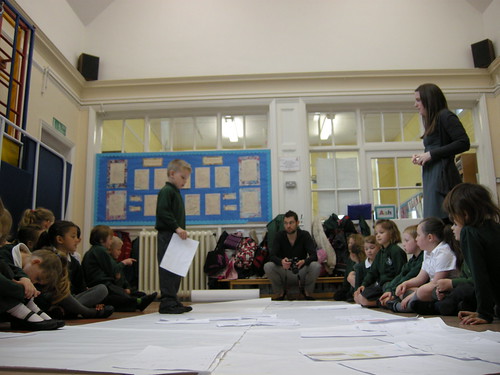
Figuring out where all the map bits go on the ginormo map

The group decides that we're going to need a *really* big piece of paper to put all these mapbits on. Next job is to work out where all the mapbits go...

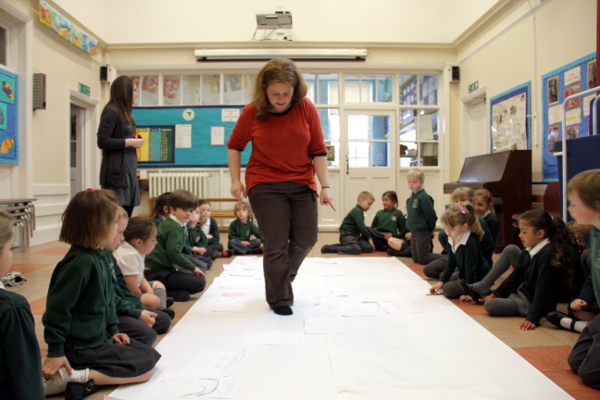
But how do we get from one mapbit to another? (JS)

Paths, roads and other details added to the gaps in the map. (JS)

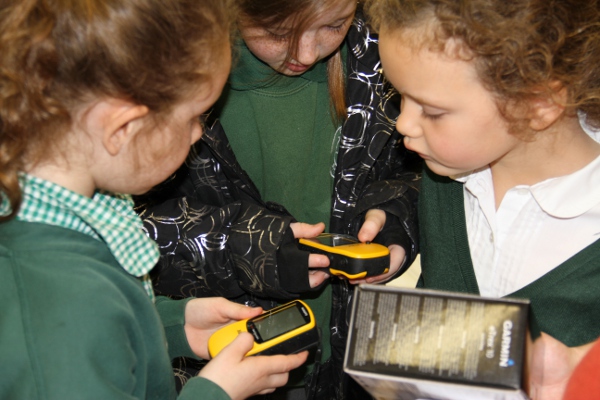
A few of the girls hang behind at breaktime because they think they've figured out what the recently-delivered devices are. (JS)

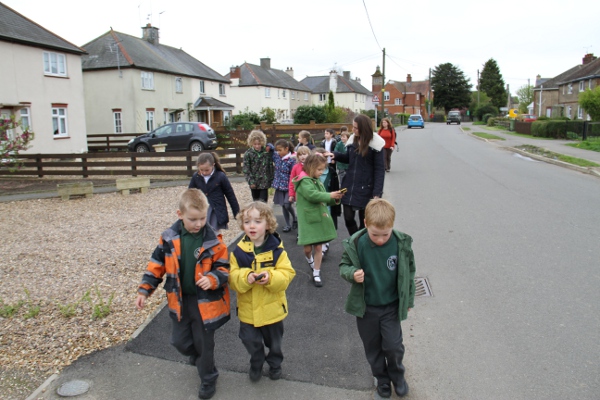
Explorers set out to walk to some of the places on the map. (JS)

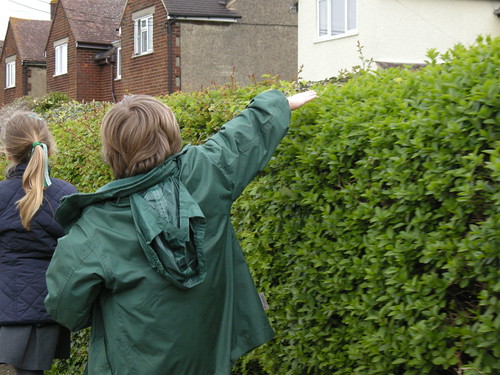
using all our senses

Using all our senses...

A confused Nikki The Explorer needing some things about the village hall explained to her. (JS)

The Pocket Park: many things to discover and examine. (JS)

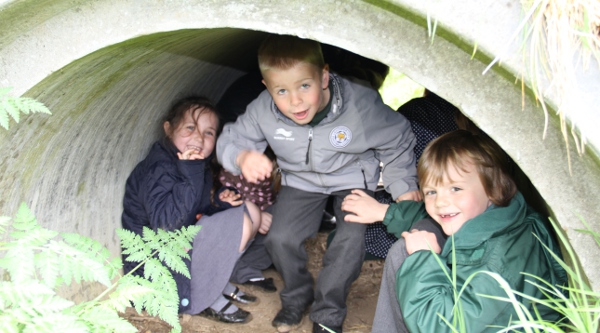
Walking through the tunnel with the GPS devices to see what effect it has. (JS)

Explorers in the tunnel. (JS)

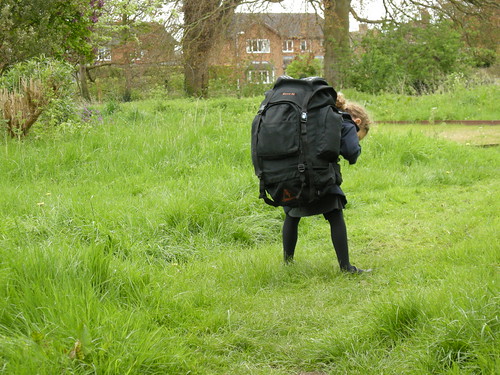
small child and large rucksack

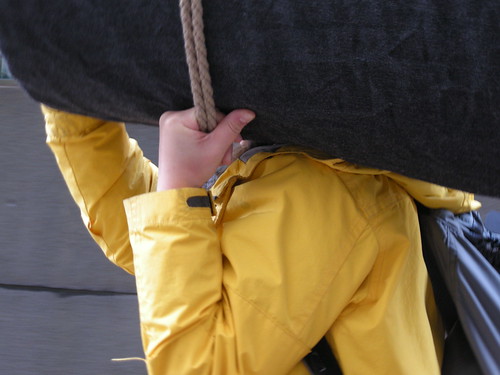
Small child. Large rucksack.

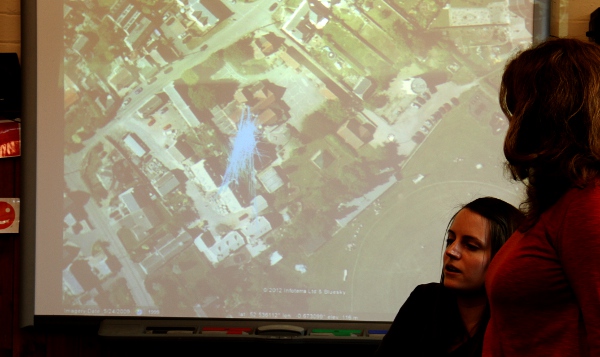
Discovering that drawing a line of where we've just been is actually quite difficult. (JS)

trying to figure out where her house was

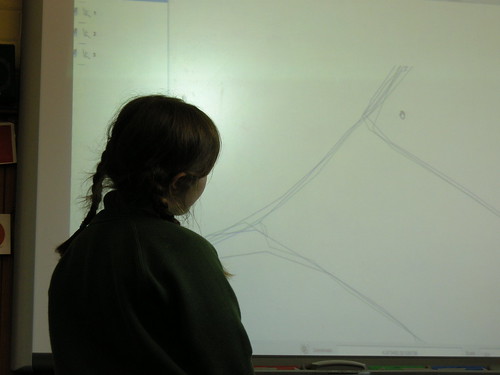
Recognising where home is on the device-drawn traces is even harder...

Recognising places. (JS)

My home-made GPS gadgets get the thumbs up. (JS)

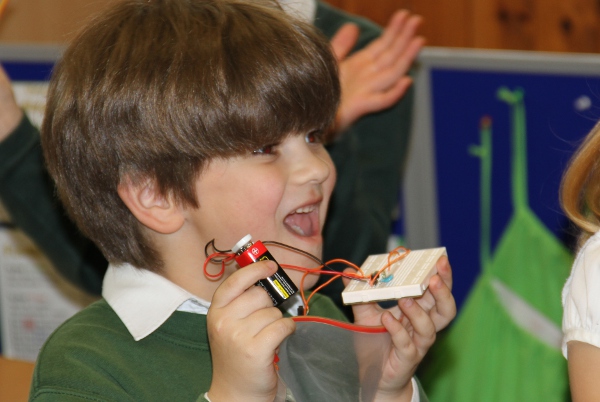
Because - regardless of age - that moment when the LEDs come on is always a good one... (JS)

Investigating dark places and their effect on the gadgets we made. (JS)

Success!. (JS)

Someone puts forward the hypothesis that the trace from the GPS module placed on the windowsill is the way it is because of all of the excitement in the room when we were making our gadgets. (JS)

A great day and a really nice group of people to work with.
Thanks to Garmin for supporting the day through the loan of several GPS devices.

My Flickr set of photos from the day is here.

Possibility Mapping (heavy object and built environment)

DSCN0184

  • It is only through our interactions/collaborations/experiments that we show up.
  • Change the assemblage and a different set of possibilities emerges.
  • Can we explore differently in order to reveal new possibilities?
  • Through the use of new tools, do we get a new world to interact with?
  • How do you arrive at the places that are not yet mapped?
  • Observations and questions arising from the Live Feeds research programme led by Spurse, NYC 2011


    Possibility Probe (heavy object and built environment)
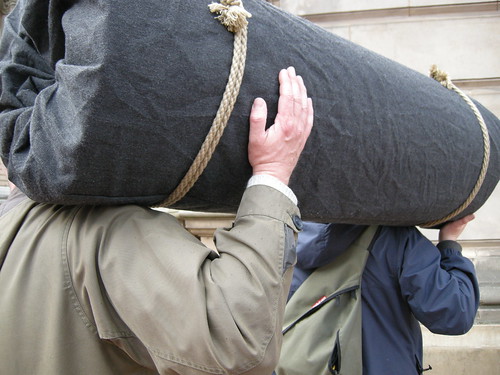
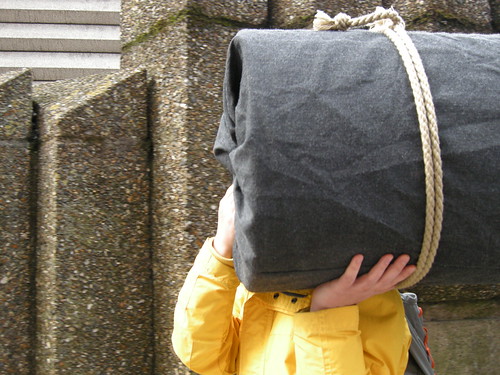
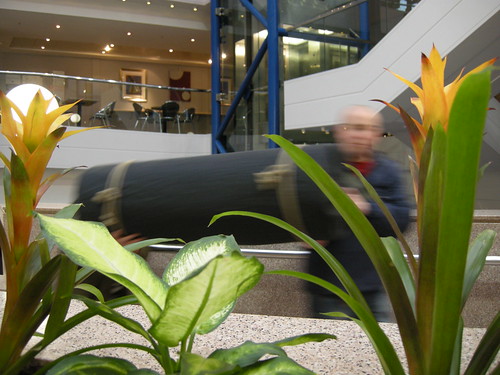
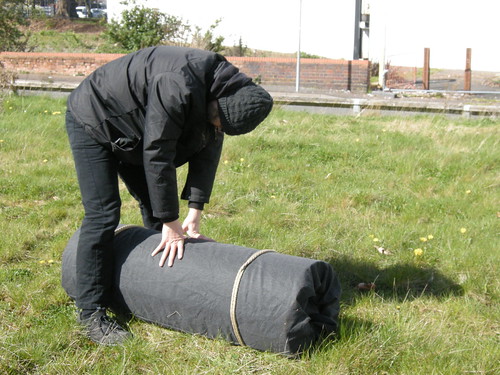
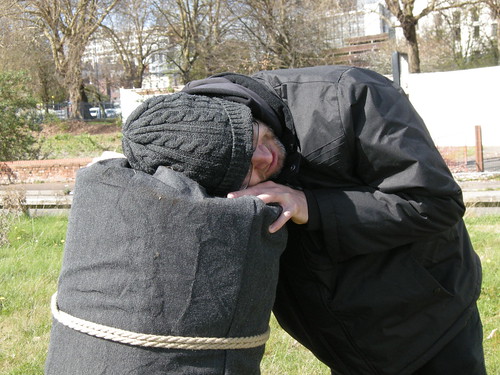
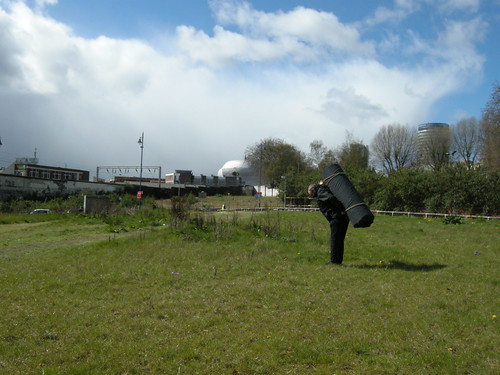
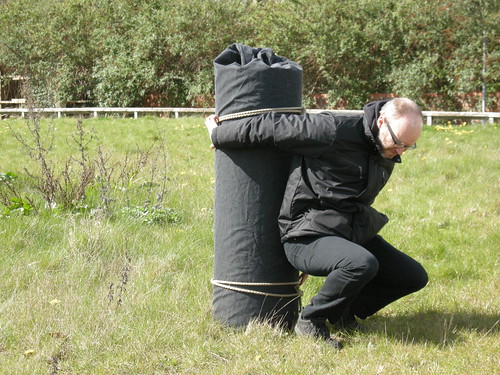
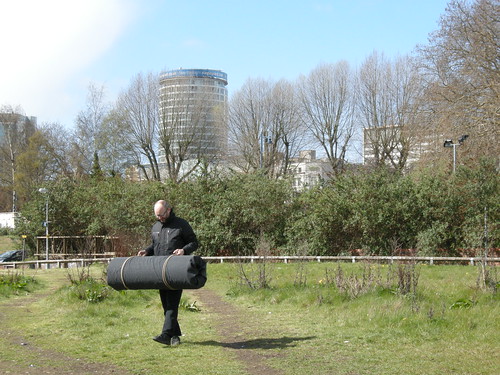
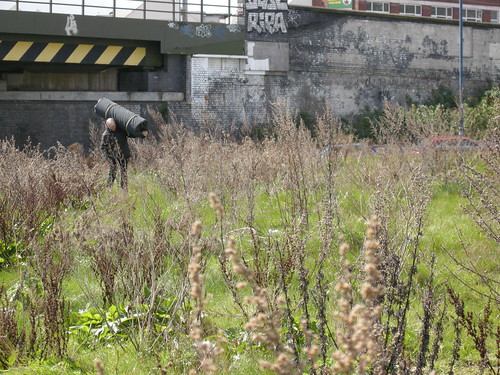
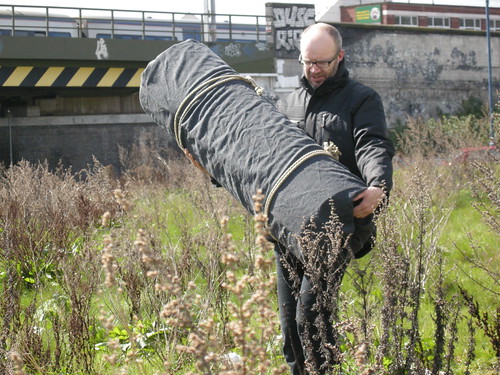
    is a starting point for asking questions and conducting experiments. A direct response to the trend of making mobile technology smaller, lighter and more discreet; these objects are unwieldy, heavy and broadcast to all within hearing distance.

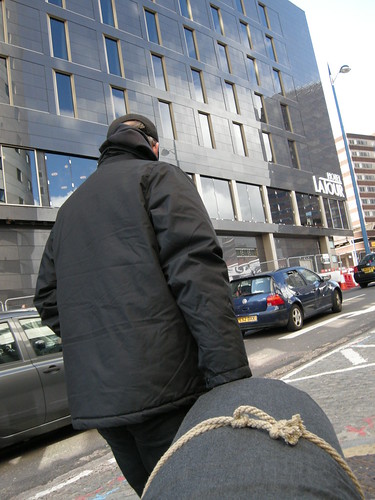
    Cumbersome – a burden if not shared – these Possibility Probes resonate with the built environment that they are carried through. Like a drum or a heart, they beat faster the more they are surrounded by the fabric of the city, slowing as space opens up around them.

    How you carry them, where you carry them and who you journey with will all affect the possibilities that emerge and the unseen qualities that are revealed to you.

    DSCN0381

    DSCN0023

    DSCN0385

    DSCN0045

    DSCN0020

    DSCN0148

    DSCN0358

    More images on Flickr: photo set | slideshow

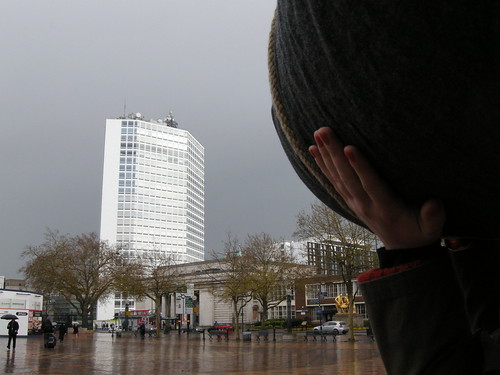
    Possibility Probes hit the city centre

    Yesterday we started the And Miles to Go Before I Sleep… gallery installation in earnest ready for tomorrow’s opening event.

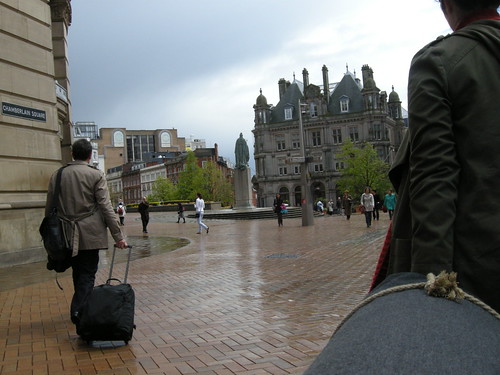
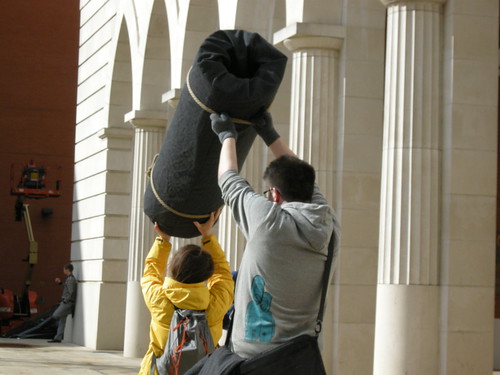
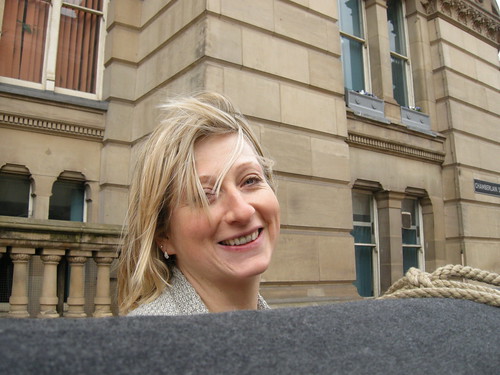
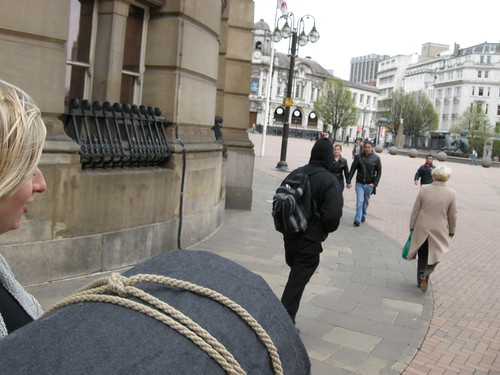
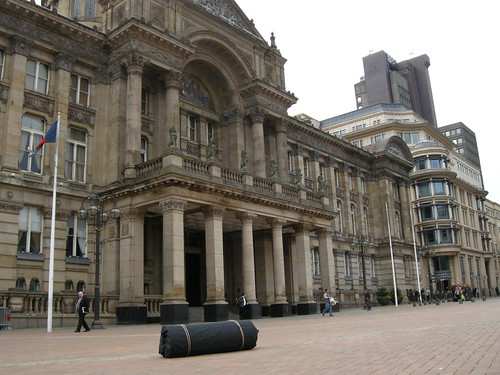
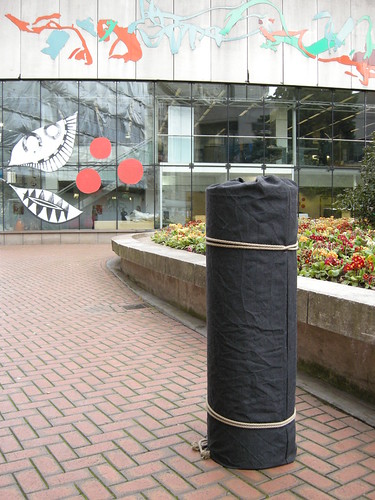
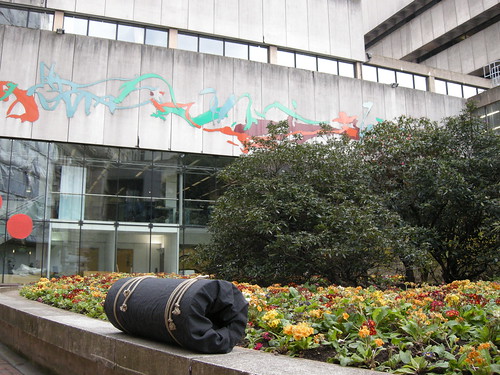
    After sorting out lighting, arrangements, power and cabling, all 3 Possibility Probes have now been assembled. Mona and I took one of them out around the city centre to see what it was like.

    Mona

    Mona gets her first Possibility Probe experience. She seemed to like it...

    All looked very promising in terms of the object functioning as it should and there was much observing, thinking and discussion around some of the questions and associations it raised.

    First up, we do like the materials. Seems there’s a hint of a coincidental Beuysian theme going on with a few of the works in the show. Now seeking a coyote for the opening…

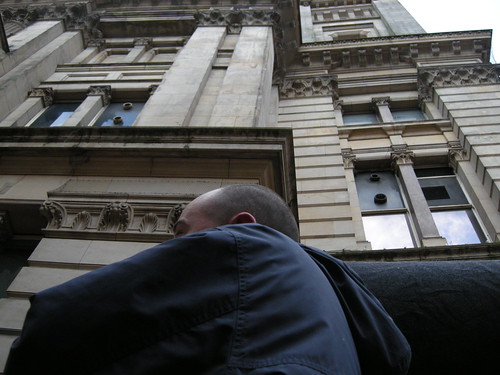
    We also liked the physicality of carrying it around and how it affected our awareness of what was around us.

    As well as trying a few different ways of carrying it, we also put it down and stood away from it a couple of times. We like how it is still audible from quite a way off and are curious about how it conveys a different feeling depending on how it is placed.

    For the opening tomorrow night the tubes will be ‘re-experiencing’ a journey through the city and then on Thursday we’ll be conducting more experiments with them to see what possibilities they open up. (Sign up here: http://heavyobjectbham.eventbrite.co.uk/).

    Test(ing) Tube

    Test(ing) Tube

    Test(ing) Tube

    Test(ing) Tube

    Test-driving the possibility probe

    I like this moment in a project – where the idea made real is first taken out into the wide world and your visions are (hopefully) shown to be roughly on target and, if you’re really lucky, whole new avenues of exploration are opened to you.

    possibility probe

    Test-drive a-go-go

    This morning Pete and I took the Possibility Probes (I’ve sent off the marketing copy, so these things now have a name – Possibility Probes is part of it) out for a test-drive.

    Most targets have been hit:

    • To be contrary to the light, cuddly, empathy-evoking bundles from the initial Colony playtesting (this project is an oxbow in a much larger, meandering research series)
    • To be a little bit uncomfortable and unwieldy, but not too much so.
    • To be audible.
    • To be felt.

    The one main area for improvement before the public get their hands on them is to improve the response to landscape.

    Not bad for a first iteration, though…

    Possibility Probe (first test drive)

    Possibility Probe (first test drive)

    Possibility Probe (first test drive)

    Possibility Probe (first test drive)

    Possibility Probe (first test drive)

    Possibility Probe (first test drive)

    Possibility Probe (first test drive)

    Possibility Probe (first test drive)

    Possibility Probe (first test drive)

    Thanks to Pete for being a willing pioneer and test subject.


    Copyright and permissions:

    General blog contents released under a Creative Commons by-nc-sa license. Artworks and other projects copyright Nicola Pugh 2003-2026, all rights reserved.
    If in doubt, ask.
    The theme used on this WordPress-powered site started off life as Modern Clix, by Rodrigo Galindez.

    RSS Feed.