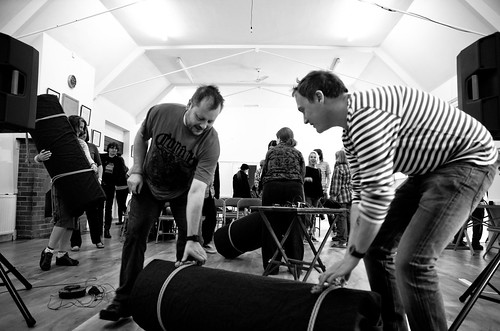
Last Sunday me and some Heavy Objects were at the monthly If Wet… salon.
In a Possibility Probe stylee, I was curious as to how these landscape-reactive devices would look when regarded within the context of musical instruments.
As ever, the most interesting things happened when I stopped talking and handed the objects over to the audience to take and explore with.
Many thanks to Sam and David for looking after me on this occasion, and also for organising such an enjoyable and stimulating gathering every month. I can highly recommend making the trip down to Callow End to sample If Wet… if you’re not already one of the regular participants.
Last week I had the pleasure of visiting the If Wet… HQ at Callow End in Worcestershire, If Wet… being a fabulous monthly salon of sonic explorations, the like of which you’ve almost certainly never seen – or heard – before.
This weekend I’ll be presenting Score for heavy objects and built environment at If Wet.. #5.
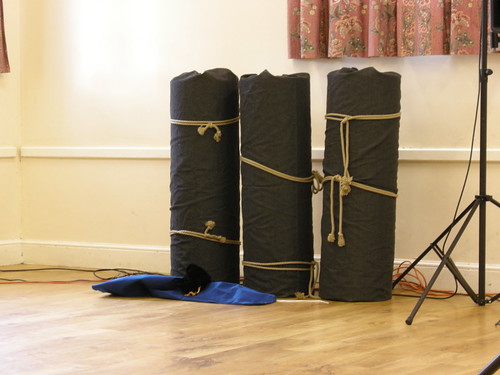
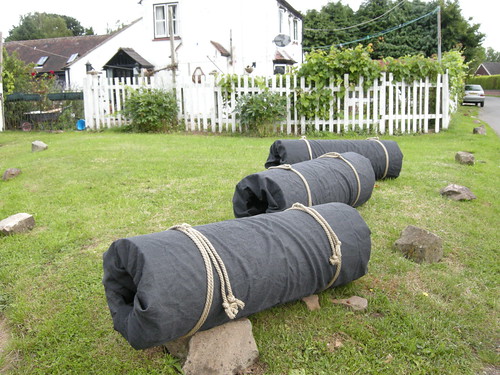
You may remember the Heavy Objects from the And Miles to go Before I Sleep… exhibition last year: large, cumbersome wooden tubes that process GPS data in order to make tapping noises in response to the type of space they are moving through.
An Heavy Object getting a test drive last year
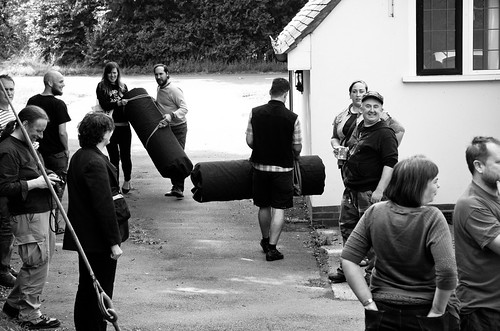
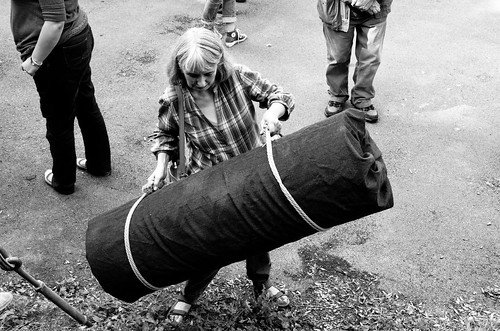
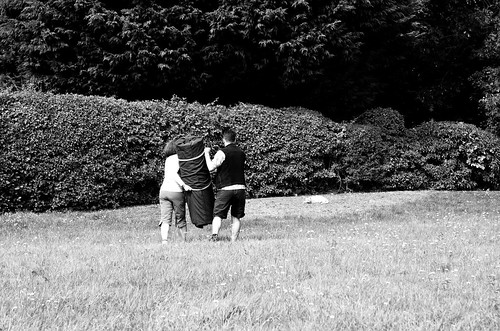
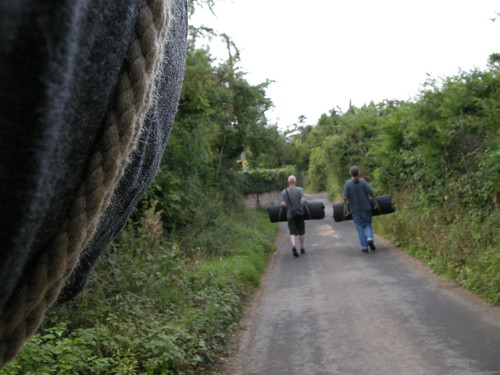
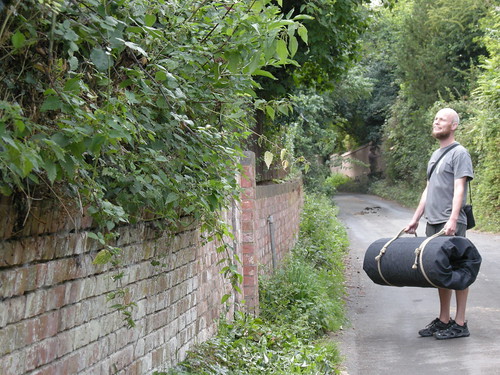
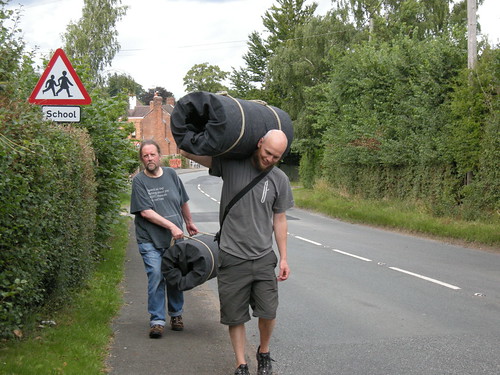
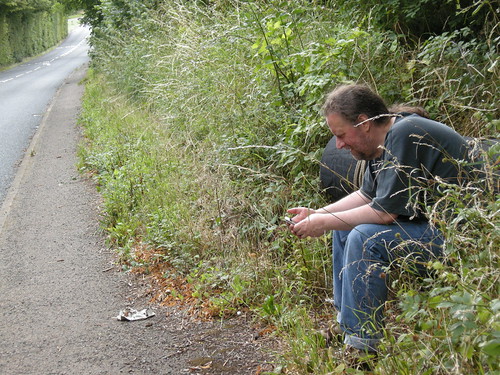
For If Wet… we used the Heavy Objects to record a sonic profile of the village of Callow End and the surrounding area. Having first waited for a gap in the rain, we set off with our unusual instruments…
It was hard work, but worth it for the expressions of the people we encountered along the way. Sam had a few explanations to make to some of his neighbours, although I noted no-one really seemed surprised at what he was doing…
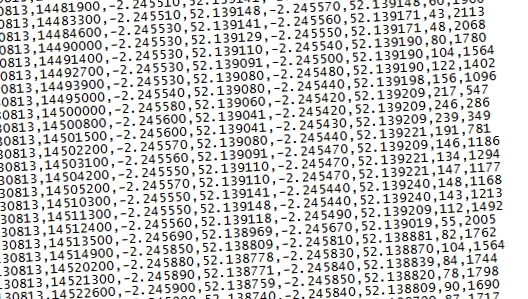
The recording currently only exists as raw data:
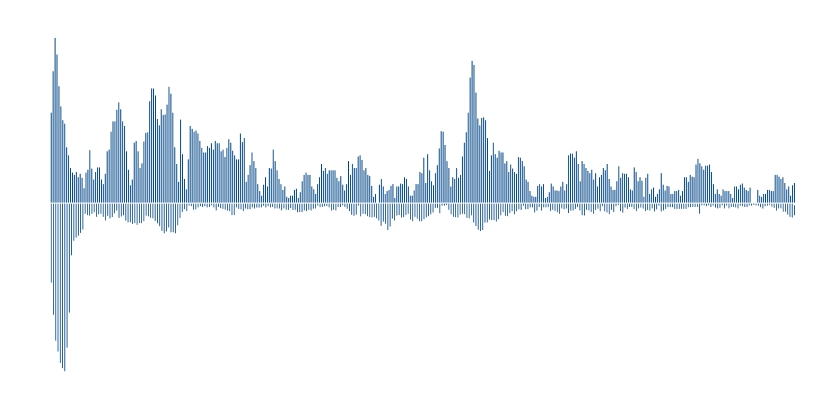
And a couple of visual representations:
For Sunday’s If Wet… we will play the recorded data back though the Heavy Objects for the first time – no one has heard it yet, not even me!
Weather permitting, there will also be an opportunity for you to take a Heavy Object outside and have a chance to use it as an instrument yourself.
As if that wasn’t enough, there will also be a (very) limited number of prints available of one of the data visualisations of the heavy sound of Callow End.
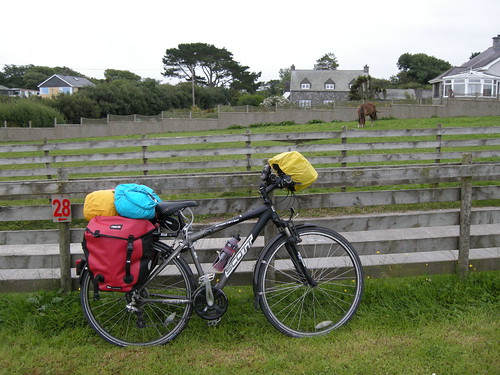
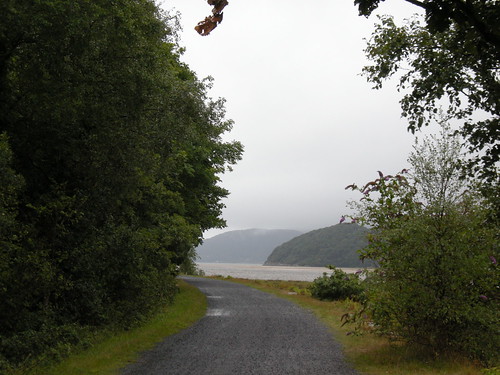
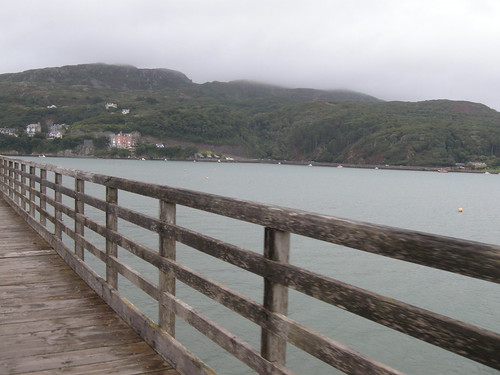
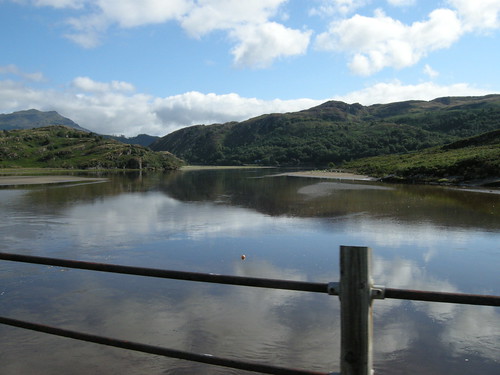
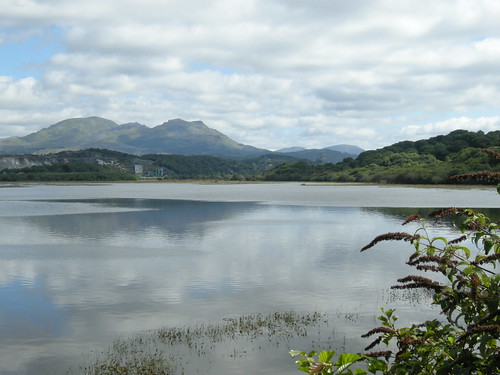
Last week I had the opportunity to join some friends on part of a cycling tour in Wales.
The tracks from the cycling I did. (Click through for a larger version.)
I wasn’t able to make all of it, but I thought the bit I could do would be a very good opportunity to test out a few things for my upcoming project Ride (Birmingham – York), in which I will be cycling and camping my way via a 200-or-so-mile route to York whilst live-streaming data back to a reactive sculpture here in Birmingham.
The Welsh trip was my first proper experience of bikepacking. I’m please to report that, bar a few broken spokes and a comedy last-minute puncture, my bike and camping kit held up to the weather and geography. There was plenty of both!
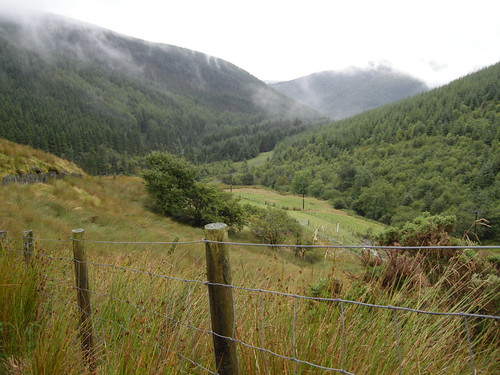
My first day took us over the mountains above Corris. It was cloudy and very steep…
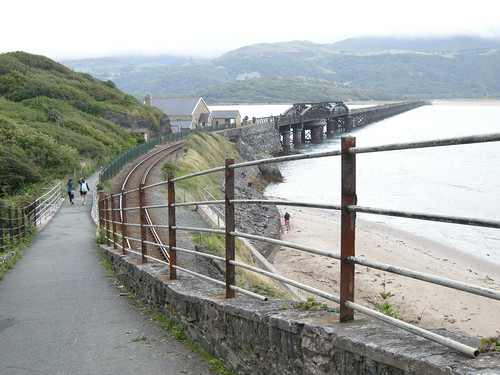
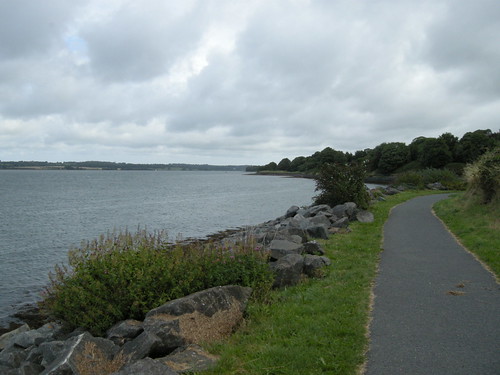
Linking back to the Ride project, I also got to sample some more cycle paths along former railway lines (also alongside current ones).
These were altogether more civilised gradients!
So, I now know I mostly have knees, cycling kit and camping kit up to the task.
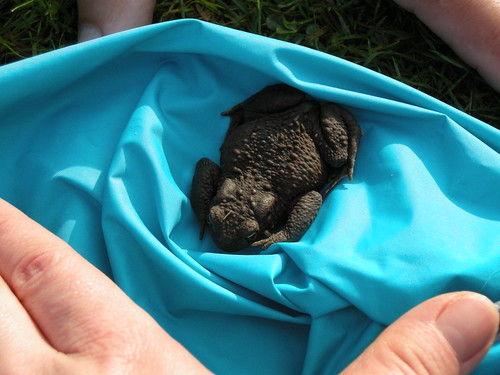
Next time however, I might forgo the toad in my tent…
Many thanks to Peter, Kim, Megan and Wendy for an excellent few days, good cycling and plenty of cake.
~~~~~
Back in Birmingham I’ve been working with programmers Jez Higgins and Mike Cummins to put together an Android app and a database system to power the reactive sculpture. The idea is that the sculpture will change colour/shape/speed in response to the amount of effort going on at the other end with me journeying on my bike.
The Welsh tour was also a chance to test the app software under serious conditions similar to what it will have to perform under next month. I’m a big fan of testing, and this was a brilliant way of highlighting further improvements and modifications that needed to be made.
We’ve since tackled a bunch of those and, along with a databasing session with Mike yesterday, I’m happy to be able to report that we now have the following chain all working together:
Me on my bike -> app on my phone on my bike -> online database -> Arduino -> blinkenlights and other physical outputs.
My next task is to develop the physical outputs and construct the sculpture.
~~~~~
The ride to York, and therefore the time during which the sculpture will be active, will probably start on the 16th of September and continue until the 22nd.
The sculpture will, all being well, be housed at the new Longbridge campus of Bournville College and I’m toying with a gentle bike ride down the off-road cycle path from Cannon Hill Park to Longbridge as part of a launch event on Saturday the 14th.
Watch this space for more information as it gets confirmed…
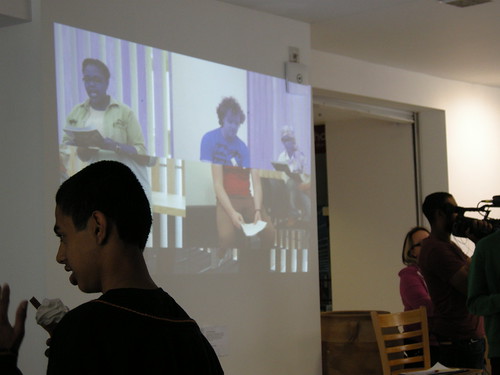
YRA took 10 young artists with varying practices (poets, actors, writers and graphic designers) and, over a week with myself and Antonio Roberts introduced them to different ways of working with data. The aim being to support them in exploring ways in which data and digital tools could be integrated into their work.
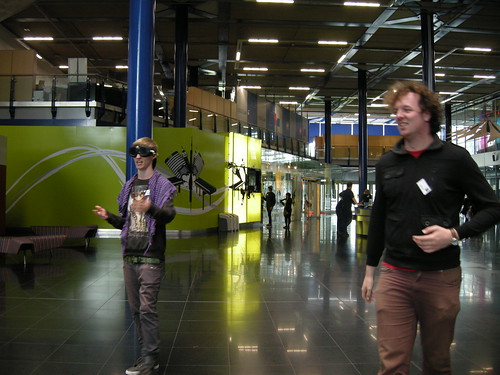
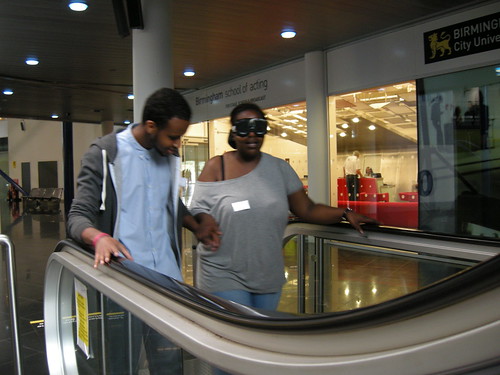
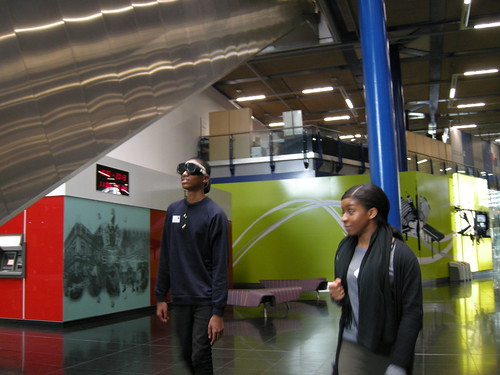
I led the first day, introducing concepts of physical computing and live datastreams coming from sensors. What better way to do this than with the sonar goggles!
We were based in the BCU section of Millennium Point, but it wasn’t long before the participants rose to the challenge and ventured out into more public space.
Later that day I did a quick introduction to Arduino and we finished off with a few MaKey MaKey boards and a chain of everyone we could find triggering a plum-based piano.
This ice breaker made me think of performing arts lessons in which I have to wonder around blindfolded and tune into my other sense. I thought the glasses would be great for my performing arts practice for when I wanted to work on spatiality.
Other tangible technology Nikki introduced to us were ‘Makey Makeys’, I have to say that this was the highlight of my week; with the aid of the ‘Makey Makeys’ we were able to make a piano out of plums! By doing this we were able to also interact with the Young Rewired State young people by bringing them into our room to see how many humans we could add to our live circuit and still have it working (23 and that’s only because there weren’t more of us). Lexia Tomlinson
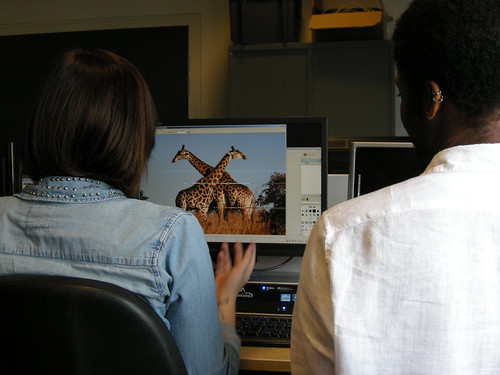
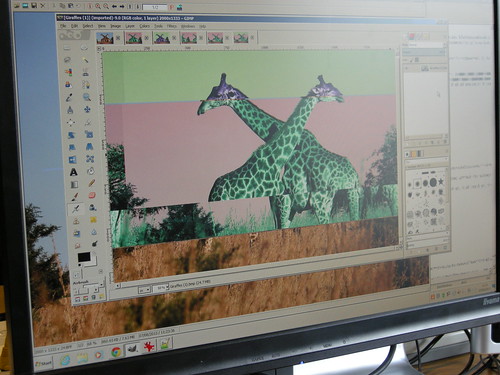
After Antonio had done similar introductions for data-bending and glitch art, it was time for the participants to get into groups and come up with a prototype project that hybridised their existing practices with some of these new ingredients.
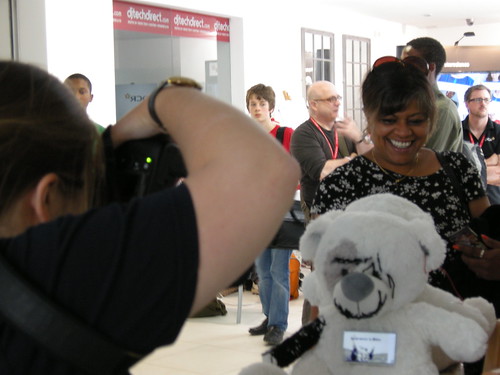
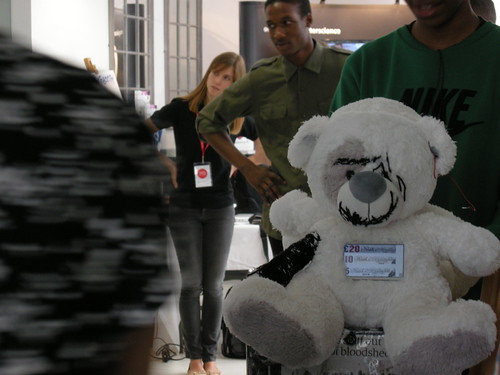
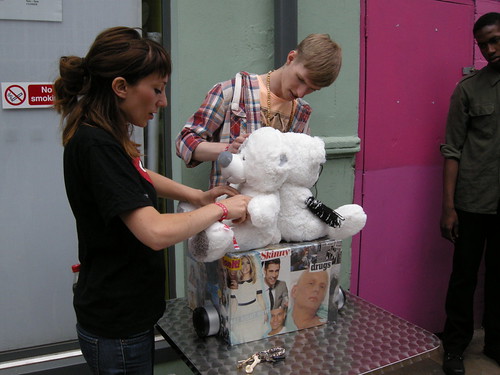
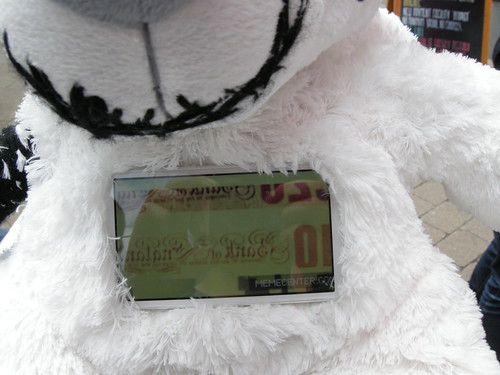
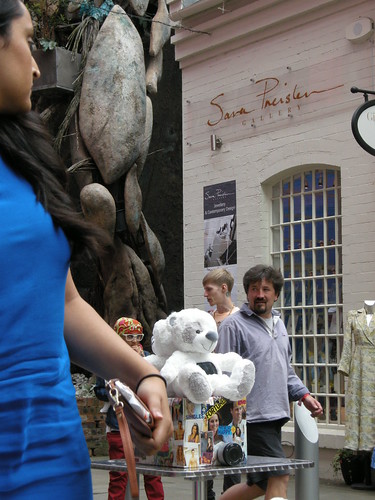
What emerged were a set of glitched Vanley Burke images, a short film exploring digital dependency and twin bears that used proximity sensing to trigger audio contrasting different political viewpoints.
On the final weekend we ventured down from what was now our base in the Custard Factory and displayed our projects guerilla style amongst the amazing chaos of the Young Rewired State Festival of Code.
We struggled to compete against the lunchtime noise, but finally found a spot for the bears outside and stood back to observe the interactions.
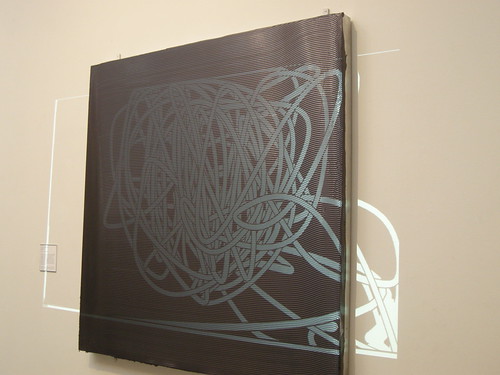
Today was our last day of Inkvisible playtesting. Having decided to move away from the L.A.S.E.R Tag software to a motion-tracking based system, it turns out we still stayed with the Graffiti Research Lab.
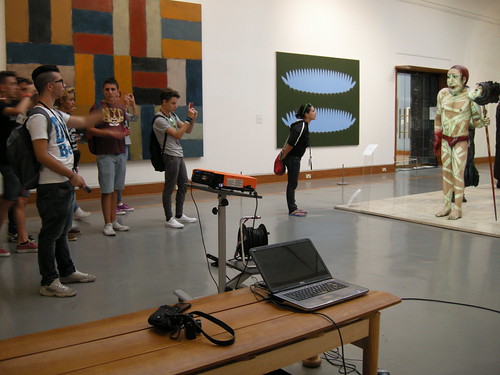
Ben Eaton hacked an installation of BlitzTag to work with a Kinect sensor.
After a bit of configuration for the space, we started getting our first curious bystanders.
They rapidly became participants!
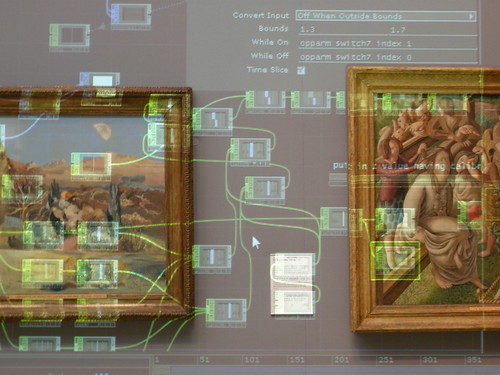
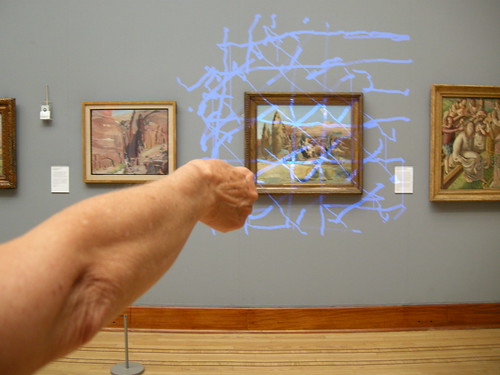
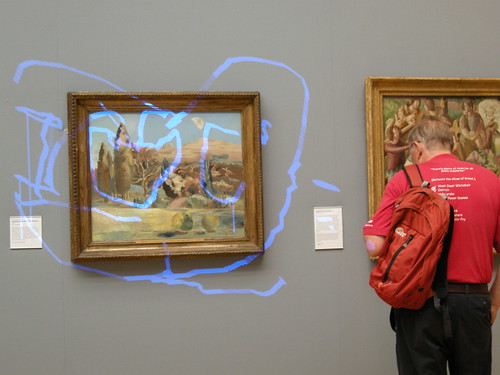
The first observation was that this system gave much smoother results. Strangely the projected line almost felt elastic at times. The second was that people seemed to get really very absorbed into the movements – in the same way that you might run your fingers through sand on the beach or trail them through water. It’s quite a different experience from the version that tracks a laser pointer. This is much more about the movement of the body.
The snippet of video gives a small sense of this, but basically we were finding that people (of all ages) were doing this for several minutes, content to just swirl their arm around and see the traces formed.
With very few exceptions, the results all looked like this:
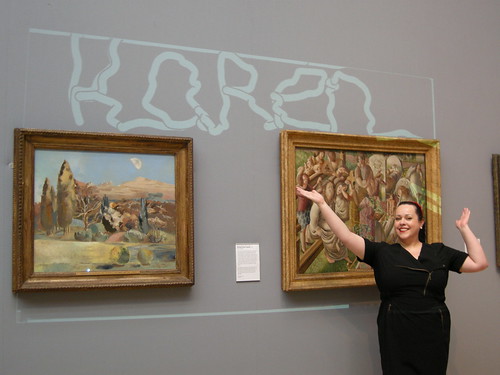
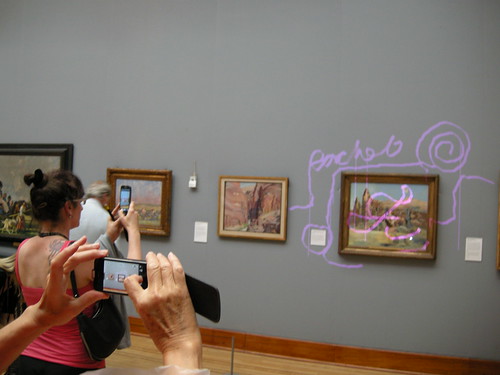
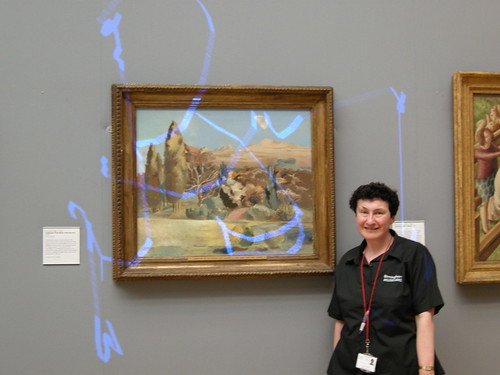
Although we did have one or two cases of people writing their names:
People seemed to filter out the paintings we were hoping they might respond too. I think most people would have preferred to have had a blank area of wall to mark onto.
This, however, was not what we were trying to investigate so, time to change things up a little!
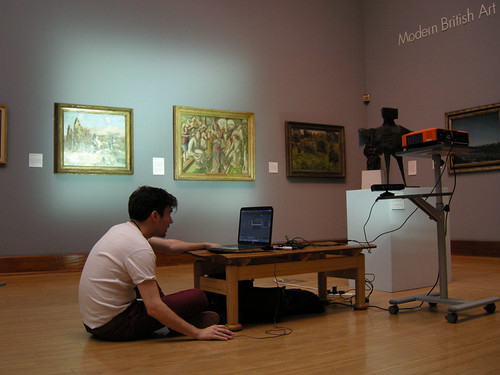
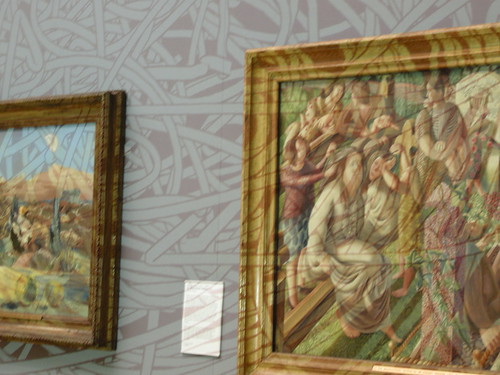
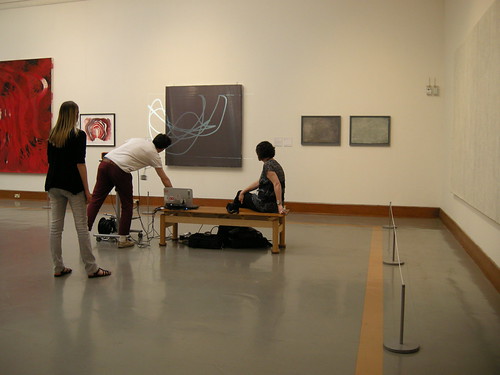
We relocated to the gallery next door and set up over an abstract painting. Here we wanted to see if we could find a base layer that resonated more with the projected graffiti layer.
It started to show some promise, so we did a slow pan of the room to see what different scales and substrates did.
I very much liked the feel of working on a huge scale as when happened when the projector reached down to the far end of the room. The corresponding drop in intensity was noticeable though, in that the lines were quite faint. It would be really good to try something on this scale, but with a much more powerful projector so that the results are still vibrant.
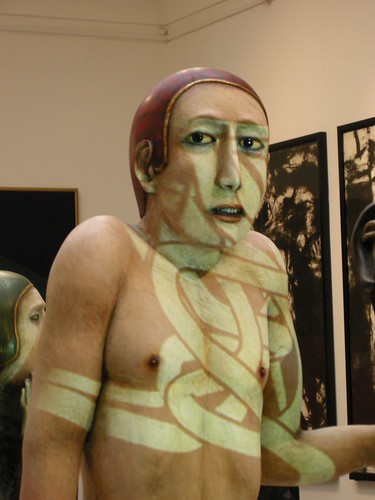
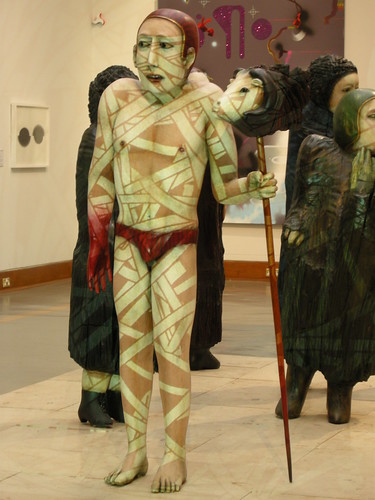
Now we started to be actually interacting with the artwork. Admittedly still through kind of scribbling, but when you mark across a face, a part of you feels it on your face too.
So, this was significant not only for the shift in interaction, but also because this was the first time we had been able to successfully project onto 3D sculpture (reflection and scatter problems with the lasers).
Both systems we trialled have their pros and cons. In particular with this one we missed the ease of being able to tweak settings and the effect of the paint drips.
As with L.A.S.E.R. Tag, BlitzTag was not without its quirks when it came to problems with tracking. For some reason it simply would not detect and respond to the movements of several people.
We weren’t really in a situation that enabled us to do de-bugging of what was causing this, but we suspect it to be partly to do with differences in clothing.
The system was generally able to detect me, so we devised a couple of work-arounds that sometimes worked. The first was to give people my brown shirt to wear (see above) and the other was for me to stand in front of people to act as a sort of shield.
In summary we think this has got a lot of potential, but we think any next steps would benefit from a particular context (giving a direction to the types of responses being sought) and a big chunk of time that could be spent de-bugging the installation and customising the nature of the projections.
That’s us out of time, though. Next week we report our findings back at King’s College.
Following on from the recent conversation I had with Garmin‘s Laura Tomei at the Fermynwoods event Art + Satellites, I’m very pleased to be able to announce that they’re supporting my upcoming project Ride (Birmingham – York) through the donation of a Dakota 20 navigation device. This should mean I can actually find my way to York!
Ride has come about from a commission from VINYL: you can read some of my early thoughts here and hear me talk about it in this talk I did for Pecha Kucha Night Afternoon Coventry:
Short version: in September I’ll be cycling from Birmingham to York whilst streaming data back to a reactive sculpture somewhere in Brum.
Meanwhile, the Dakota arrived the day before yesterday and I had to set about learning the language of Garmin devices. It’s a bit of a learning curve, but I’m starting to get the hang of it now!
After a quick play and familiarising myself with the menus and settings, I naturally wanted to take it out on the bike to see how it behaves in use.
This required molishing a quick bike mount. Here’s what I came up with:
PCV foam board with cable-tie holes and velcro slots
And here it is on the bike and out and about
It worked really well – only coming off when I hit a pothole at 26 miles per hour!
Even surviving canal towpaths!
Anyway, a brief moment of DIY bodge glory, as yesterday a RAM mount arrived in the post.
I didn’t buy any of the mounting component stuff, just the bit that clips directly around the Garmin. Yesterday I made do with simply cable-tying this to my handlebars, but this morning I’ve attached it onto a spare light mount to produce this:
So, off we go into the wide yonder to find out what this thing can do and what I can do with it!
On the 2nd of July I took part in an ‘in conversation with…’ style event for Fermynwoods Contemporary Art: Art + Satellites. My conversation partner was Laura Tomei from Garmin (the GPS device folks).
One of the things that came up was the language of GPS part of this was realising that GPS is only one dialect amongst many satellite navigation systems (GLONASS, BDS and Galileo being others)
I had a bit of an insight into my own practice and observed that perhaps what I was doing was also searching for alternative languages of navigation, often those that work on a more intimate scale: the whispers in the ear and the tug on the sleeve.
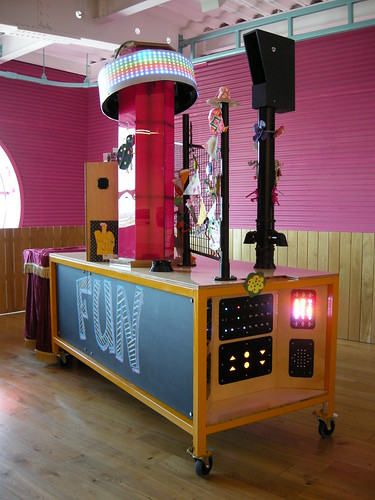
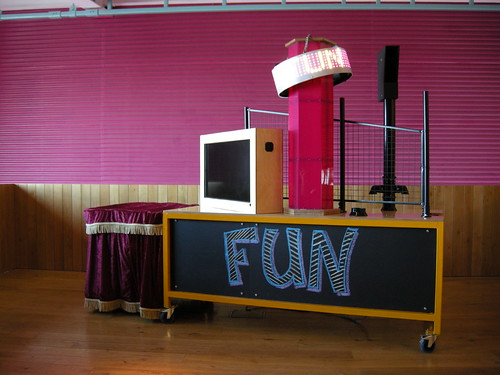
So we (Garry Bulmer, David Checkley, Rachel Sutton, Kim Wall and I) eventually finished building a Mobile Fun Factory for The Public in West Bromwich.
Designed as a mobile unit that is interactive in its own right as well as providing a method of displaying work made during the summer programme’s activities, the Mobile Fun Factory had quite a brief to fulfil. It also had to fit in the goods lift.
Here’s what we made…
It sports:
A 42″ screen on the top
A smaller touchscreen screen in the Secret Cinema (behind the velvety curtains)
Some amazing velvety curtains
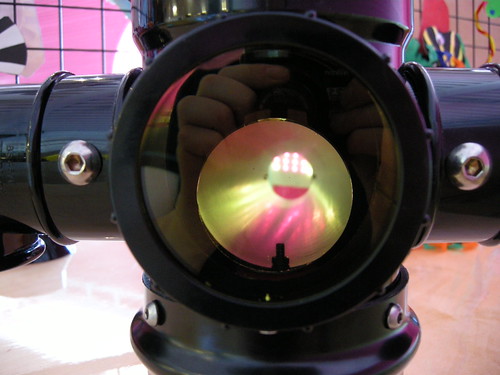
A camera sending a live feed to a screen on the other side of the unit (pleasingly infra-red)
A chimney that glows in a vaguely TARDIS-style manner
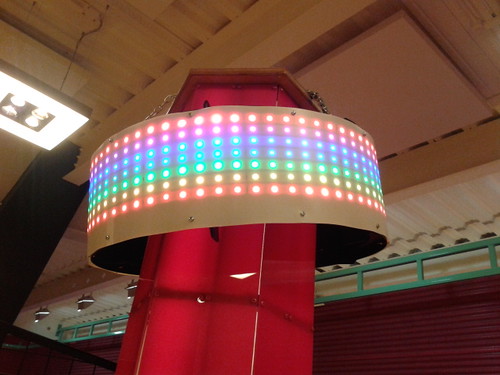
A scrolling LED matrix
Lots of mesh for attaching artworks to
A mahoosive blackboard
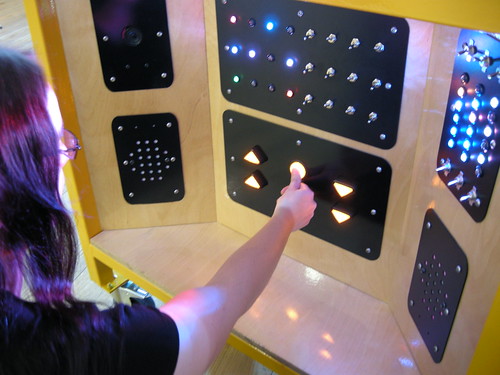
A Control Panel full of big pressy buttons, thunky switches, rainbow LEDs and random noise samples
Well, sort of, the periscope and the chimney have to be detached, but we figured out ways of doing this in a reasonably straightforward manner whilst still having them secure once re-attached.
The gorgeous curtains for the Secret Cinema. What’s inside? Only one way to find out…
Nice kaleidoscope effect when the periscope points at the LED hoop
The LED hoop in all its glory. It also runs Conway’s Game of Life, which is rather nice.
The Control Panel – an easy way to lose track of time as you explore the different sound samples and admire the blinkenlights. All those switches and buttons do something; can you figure them out?
Photos of several of the bits don’t really do them justice, so here’s a quick video to give more of a flavour:
Having previously decided on our location and homed in on some of the aspects of interaction that we wanted to encourage during a planned final even, our aim for last Friday was to set up in situ and perfect the tech and social set-ups.
It all started well, with some excellent exchanges. Following an observation from Ben, we made a bit more of people having their photos taken alongside the marks they had made.
We’re interested in how this may change the dynamics of what people draw and also the ownership they take of it.
A Dutch artist echoed the paintings she usually does that consist of white and blue lines. She was very keen to take lots of photos of everything and there was a very strong sense that she would go on to share these with others.
We don’t often get people writing text (it’s quite difficult, especially on your first attempt), but someone who I’m guessing was a visitor from East Asia, contributed an I ♥ You.
I’m curious about how this behaviour might relate to whether people consider themselves tourists or not. As a nice juxtaposition, though, this member of staff was also keen to have a go and to know where she could find her photo online afterwards. (pssst! It’s here!)
We also had our first genitalia drawn – suffice to say from an unexpected source!
It’s been very interesting talking to people and finding out about their expectations and assumptions about what ‘everyone else must draw’. We think there’s some interesting psychology going on here beyond anything too Freudian.
Unfortunately we then hit a point where the technology started to seize up on us; first working intermittently and then failing to work at all.
This has scuppered our plans to hold a formal event at the end of the month, however you could argue it has furthered our learning and the conversations around it quite a bit.
After some wrangling we decided we couldn’t run an advertised event with the technology being as unpredictable as it was. We have a fair idea of what we are asking from such an event though, and increasingly how to achieve that, so we’re still going to design and plan one – we’re just not going to try and make it happen just yet.
In the meantime we’ve still got one more day at BMAG: stay tuned to find out how we’re going to use it…
As part of the Many & Varied programme at The Public over the summer, I’m running another of my GPS Orchestra workshops.
Again limited to 10 people, but this time supported by Arts Council and running over 2 days, the £40 ticket price represents quite a bargain – get yours now!
We’ll be using a combination of Arduino, simple electronics and junk materials to make a collection of noise-making devices that play themselves in response to how you move through a landscape.
Whilst coding experience might be useful, it’s nowhere near as essential as imagination, a sense of humour and a willingness to give things a try. Absolutely no musical ability required whatsoever.
I’ll guide you through what you’ll need to read live data coming in off a GPS module and use an Arduino nano to translate this into taps, rattles, swooshes and whirrrrrs through an assortment of motors, servos and the like.
By the end of the weekend you’ll have a great utility belt of translatable skills and enough know-how to buy your own kit if you decide this is something you’d like to do more of.
My main area of enquiry is centred around interactions between people and place: often using tools and strategies from areas such as pervasive games and physical computing to set up frameworks for exploration.
If you'd like to commission me or collaborate with me, please get in touch via the contact page.
General blog contents released under a Creative Commons
by-nc-sa license.
Artworks and other projects copyright Nicola Pugh 2003-2026, all rights reserved.
If in doubt, ask.
The theme used on this WordPress-powered site started off life as Modern Clix, by Rodrigo Galindez.