October 8, 2011

Manhattan in cross-section

For the last few weeks I’ve been walking across Manhattan from East coast to West and back again gathering GPS data.

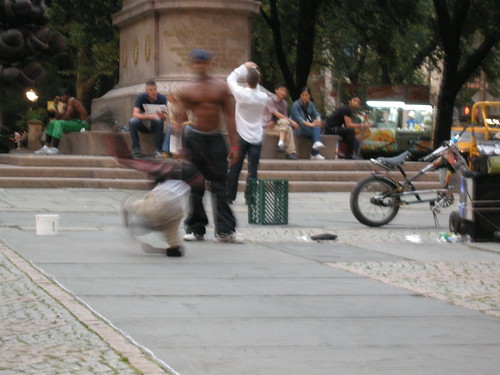
West of West 81st Street

East of East 79th Street, about 50 minutes later

I’m interested in how the land use (and therefore the effect on the GPS) varies as you move inland, gradually moving into more affluent areas, then the open space of Central Park, then out to the coast again.

As I repeat the process for different streets, I also get a sense of the change in landscape as I move further North: Midtown East becomes the Upper East Side becomes East Harlem; Midtown West becomes the Upper West Side becomes Morningside Heights.

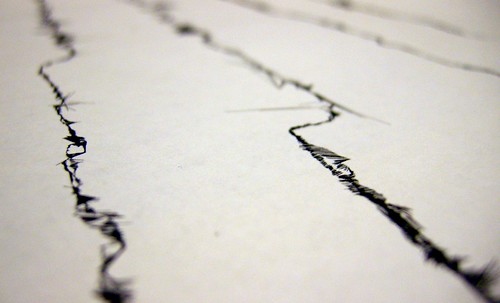
I’ve recently reached the stage where I’ve been able to get the traces printed out and it’s interesting to see the ghosts of the city in the lines.

First printout of the processed GPS data

I’m looking forward to getting back home and being able to print them out full-size to enjoy and explore in more detail.

Splacist Manifesto v2.0

A revision of v1.0 and a work in progress in advance of an event at MADE in late November.

splacist (splā sĭst)

A contemporary mode of practice proposed by Paul Conneally. A new set of ideologies defined by Hannah Nicklin and Nikki Pugh. A hop, skip and a jump away from phsychogeography and the works of the situationist international. With more practice and less wine. Think space, place and splice. Though still with a bit of wine.

Developed empirically by whoever’s interested.

WE ARE THE SPLACISTS

We will own this city.
We will take it back.
We will link and shift; across time, space, people, places and processes.
We will weave throughout the fabric of people’s lives.
We will unpick it.

We will expose and re-see.
We recognise our observation affects the outcome unavoidably.
We will affect and be affected.
We will glory in the moment, the collage, the marking and then passing on.

We reject your beginning, middle and end.
We will work on and across edges. We will push them. We will blur them.
We will trace and leave traces.
We will work with you, not for you.

We reject your shopping centre, your pavement, your cultural quarter;
We will under mine pre-defined spaces. We reject them.

We will fail spectacularly, vitally, elegantly.
Our practice will be open, although it may not always be out in the open.

We will make exchanges.
We will make adventures.
We will reveal beautiful moments.
We will reveal the ugly.
We will hold your hand.
We will whisper in your ear ‘let go’.

We will reclaim the city, not for you, but with you.
We are you.

WE ARE ALSO THE TECHNOLSPLACISTS

We will not be technosplacist when being splacist will suffice.
We will never underestimate the power of cardboard and masking tape.
We will not be afraid to get our hands dirty.
We will not be afraid to do without digital at all.

We will use ‘digital’ as tool and material, not as veneer.
We recognise ‘digital’ is not necessarily something ‘other’.

We will make and share our own tools as appropriate.
We will collaborate.
We will be generous.
We will be porous.

We will re-reveal technology as used by private interests.
We will hold them accountable.
We will put it to our own uses.

We will cut, and we will paste.
We will undo.

We will be artful. We will be skilful. We will fail usefully.

We will find our own energy sources.

We will pervade.
Hello Stranger

Workshop with Kio Stark.

Mission:

  • Approach a stranger.
  • Ask if they will help you with a project and answer a question on camera.
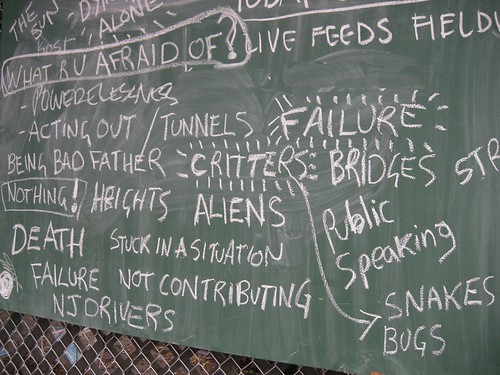
  • Ask them what they are afraid of.
  • [interact]

Responses:

(Of course the most intimate and revealing was off-camera.)

What are you afraid of? #1 from nikkipugh on Vimeo.

Collated results from all of the stranger-finders

Resonances:

  • City as potential interactions and potential for interactions.
  • Rules are unwritten …but can be bent.
  • Interactions with strangers as a mechanism for connecting to place.
  • Strangers are good for your brain. New people; new ideas.
  • The importance of interesting things (points for conversation) happening in public places.
  • The importance of providing spaces for strangers to interact.
  • How the rules are relaxed in transitional spaces (train stations, elevators etc).
  • The unexpected works!
  • The value of conversation.
  • The value of making interactions where there was none before.

Questions:

  • How does it change things if we go about the city knowing we are somebody else’s stranger-in-waiting?
  • Can we lower the barrier to interesting interactions?
  • What would a signalling system look like to enable others to see if we were open to new encounters or not. (update 03/10/2011: This question’s been bugging me as being too obvious, so I’d like to use it as a starting point Signtific style to get somewhere else.)
  • Thinking there’s an empathy barrier analogous to an enthalpy barrier. What novel catalysts can we provide to lower the barrier?

The relationship between activation energy (Ea) and enthalpy of formation (ΔH) with and without a catalyst, plotted against the reaction coordinate. The highest energy position (peak position) represents the transition state. With the catalyst, the energy required to enter transition state decreases, thereby decreasing the energy required to initiate the reaction

~~~

After the workshop I stopped to help a man measure a bit of sidewalk that was longer than his tape measure.

Habit(at)

I’ve been in this city for less than three weeks, and already I’m wrapping myself in the comfort of habit: where I eat; how I get from place to place; my daily routine.

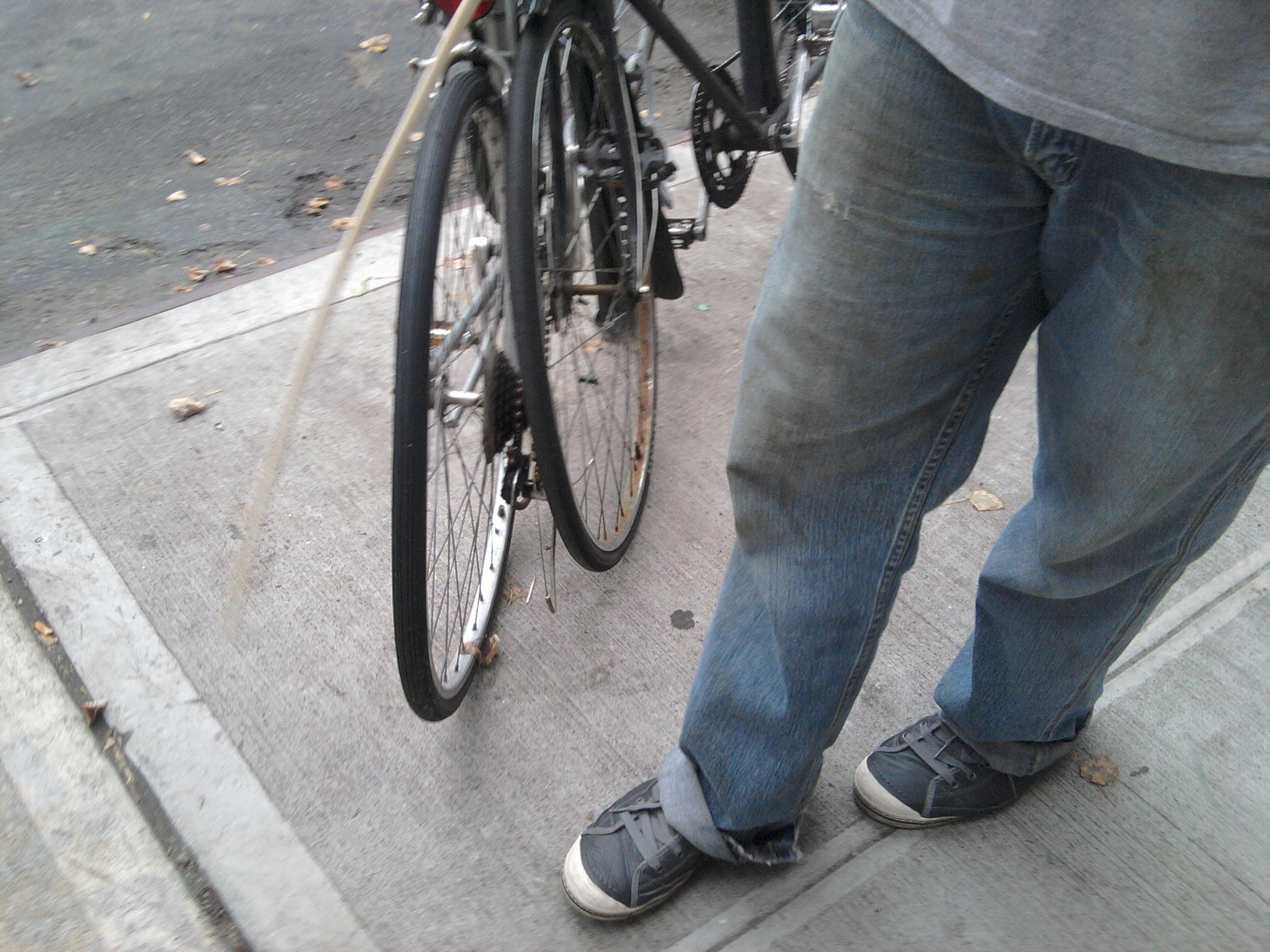
As a result, I’ve been trying to mix things up a bit. It’s amazing how much difference just crossing the road at a different intersection makes. If instead of walking along E 52nd on the Southern side and turning left down Lexington before crossing at 51st to enter the subway, I cross at 52nd and walk down the opposite side of Lexington, suddenly a view of the Chrysler building is revealed.

The joint second tallest building in the city, and I had no idea it was there until I changed my habit by a few tens of metres.

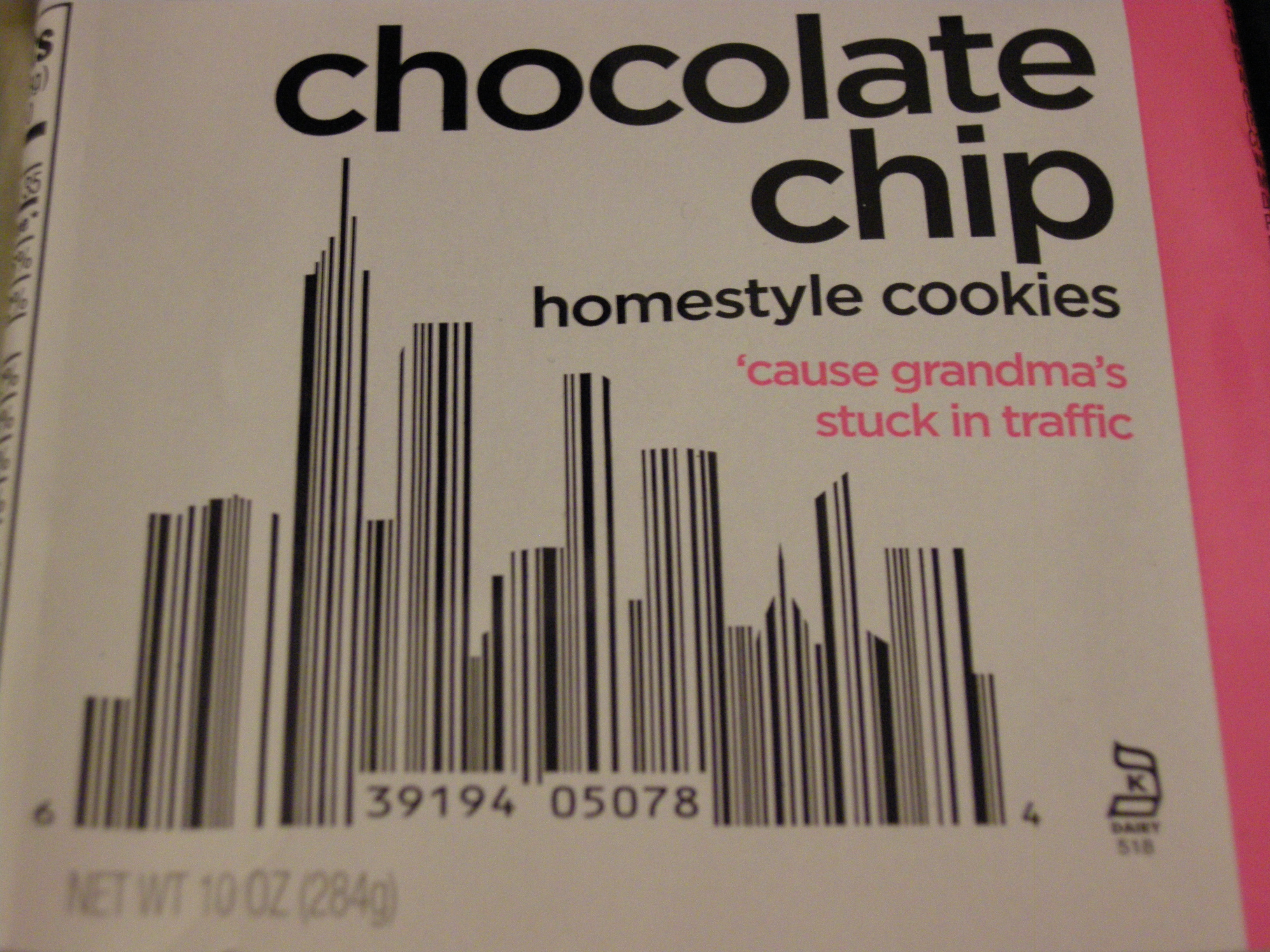
I only bought them because of the barcode…

If half the world’s population is now living in cities, I suppose that must mean a fair few grannies live in tower blocks; it’s just not a skyline I have been trained to associate with the notion of homemade-ness…

Mapping now possible

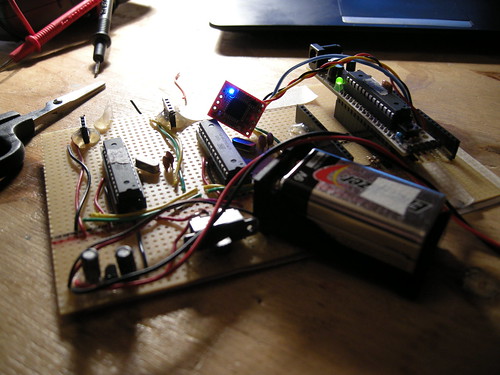
There’s still work to be done, but over the last couple of days I’ve finally been able to replicate the traces I’ve previously been using two sat-nav type devices to make, using my home made Arduino-based system instead.

This feels good.

From here I can go anywhere.

The iPaq-in-each-hand technique

The 3-arduino-2-GPS-modules-and-a-micro-SD-logger-hidden-in-a-bag-so-as-not-to-scare-people-too-much technique

Whilst I’m using this set-up for logging, there’s painfully little feedback on whether things are working as they should, however once I return to the UK I’ll be experimenting with using it to drive various visible and/or audible things and of course putting it inside the Colony creatures.

In the meantime though, I shall be testing, testing and more testing.

Mapping possibilities

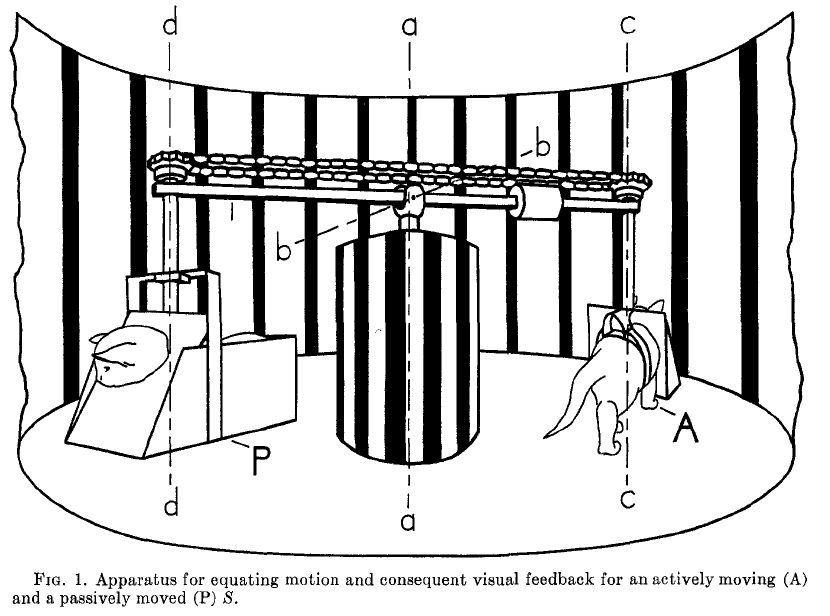
Yesterday I took part in Spurse’s Mapping the Distributed Self workshop at the Guggenheim Lab: “Can we develop a different view of the self—a self that extends beyond our skin, out into the surrounding environment? One that is distributed and woven into the environment?”

At the moment everything’s reflecting back onto Splacism as we try and figure out what it is and what it might be.

Amongst a whirl of kitten carousels and collapsing wave functions, I’m now pondering the opportunities for working with digital tools and materials for creating new ways of perceiving our surroundings and encounters.

Assemblages; perspectives; co-composition; possible states; experimentation; meeting local conditions; mapping as fiction-making; disintegrating tales; the needs of the self.

Can we explore differently in order to reveal new possibilities?

Through the use of new tools, do we get a new world to interact with?

How do you arrive at the places that are not yet mapped?

East – West

66th Street: there and back again

GPS parallelograms

Not entirely what I’d expected when I went out to test the homebrew GPS system today…

Several hours meandering around Central Park rendered as 10,000 small lines mostly aligned in one of two directions

What’s going on there, then?

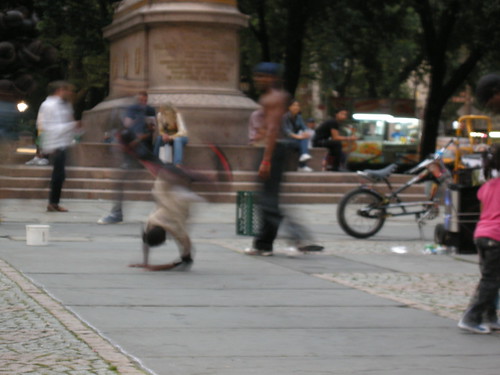
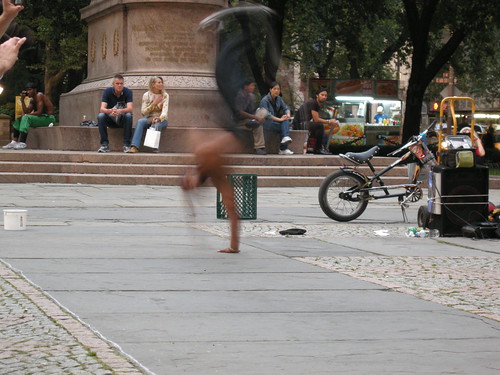
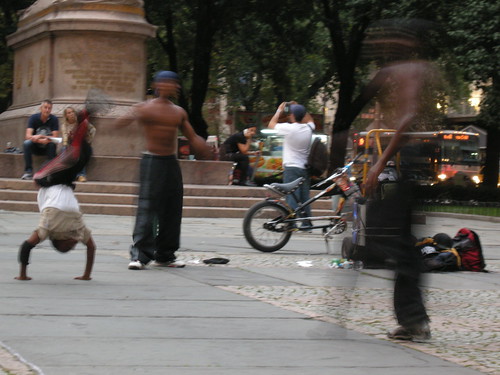
Bodies in motion

I was thinking it’d be interesting to have the beats in time to the movement instead of the other way around; has anyone done that Kinect hack yet?

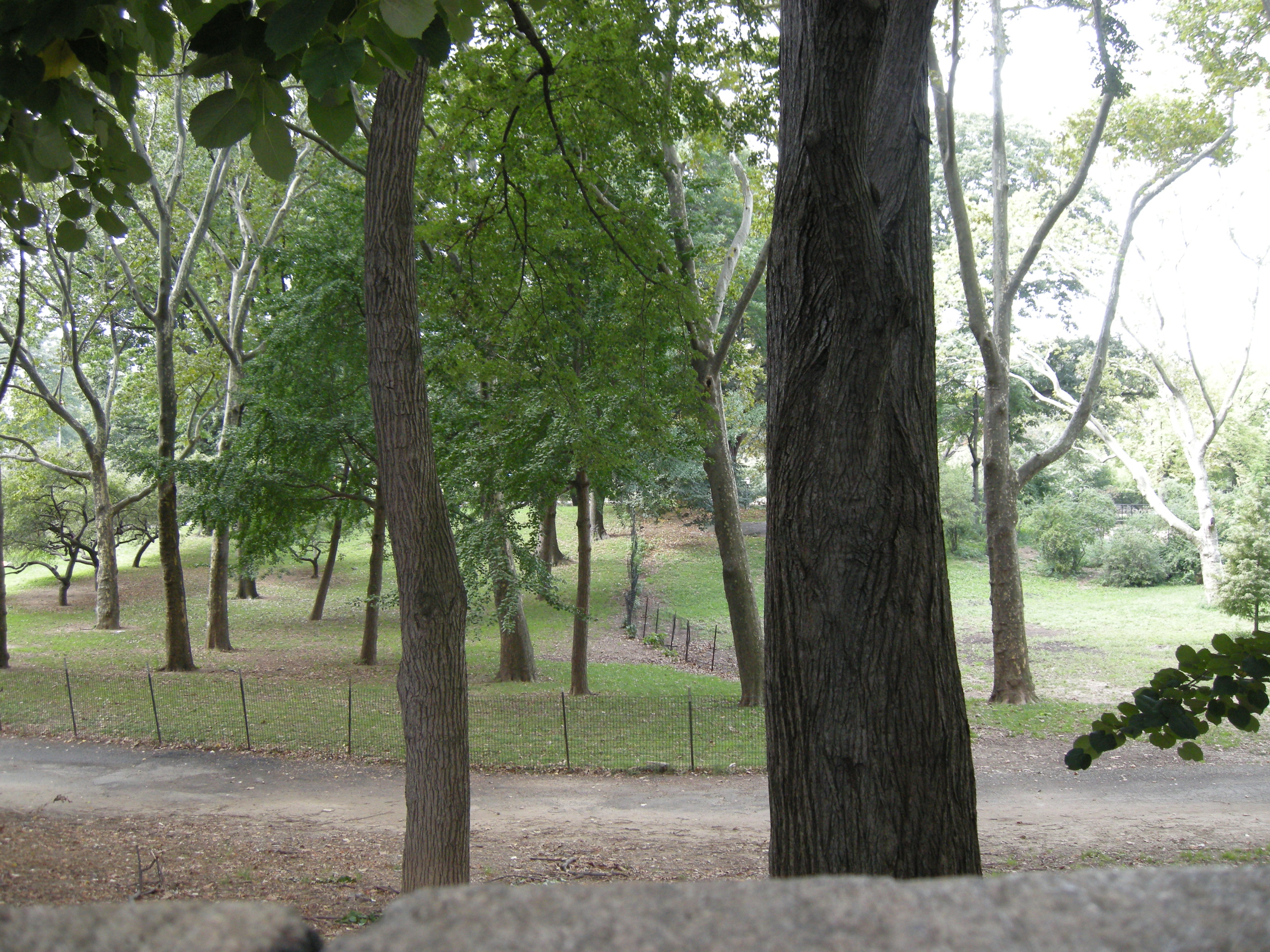
Central Park

Central Park

Central Park

Central Park

Central Park


Copyright and permissions:

General blog contents released under a Creative Commons by-nc-sa license. Artworks and other projects copyright Nicola Pugh 2003-2026, all rights reserved.
If in doubt, ask.
The theme used on this WordPress-powered site started off life as Modern Clix, by Rodrigo Galindez.

RSS Feed.