July 20, 2012

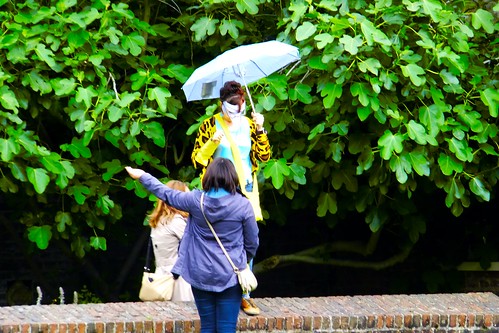
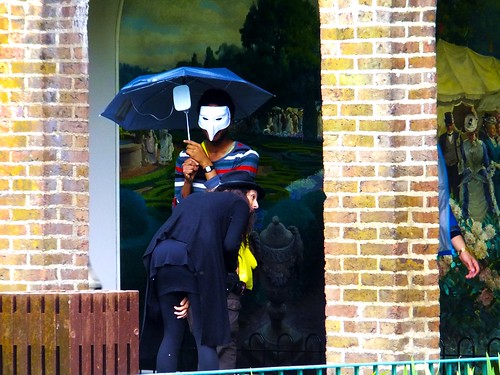
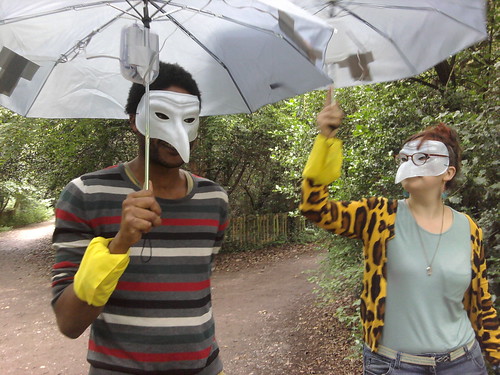
Andy Broomfield’s photos of Drift

I love finding other people’s photos of my projects, because I only ever see the action from a limited viewpoint (on this occasion I hardly saw any of it at all!).

Really nice then to see Andy Broomfield‘s spottings of interactions happening between Drifters, players and bystanders at the Sandpit last weekend.

Drift

Drift
(Click through and zoom in to the largest size for best location-and-spectacle results!)

Drift

Drift

Sitting quietly with my eyes closed, focusing on my breathing and then opening my eyes and waggling my fingers in front of my face really really fast

Documentation of Drift at Holland Park

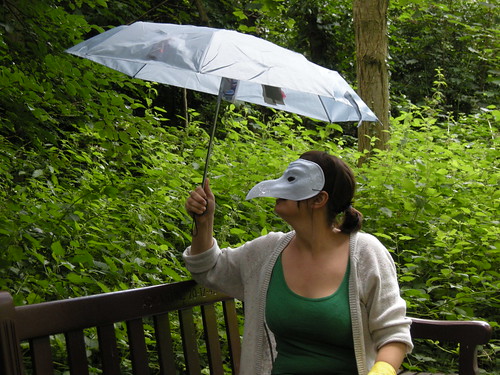
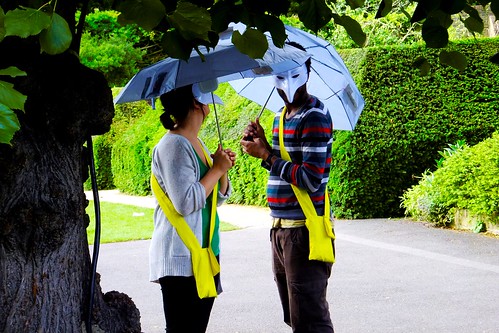
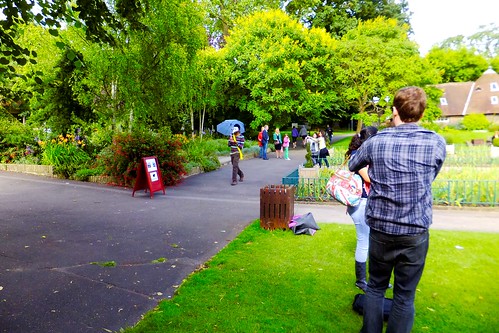
We spent yesterday afternoon moving around Holland Park in a Leisurely manner. Well, I didn’t, I was busy telling people about odd characters and how to attach vibrating sashes to their arms, but these guys did:

Drift at Holland Park

Drift at Holland Park

Thanks to everyone who took part in the playtesting and to Ant, Lucy and Emily for being the Drifters. Thanks too for all the great feedback – lots of very useful comments and I particularly liked that one person said that Drift had prompted him to explore unfamiliar parts of the park.

My photos are in this Flickr set:

Unfortunately I don’t really have any record of the interactions between players and Drifters, so if anyone has photos of any of those I’d be really grateful if you could email them to me or share a link or something…

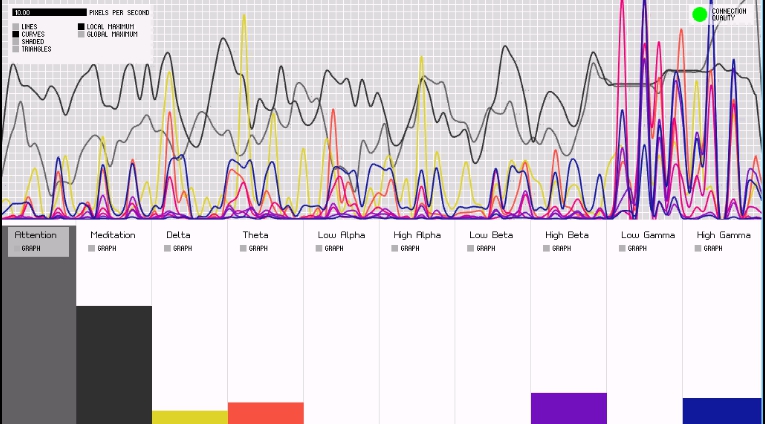
Since the Sandpit was themed around movement and spectacle, I’ve also run the data collected during the game through Howard Rickett’s code (from the Ikon Postmarks group) to get a visualisation of how it took shape over time. The resolution isn’t great by the time it’s been through screen capture and Movie Maker, but it gives a sense of the drift unfolded…

Drift at the Holland Park Sandpit

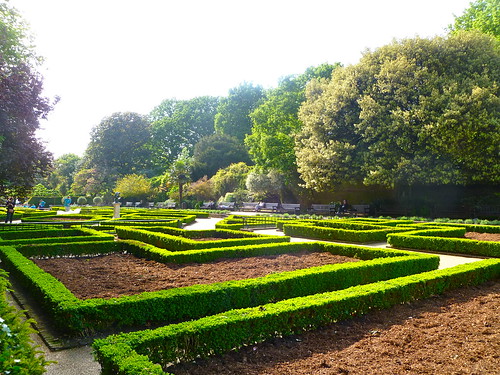
Holland Park

Holland Park by HerryLawford on Flickr

There are unusual characters drifting around Holland Park. A person of your skills will have no trouble identifying the three in question.

A person of your skills who is also wearing a sash will be able to feel the messages one of the drifters is broadcasting…

bzzzzz, bzzzzzz, bzzzzz, bzzzzz, bzzzzzz ~ I’m in the open

bzzz, bzzz ~ I’ve sought somewhere more sheltered

bzzzzz, bzzzzzz, bzzzzz ~ I’m somewhere in between

Observe the drifters as they move and try and deduce which one is broadcasting about the space they are in. Don’t hang around too long though, because the one broadcasting will change!

These three are all about the drift. They will be watching for the sash-wearers who can hear them – they have something for you – but if you move too fast they will scatter. Likewise, if too many sashes close in on them at once they will make their escape.

Move slowly and smoothly; approach the drifter you think is broadcasting and gracefully offer them a gift. If they approve, and are the broadcaster, they may offer you something in return.

If they disapprove of your non-driftyness, or you have guessed incorrectly, you will not receive anything back.

You have two chances. Good looking and good luck.

This Sunday we’ll be playing Drift in Holland Park as part of the Hide&Seek Sandpit event being run for the InTRANSIT Festival of Arts

The event is free and takes place between 2 and 5:30pm. Come and join us on the Orangery Lawn (near the café) for an afternoon of fun linked to the theme of movement and spectacle: “processions down pathways, walking tours, memories, hiding, scurrying, running, pondering and much more.”

There’s more information on the Hide&Seek website and there’s also a Facebook event doodad.

Interview for Using Games to Enhance Learning and Teaching

A while ago I was asked a few questions by Nicola Whitton as part of her research for her upcoming book about games in education.

Well the book has now been published and there’s an accompanying website that presents longer versions of the interviews with the various contributors.

My interview is here.

experts

d

Weatherproofing homebrew GPS kit (part 2)

Holland Park Umbrella

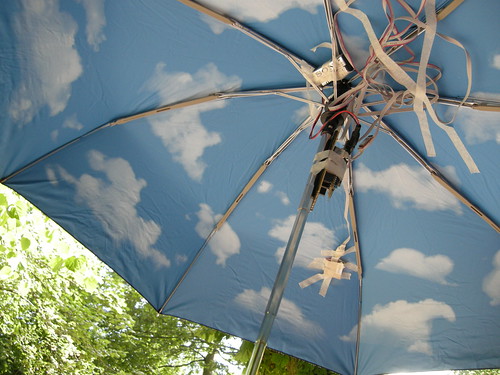
By taping it to the underside of an umbrella. On a gloriously sunny afternoon.

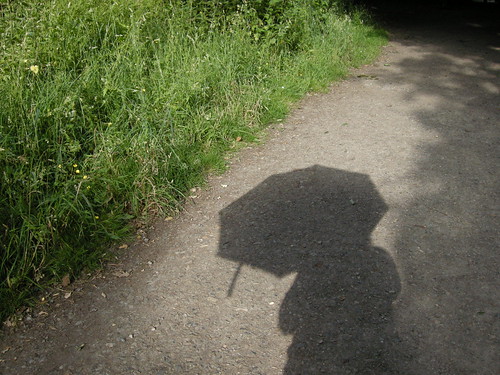
This afternoon I spent an hour wandering around the picnic-ers and sunbathers in Holland Park whilst carrying an umbrella.

During that time one child exclaimed loud enough and close enough for me to engage him in conversation (and an explanation); one woman gave me a look and a smile; and two men who had just thrown a stone at a pigeon told me it wasn’t raining. The latter also got an explanation.

On this occasion, the explanation has something to do with this.

Holland Park umbrella

Their enthusiasm is infectious

I’ve been thinking a lot about community-building around organisations and other groups recently. Well, for a long time really – it keeps cropping up in different forms.

This Don’t bring your 3D printer to MakerFaire post from the Hack a Day blog seems to resonate with a few things:

I’ll tell you what you need to bring. Listen close, because this is very important. Think about the people at your hackerspace. You’ve got a person or a few people who are very excited about something. It may not look particularly special to you. It may not be in the headlines of Make Magainze (yet), and you probably haven’t seen it for sale online with a fancy web page. This person/people may seem like the fringe to you. Some oddball that just happens to get really excited at the thought of some peculiar laser or a specific type of leather working . Bring that person. Have them go on and on about their peculiar project. Their enthusiasm is infectious. Your hackerspace will be remembered. Hackerspace’s power lies in the diversity of their people and what they do with the space. Don’t show up thinking about what your hackerspace supplies to your members, but show off what your members have supplied your hackerspace.[original emphasis]

Weatherproofing homebrew GPS kit (part 1)

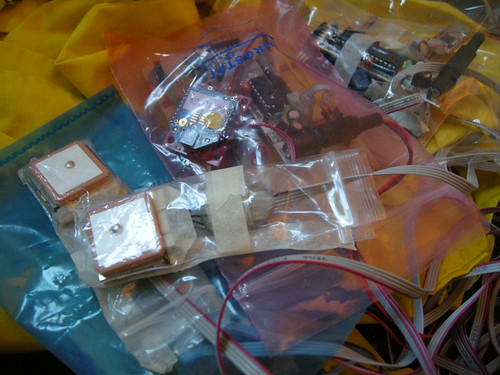
So, I spent most of the day prior to the Ikon walk wrapping GPS modules and Arduino microcontrollers in plastic bags.

Wrap 'em in plastic

This is not an ideal solution to the ongoing challenge of protecting electronics from the weather! Since having one of my GPS modules stop working on the Fermynwoods residency, I’m also increasingly aware of needing to protect the units from the mild battering they get every time I use them in a workshop or for an event.

Time to invest in some proper protection.

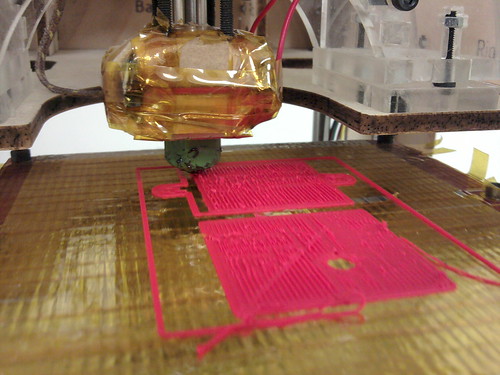
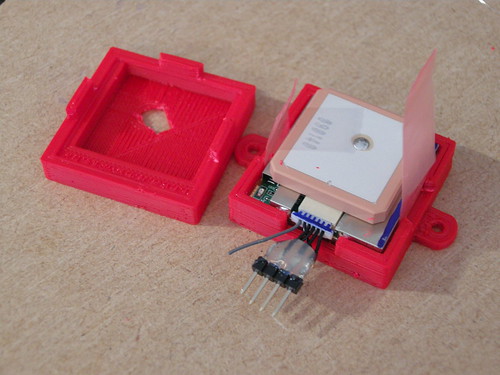
After a bit of a search around, I found someone had been kind enough to share the files for a 3D printed GPS case on Thingiverse and thought it would be worth giving it a try…

3D printed GPS case

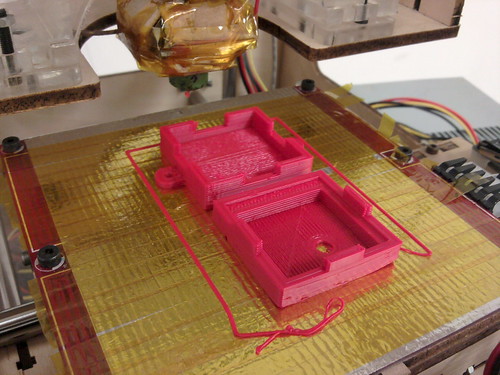
3D printed GPS case

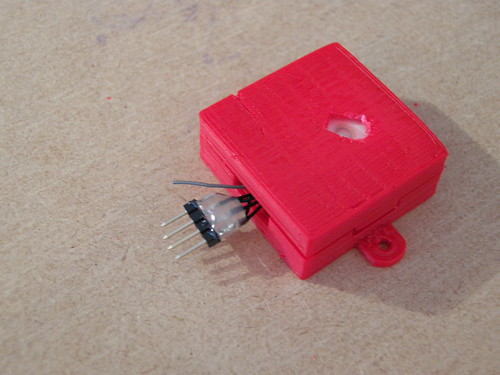
It took about 30 minutes to print out the case. It needed a bit of knife work to trim off ‘squidgy bits’ that were preventing it from closing properly and to open up the case above the misaligned aerial dot, but the end result was pretty much as hoped.

3D printed GPS case

One drawback is that it’s a nice snug fit. Fine if you’re going to leave the module inside the case, but trying to remove it involved a fair amount of prising with a screwdriver and this can’t be a good thing!

3D printed GPS case

Second time around I placed some plastic under the module before placing it inside the case. This helped a little by providing something to pull on, but still not a real solution. (I’d probably try some ribbon or something with less stretch next time.)

The other main issue for me is that this process is not really of a high enough standard for me to use in an art project. Fair enough if it was hidden away, but these are likely to be on view quite a lot, so I need to pay careful attention to the material and quality of finish.

It would also be nice to be able to find a streamlined solution, but I think a certain amount of bulkiness is probably a price I’m going to have to pay.

Plan B is, I think, to investigate an acrylic laser-cut case. I want a certain amount of translucency so I can see the status LED on the GPS module, but I think having the tech on view is also a good thing for workshop scenarios.

Stay tuned as the experiments continue…

PostMarks: data collection

I’ve been commissioned by Ikon Gallery to work with a few different groups on various projects. The first of these is an established group that has been involved in an international project exploring mark-making and cities (I believe there are parallel groups in Germany and Italy).

I’ll be supporting their work with my GPS-related tools and strategies for documenting traces of spaces. A few days ago we began our first wave of data collection around the Austin Village between Northfield and Longbridge.
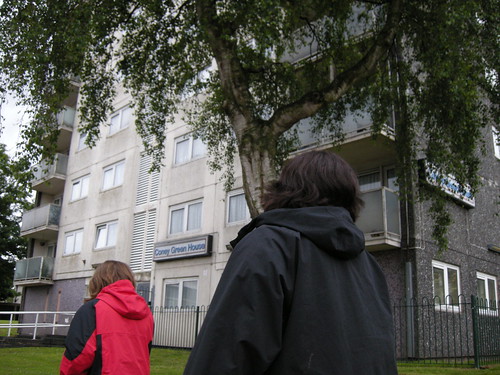
Austin Village data collection

Thursday was a dismal day with portentous dark clouds, intermittent downpours and the accompanying gridlocked traffic. Already loaded with prejudices, a cold, a less-than-positive mood and, having done our introductions in front of a typical Birmingham tower block, it’s fair to say I didn’t have particularly high expectations of a great evening.

I was wrong. It was of course thoroughly enjoyable and I learned loads!

And wow, Austin Village is an interesting place. The first sign that something different was going on here was another tower block further into the estate. This one was subtly not your typical Brummie block, however… Painted in pale greens it first caught our eye for being lighter than the ominous sky behind it but as we pondered more we reflected that it looked like it had come from some place other: somewhere by the coast? Somewhere within mainland Europe? Teleported in?

This is where we first had the sense that we might be inside some sort of conservation area. The history of the area is well documented elsewhere, so I won’t reproduce it here. Try Austin Memories and Stuart Whipps’ photos of the wooden bungalows (you need to scroll across the page to see them all).

For our research, we togged ourselves up with as many sets of GPS logging kits as I could muster and also the landscape-reactive sashes to link us together as a group.

In addition to gathering numerical data (“when we put the sashes on we felt like a slow-moving version of the Red Arrows leaving the data lines behind us instead of trails”) the group also did some drawing and mark-making onto postcards as first steps towards responding to some work that had been sent to them by the German group.

There was no plan for what route we took (in fact I was thoroughly disorientated for much of the evening!) and we tried to defer decision-making to the group as often as possible.

Here are a few things I came away with…

Austin Village data collection

I like the way the group combined elements of drifting with repetitive formulaic movements. Here they walked up and down a side track, prompting a resident to come out of his house and ask if he could help them at all.
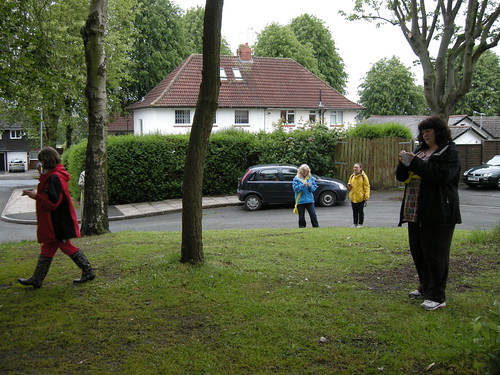
Austin Village data collection

The distinctive road layout in the village includes 4 islands. Normally I’d demonstrate my non-Brummie origin by calling them ’roundabouts’, but in this case they really did feel like islands!

Large enough to be covered with lots of trees, there was a nice moment looking in from the side, watching people pacing around and absorbed in their mark-making that was very reminiscent of the human library scene from Fahrenheit 451!
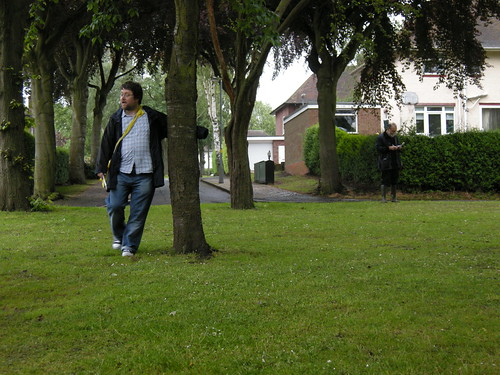
Austin Village data collection

I’ve also read that originally 2 of the 4 islands also had octagonal shelters for children to play in. I like the echoes of that in this image.
Austin Village data collection

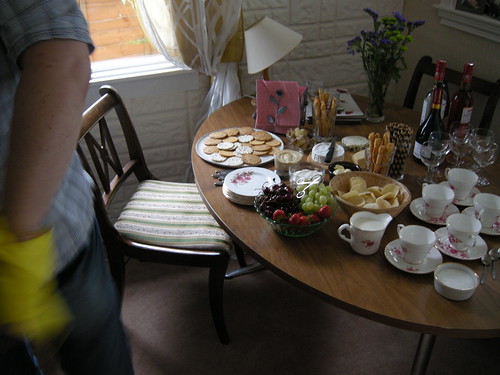
After the walking we had a fine treat from one of the people/participants/artists who had invited us into her home for an inside view of one of the bungalows and an amazing spread of cheese and other goodies. This was a completely different perspective on the landscape: thumping the original (close to 100-year-old) cedarwood window frames; listening to the trains go past; watching her eyes track the locations of the homes where deceased neighbours had lived.

The rest of my photos are in this Flickr set.

I think the main point of writing this post has been for it to act as a reminder to move past pre-judgement and assumption; to look beneath the surface. To dig deeper.

We’ll all be meeting up again in a week or two to look at the data we collected and try out different ways of transmogrifying it into something else.
Aspirational Clocks

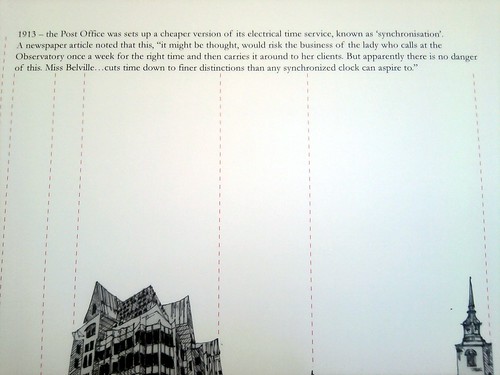
This excerpt from a piece in the One Day in the City: Part I exhibition at University College London caught my eye and my imagination:

Aspirational Clock

1913 – the Post Office was sets up [sic] a cheaper version of its electrical time service, known as ‘synchronisation’. A newspaper article noted that this, “it might be thought, would risk the business of the lady who calls at the Observatory once a week for the right time and then carries it around to her clients. But apparently there is no danger of this . Miss Belville … cuts time down to finer distinction than any synchronized clock can aspire to.”

I love the idea of clocks aspiring to be more and of time being something you can carry. I think there’s some interesting leverage in infusing our technology with dreams and also of giving the intangible mass and physical form.

Miss Belville – Ruth – was one of the Greenwich Time Ladies. Also fascinating and a good reminder that tech can slip.


Copyright and permissions:

General blog contents released under a Creative Commons by-nc-sa license. Artworks and other projects copyright Nicola Pugh 2003-2026, all rights reserved.
If in doubt, ask.
The theme used on this WordPress-powered site started off life as Modern Clix, by Rodrigo Galindez.

RSS Feed.