January 13, 2012

Sonar Goggles and The Blind Fiddler

Paul Conneally has been using his cultural foraging technique to bring together (cf ‘curate’) an exhibition at the Snibston Discovery Museum exploring home entertainment between the years 1806 and 2012.

Paul Conneally, transform’s Cultural Forager, discovered that The Blind Fiddler was painted in the kitchen of Coleorton Hall Farm in 1806 – the same farm that the great poet William Wordsworth lived in with his family. The picture was commissioned by Sir George Beaumont and given by him to the nation and now forms part of the TATE collection.

The exhibition will feature artefacts held by Leicestershire County Council’s Museums Service, new works by Conneally, other artists and local communities where the picture was originally painted.

The exhibition’s starting point is the painting The Blind Fiddler by David Wilkie 1806 painted in Coleorton Hall Farm Kitchen North West Leicestershire.

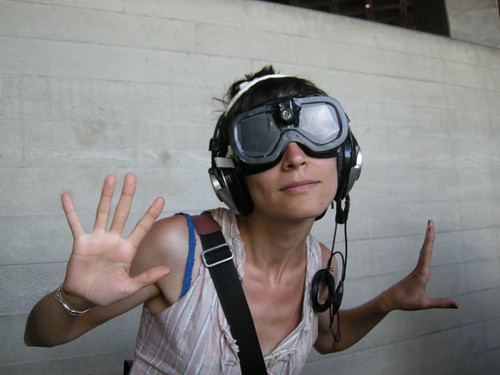
Starting at The Blind Fiddler, Conneally has linked and shifted to an eclectic range of artefacts and references – one of which gets him to my sonar goggles!

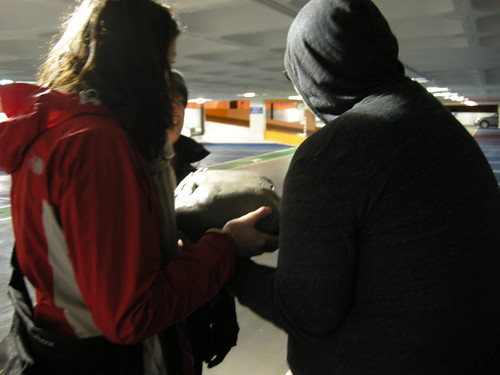
Experimenting with the sonar goggles

A pair of sonar goggles being experimented with at the Hide&Seek Weekender at the National Theatre, 2010

The Blind Fiddler – Home Entertainment 1806 – 2012 opens at Snibston tomorrow (Saturday the 14th of January) and runs until Sunday the 4th of March). Pop along for some Happy Families and maybe a bit of SingStar.

The Sanitised City: How public is public space?

Birmingham Salon – a friendly bunch who take ideas and debate seriously – has invited me to speak at their upcoming event “The Sanitised City: How public is public space?”

[…] what could bring our sanitised cities back to life? What represents acceptable behaviour, and who should decide and how? Is the way forward to be found in better design and new models of ownership? As from Cairo to Tunis and from Athens to Madrid, civic space has recently been thrust back into the spotlight, this session asks ‘what is public space?

The main speaker will be Alastair Donald: associate director of the Future Cities Project, and co-editor of The Lure of the City: From Slums to Suburbs. He is an urban designer, researching mobility and space at the Martin Centre for Architectural and Urban Studies, University of Cambridge.

Then there’s me. I’ll be responding to Alistair’s introduction with my Splacist hat on and exploring what implications thinking about mass participation and the organisation of cities has for the Splacist manifesto and vice versa.

Hannah and I still very much see the manifesto as an ongoing work in progress as we debate and experiment to find out what it may mean. Feel free to add a comment if you have any thoughts to share on things such as:

  • rules and regulations
  • accepted/expected civic behaviour
  • homogeneous city centres
  • commercialism
  • privately-owned public space
  • occupation
  • surveillance

What is public space? Join us on Wednesday the 8th of February at The Studio, Cannon St, Birmingham B2 5EP. 7.00pm until 8.30pm and in the pub afterwards.

Sol Invictus

I wanted to make some seasonal decorations for my flat in keeping with the spirit of Nine Lessons and Carols for Godless People, so I connected some fairly lights to a Geiger counter.

(Yet again Garry Bulmer helped with the coding – many thanks!)

Update:
makeInstructables tutorial.
Post on MAKE blog.
Article on Wired.co.uk.

***
I know 2011 has been tough on a lot of people: may the dark days lighten soon.
xn

Dust documentation

Lorna Parsons has made this video to whet your appetite for Dust:

Mike Cummins has also sent me a few photos:

And Paul Conneally sent me this image of the dust mote he is looking after:

Dust Mote Farmer and Pigs

In 2012 Hannah and I will be looking for opportunities to develop Dust into a finished piece of work – if you have any leads for us (or any documentation of the work in progress we presented recently), do let us know.

Dust: tech write-up

Now we’re the other side of Dust and safe from dropping any major spoilers, here’s a quick overview of how the Dust Balls were put together.

Dust balls? Here’s an extract from the explanatory text Hannah’s published on her blog:

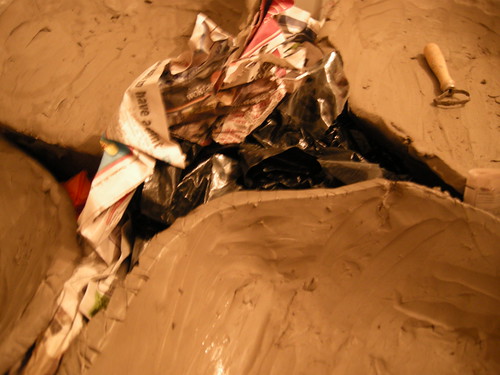
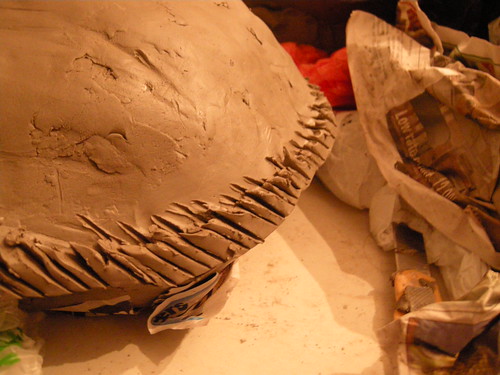
The Dust Balls are large fragments of the city. They are formed out of open source electronics, clay, hope and optimism. They begin by introducing themselves to the listeners, and instruct them to point the device in different directions in order to ‘pick up’ stories of individuals in the areas surrounding them. Depending on the timing and direction in which you are facing, different stories will be heard.

They are heavy, and designed to be listened to by two people at once – the weight and bulk of the object meaning that two are required to support it. The two people sharing each experience of overhearing the stories should be strangers.

Quite a design brief there, with some technologies I’d never worked with before (audio and direction-sensing). Fortunately I know where I am with clay!
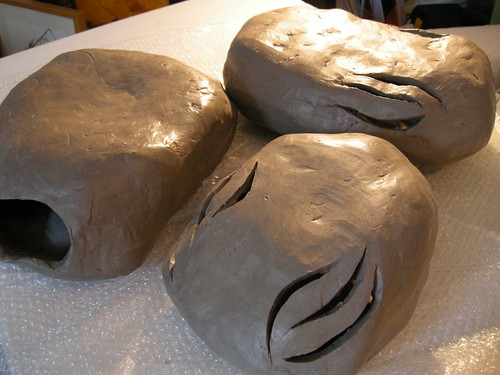
Fragments of the city

The finished Dust Balls

There’s a whole other post-worth of talk about the whys, wherefores and processes relating to the clay, but this post is about what went inside the Dust Balls.

Short answer: lots of electronics.
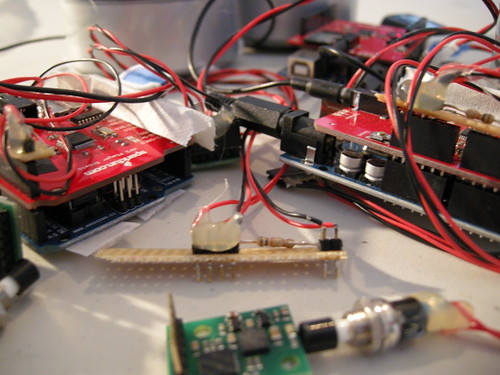
Dust bunny brains

Location, location, location

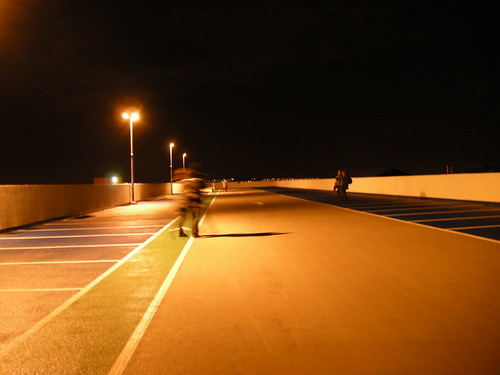
Once we’d decided to site the Dust event on top of the Vyse Street car park, I spent several hours up there over 3 or 4 visits after work. We didn’t have much in the way of lead-in, but this was time well spent getting to know the feel of the location and details such as how loud the ambient noise of the traffic below is, how busy the car park is at that time and generally getting to know the lie of the land.

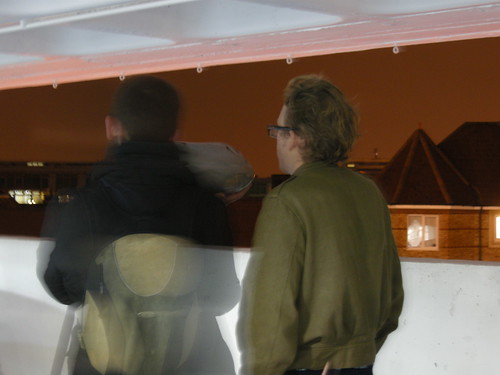
View from the top deck of the car park towards Snow Hill station and Colmore Square.

From here we were able to locate the 5 story threads that Hannah had written amalgamating objects and memories submitted by different contributors.

Thread 1: a visitor to Birmingham is reminded of being in love; Thread 2: a man feels like a boy as he listens to a recording of the grandfather he never met; Thread 3: an office-worker battling deadlines and spreadsheet puts a hand to the pocket containing one of his son's toys; Thread 4; a victim runs through the city streets at the feet of the tower blocks; Thread 5: a friend bearing a gift walks purposefully towards the hospital.

Working from a tracing from a fold-out A-Z map of Birmingham, I drew out the segments for each thread and used a protractor to get the bearings for the boundaries between threads. This working diagram was then orientated to North and taped to the table-top in preparation for testing the the next stages…
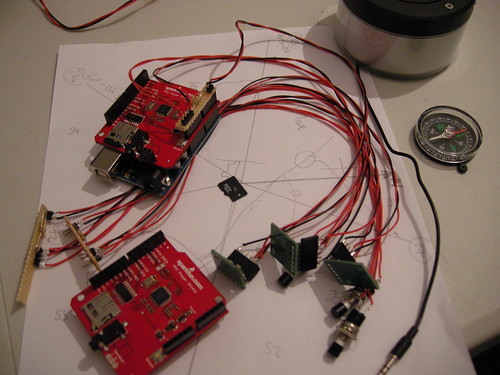
Locating story fragments

The compass module

After some research into different options, I decided to use this CMPS10 tilt-compensated compass module. The tilt compensation was important (since we couldn’t guarantee the Dust Balls would be held horizontally) but it was also selected because of the range of communication methods (serial, I2C, pwm) and the documentation and example code available. Given the lack of time and my lack of coding chops, this is the sort of bet-hedging that was required!
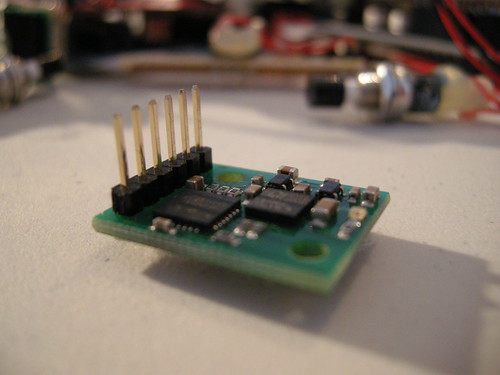
Compass module

It was easy enough to get the compass module working with an Arduino using the example code. I initially tried serial communication, but I couldn’t get this working via the NewSoftSerial library when I came to combine it with the mp3 shield.

The switch to I2C communication required the addition of a couple of pull-up resistors, which I made into a stripboard ‘shield’ that I could plug into the Arduino stack.
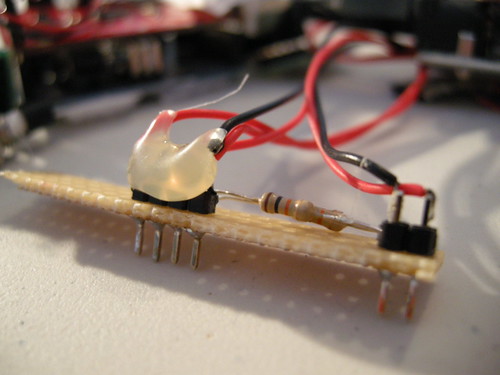
I2C and reset 'shield'

This made things a bit more robust for placing them inside the Dust Balls, as well as being a nice convenient modular approach.

I also added in a push-to-make switch between the ground and reset pins. This would allow me to place the the electronics at the back of the Dust Ball where they wouldn’t interfere so much with the compass readings, but to still have reasonable easy access to reset the kit between users.

mp3 shield

The remaining component of the set-up is the mp3 player shield. I used this one from SparkFun, and it worked, although I may well choose something different next time around…
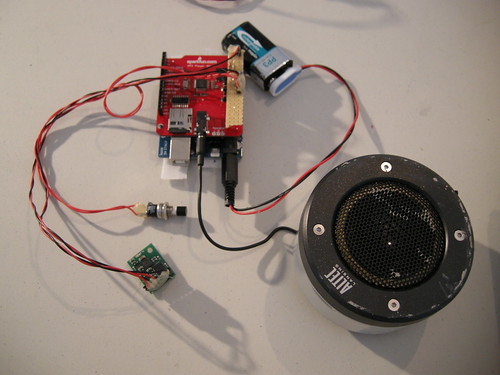
Dust bunny innards

The main thing to be aware of with this shield is the lack of a line out. There’s a headphone socket and somewhere to connect a speaker, but using an amplifier without also adding in protection against electrostatic discharge runs the risk of frying the audio chip. We’ve been lucky so far using portable speakers in the headphone socket, YMMV and you have been warned.

When using these shields you also need to be careful to install the SDFat library correctly (only the ‘SdFat’ folder from the zip file) and ensure you make the necessary changes to the Sd2PinMap.h file as documented in the mp3 player example.

The comments on the product page are well worth a read through too.

Anyway, I got it working eventually…

… et enfin…

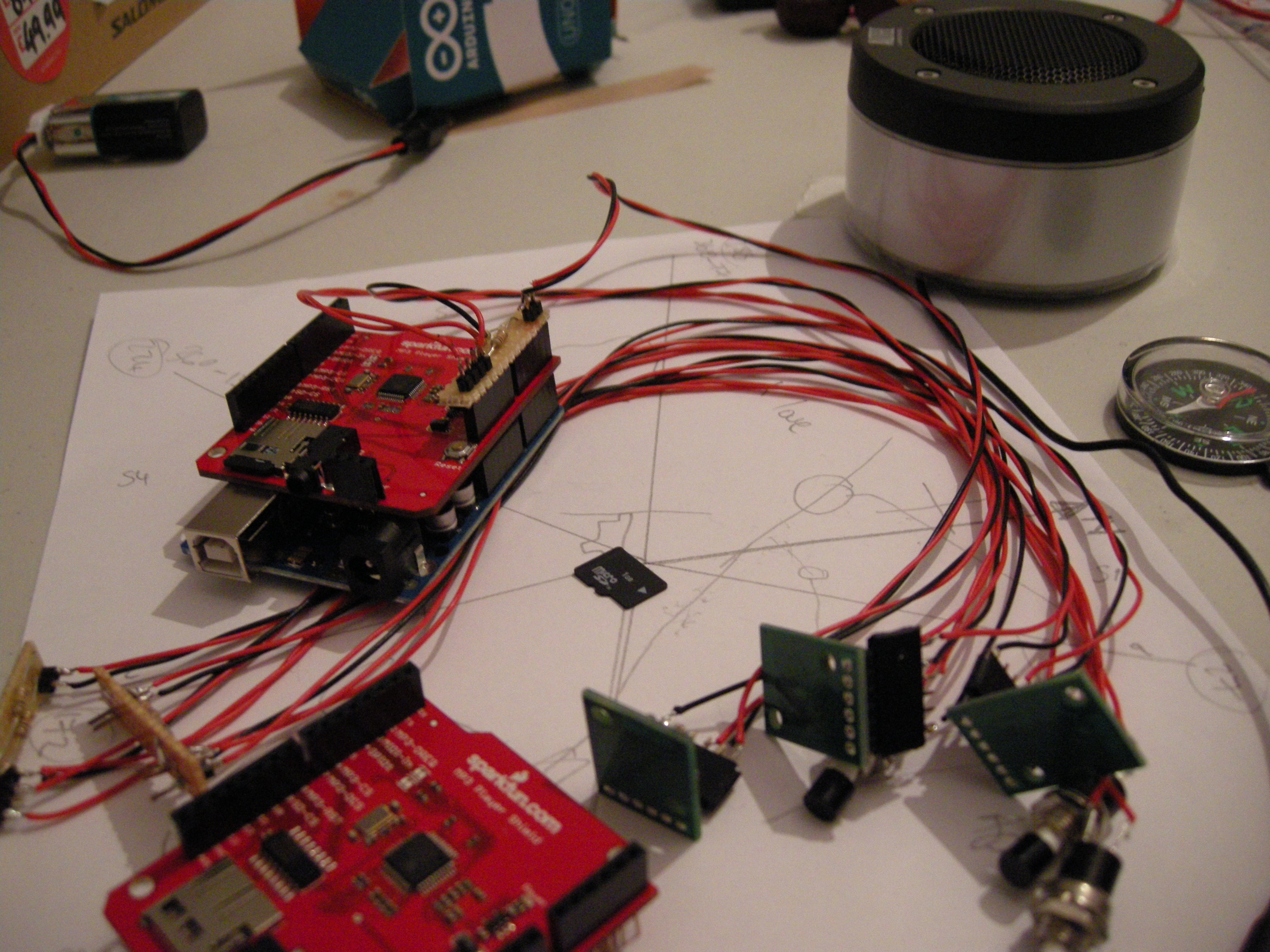
The final stack looked like this:
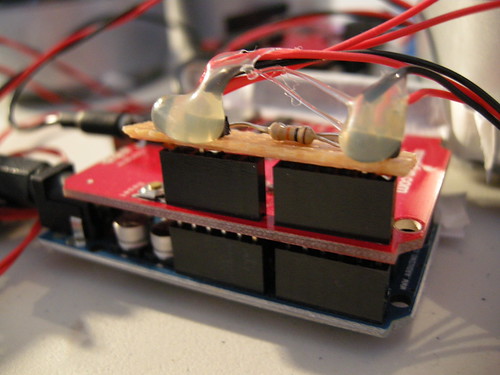
Stack: Arduino, mp3 shield and I2C/reset gubbins

Arduino Uno, mp3 player shield and homebrew I2C/reset shield, also connected to the compass module and the portable speaker. All powered with a PP3 9 volt battery connected to the Arduino’s power jack.

I added in some hot melt glue to protect the soldered joints that were prone to flexing and breaking and also used black insulation tape to cover over some of the power LEDs (I didn’t want the Dust Balls to look like they were powered by Kryptonite!).

Strips of velcro were used to hold the components in place during use, whilst still leaving them removable when required.

The code takes its main functionality from the compass and mp3 player examples, with some logic to select which audio track to play depending on which direction you’re facing and what’s been played before.

As ever, there’s room for improvement, but hopefully there’s enough here to get you started with your own projects. There’s also a set of photos from the make on Flickr.

We will not be afraid to get our hands dirty.

We will make and share our own tools as appropriate.
We will collaborate.
We will be generous.
We will be porousexcerpt from the Splacist Manifesto 2.0
Performance Fictions book launch

About 2 years ago I presented an introduction to Uncertain Eastside as part of Dr Sadie Plant’s contribution to the Performance Fictions event.

There’s a book launch tomorrow in London:

Invite for book-launch and talk

Book-launch and talk to mark the publication of five volumes from the art-writing-research series by Article Press.

Talk by John Cussans entitled ‘Télémaque in Marmalade’ – an illustrated lecture touching upon paranoid critical theory.

X Marks the Bökship, Unit 3, 210 Cambridge Heath Road, London E2 9NQ

Saturday 3rd December 2011, 6 – 8 pm, talk at 6.45 pm.

The five volumes address the relationship of art, performance, art writing and knowledge, as well as exploring art as counter-knowledge or a means to counter knowledge.

The volumes contain essays, art works, illustrations, documentation of performances and diagrams.

‘Performance Fictions‘ – edited by David Burrows with contributions from Sadie Plant, John Cussans, Simon O’Sullivan, Pil and Galia Kollectiv and David Burrows.

‘Barefoot in the Head‘ – edited by John Russell, Alun Rowlands and Mark Beasley with contributions from the editors.

‘Performing/Knowing‘ – edited by Gavin Butt with contributions from Aaron Williamson, Kate Love, Oreet Ashery and Hugo Glendinning, Adrian Heathfield & Tim Etchells.

‘Materiality of Theory‘ – contributions from Jonathan Lahey Dronsfield, Benoît Maire and Marcus Steinweg.

‘Who is this who is coming?‘ – edited by Maria Fusco with contributions from Alexandre Singh, Craig Martin, Jennifer Higgie, George Clark & Beatrice Gibson, Giles Eldridge and Maria Fusco.

Series editor David Burrows. Price £8.00. Books can be ordered from www.centralbooks.com

Artist’s films, relating to the publications, will also be screened. For more info about the launch and talk contact bokship@googlemail.com or d.burrows@ucl.ac.uk

Article Press, School of Art, BIAD, Birmingham City University, Margaret Street, B3 3BX.

Dust

I see you.

I always see you.

I hold you up and speak to you in the rush of the trees or the skittering of a crisp packet across your path.

I see you now. Standing on a rooftop in the wind. I’m whispering past you. I brought you here. Because I’ve been listening to you, all of you for so long, and today, for a moment, I want you to hear me. Hear me tell you about what it feels like to see and touch and know all of you. Show you things you don’t see. Things lost and found and dropped and broken and fixed. I wrap myself around you.

You give me so much. I have given you something in return. I echo out of this fragment of the city. Turn me, press your ears, and turn, as you face different directions and you will be able to hear me speak about the things that you see. The stories in the faces and traces of the people you move past every day.

Listen to me.

[audio:http://www.npugh.co.uk/media/intodust.mp3]

Dust at "Who are the Splacists?" event, hosted by MADE

Dust at "Who are the Splacists?" event, hosted by MADE

Dust at "Who are the Splacists?" event, hosted by MADE

Hannah has the explanations.

Flickr has the rest of my photos.

These people have our gratitude:

– MADE, for their unwavering hope and optimism in commissioning and supporting Dust and the process that resulted in it.
– Everyone who shared their memories with us via various channels.
– Garry Bulmer, for being a knowledgeable sounding board for the tech …and pointing out the obvious.
– Jules and Jen, for their help and giggles whilst making 200 Brazilian thumbpots.
– Bournville and Margaret Street, for last-minute supplies of clay.
– Maggie at Active Robots, for being nice.
– Black Boe, for the wind sample.
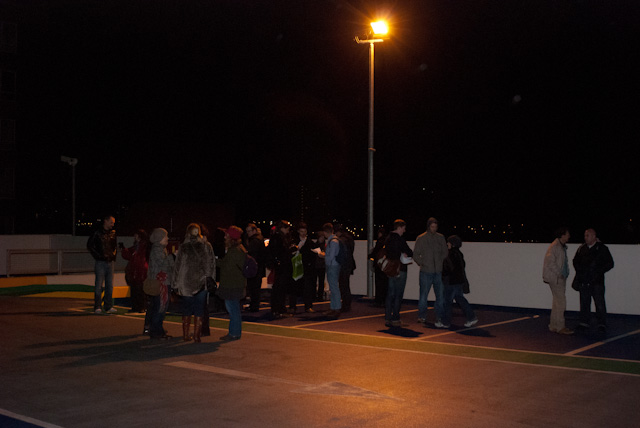
– Everyone who came and stood on a cold, dark, wet carpark roof with us last night.

Interface for electronics

For beating hearts and trembling hands.
The ground pressed to your cheek.
She sees you.
Hold her, listen to her.

http://www.made.org.uk/events/view/who_are_the_splacists/

interface for electronics

interface for electronics

interface for electronics

Many thanks to Jules at Jen for all their help and tangents.

Switching audio via direction

A short, self-congratulatory post to say I DID IT!

Compass module connected to mp3 shield connected to arduino. And they're all talking to each other!

Fruits of our labours

After about 14 hours today spent slaving over keyboard, soldering iron and a fold-out A-Z map of Birmingham, we now have a rather nice set-up that will play different fragments of audio depending on what direction the compass is pointing. Phew!

Tomorrow we break out the clay…

Dust deliveries

Having yesterday met up with Hannah for a second time in preparation for sharing our collaborative work-in-progress Dust on Wednesday, I’m now gearing up for a weekend of making.

“Gearing up” in this particular instance consists of deliveries of various items…

25kg of clay

Back-up 50kg of clay

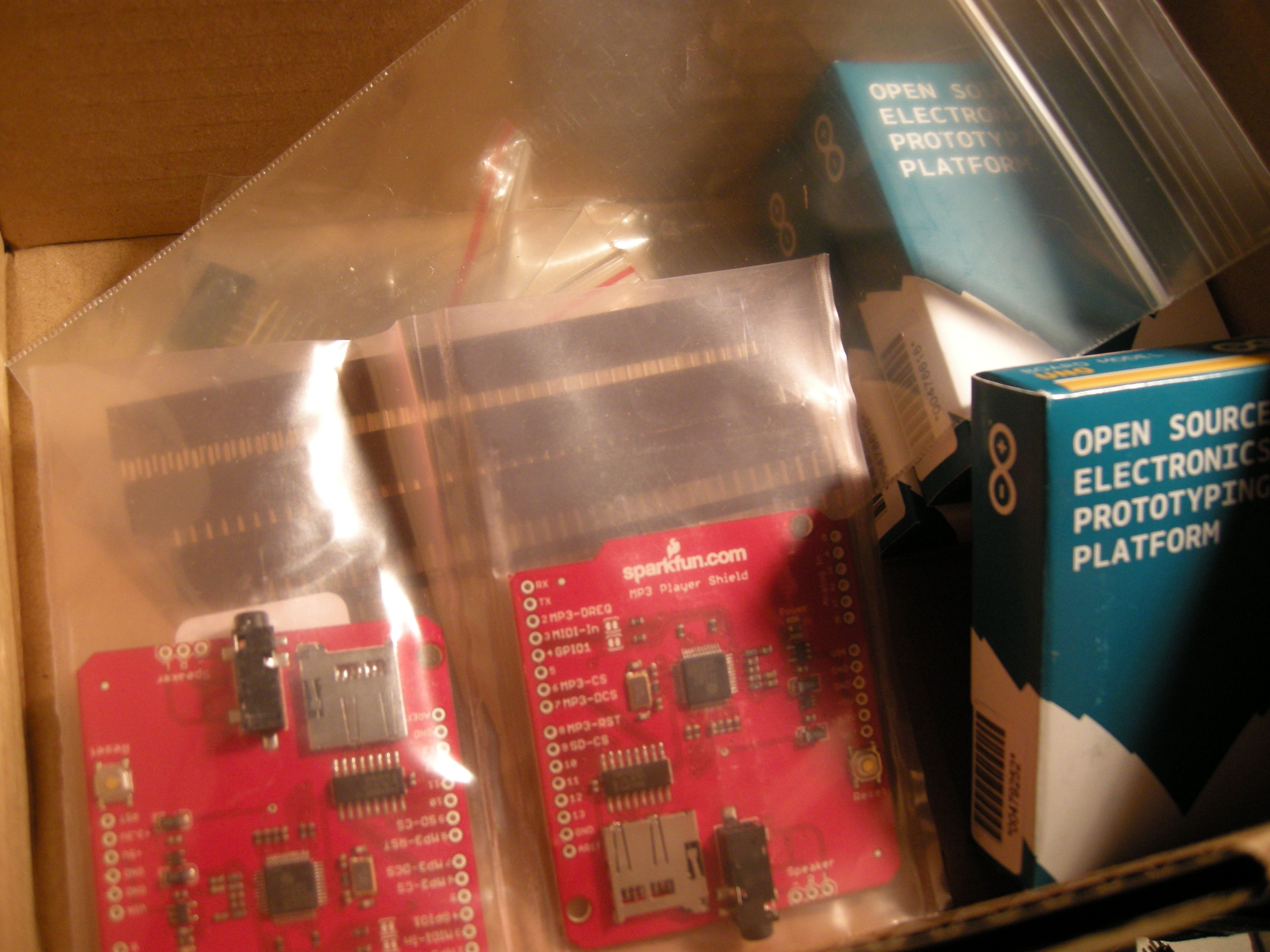
Arduino microcontrollers, mp3 shields and things for connecting them together...

Today I’ve also bought a speaker, some clothes pegs, and some index cards as well as acquiring some duvet covers and a camouflage tarpaulin. I’m really hoping the delivery of compasses arrives tomorrow.

Tonight I’ll get the best delivery though – the sound files from Hannah, who’s spent the day writing in response to the objects and memories people have been contributing to the project. How exciting!


Copyright and permissions:

General blog contents released under a Creative Commons by-nc-sa license. Artworks and other projects copyright Nicola Pugh 2003-2026, all rights reserved.
If in doubt, ask.
The theme used on this WordPress-powered site started off life as Modern Clix, by Rodrigo Galindez.

RSS Feed.